

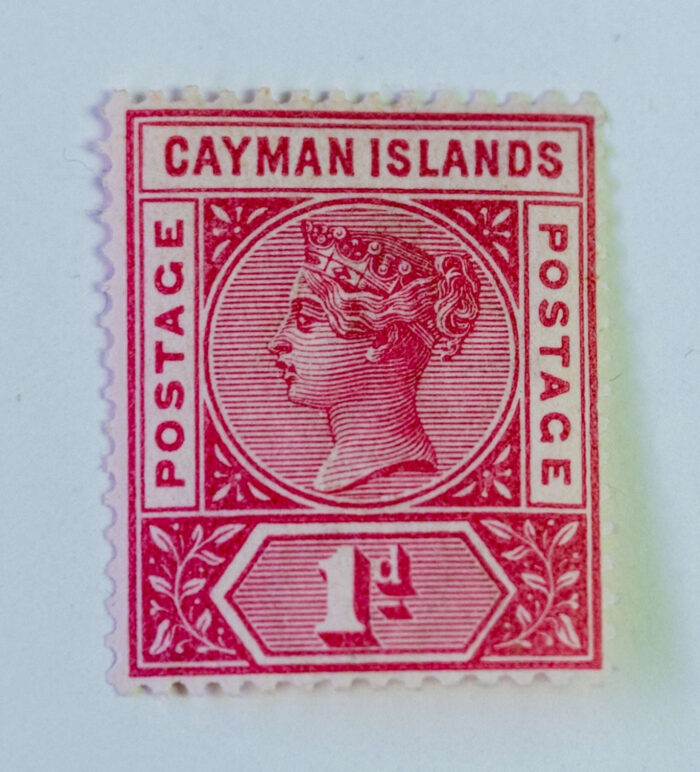
For the first time since the end of the Second World War, the Cayman Islands Postal Service appears set to forgo releasing a commemorative stamps issue during the year.
“The release of a stamp issue has not materialised for 2025,” said Postmaster General Sheena Glasgow when asked by the Compass about the lack of a new stamp issue so far this year.
Although stamps are less pertinent in modern society, for more than a generation in the early 20th century, stamps were not just decorative collectibles or functional postage. They were the economic lifeblood for the Cayman Islands government. They paid the bills.
The loss of practical relevance of stamps is not unique to Cayman. Globally, postal administrations are cutting back. In the UK the number of letters being sent has halved over the past decade. Around the world, postal services are issuing fewer stamps as electronic communication reduces demand. Cayman is not alone in asking whether new stamps are still worth the investment. Digital payments and online logistics have made the physical stamp a niche product.
In Cayman, stamp sales no longer support the budget. For younger Caymanians, the tactile thrill of buying a first-day cover has been displaced by the scroll of a phone screen. Practical relevance aside, the true question is not whether Cayman still needs stamps to send letters. It is whether we still need the stories stamps tell.
A brief history of Cayman stamps
Ivan Burges who owns the Penny Black stamp shop across from Hog Sty Bay in George Town is an authority on Cayman stamps and wrote the book, ‘The History of the Cayman Islands Post Offices’. In that book he notes, “The George Town Post Office was Cayman’s first Post Office and came into being on 12 April, 1889.”

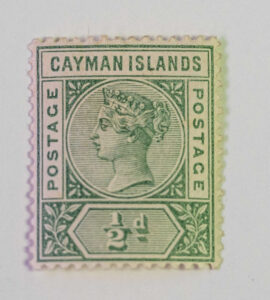
But Cayman’s stamp story began in November 1900, when it issued its first two denominations — a half-penny and a penny, both bearing Queen Victoria’s portrait. Until then, Caymanians had used Jamaican stamps. The change was administrative, but it was also symbolic: Cayman had its own name, its own revenue stream and soon, its own international following.
In the early decades of the 20th century, Cayman’s economy was small and relatively undeveloped. There were few alternative revenue streams — no large sugar estates, no heavy industry, limited trade taxes and minimal internal taxation. So, the stamp “tax,” hidden as it was in mail and documents, served outsize importance.
The new Cayman stamp issues quickly attracted attention from collectors around the world – in Britain and beyond. The collectors’ appetite, combined with limited printings, helped swell stamp income for the local administration.

As philatelist Graham Booth would later remark in his book on Cayman postal history, “a meagre two low values … did not deter collectors whose demand for stamps eventually led to shortages and the need to create provisionals … these new creations only added fuel to the fire.” Collectors abroad were insatiable, and a local fiscal experiment quickly became an international market.
By 1913–14, stamp sales brought in £2,750 — more than 53% of the total revenue of the Cayman Islands Government. According to Booth, “In many years over the period of 40 years (1901-1939) it accounted for between 40 and 50% and some years more. In 1937 it generated almost 70% of Government income.”
Commissioner George Stephenson Shirt Hirst, who governed between 1907 and 1912, oversaw years when philatelic revenue became as important as any tax or duty.
This reliance on stamps for revenue carried risks. The more valuable the stamps, the greater the temptation for dealers, speculators and counterfeiters to intervene.
Collector demand abroad caused shortages, overprints and a flood of forgeries.
Controversies
There were a series of Cayman stamp controversies: scarce issues were sold abroad, and there were complaints that dealers overseas profited while islanders went without.
– Photo: Taneos Ramsey
Burges summed it up best: “These little pieces of paper were never just stamps here — they were lifeblood, and when the supply faltered or the speculators swooped, people noticed.”
Supply shortages led to overprints and provisional issues. Dealers abroad cornered the market. Locals sometimes could not buy stamps for everyday use. But while Caymanians grumbled, the government balanced its books.
Though Hirst did not leave a memoir about stamp scandals, later philatelists and historians point to his tenure as part of the transition phase when printings were small, oversight was limited and collector demand surged.
The “Cayman stamp scandal” is less a single headline than a recurring specter: whispers in local circles, complaints to the Colonial Office and debates in the margins of official reports about whether the postal department was being managed for public service or private gain. In some years, postal inventories were short; in others, surcharges among existing stamps sparked speculation. The Colonial Office “Blue Books” (Annual Reports) occasionally noted these tensions and urged cautious management so that Caymanians wouldn’t be denied basic postal services while dealers speculated.
Stamps as symbols and records of Caymanian culture
By the late 1930s, the story began to shift. Stamp sales still brought in money, but other sources of revenue — small trade duties, remittances, and early tourism — began to matter more. By 1939, stamps were a fiscal footnote rather than a cornerstone. Yet their symbolic importance remained.
Burges, reflecting years later, offered another insight during an exhibition, “Stamps are our history in miniature — they tell you who we were, how we lived and what we valued.”
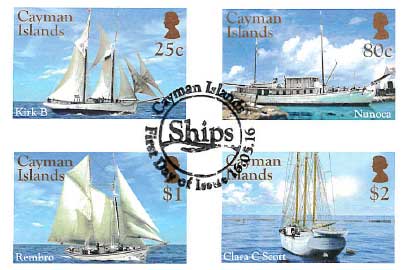
The 20th century saw Cayman stamps reinvented as cultural artifacts. For example, in 2011, the Postal Service issued a six-stamp Catboat series, depicting turtle hunting, cargo hauling, sail sewing and regatta racing.
“This issue tells a story, beginning with the reason catboats were made, their impact on our economy and the fact that they continue to be around today,” Glasgow told the Compass at the time.
Later that year, the Pioneers issue honoured Caymanians from midwife Almeria McLaughlin Tomlinson to Major Roddy Watler and Captain Rayal Bodden. Glasgow said, “We intended this to be a living, breathing issue in which the public would be able to participate by nominating pioneers.”
Why stamps still matter
The golden age of Cayman stamps — when a commissioner balanced the budget on philatelic sales — is gone forever. The scandals, forgeries and surcharges of the early 20th century are stories to be retold in classrooms, exhibitions, or coffee-table books, not lived experiences.
Yet dismissing stamps as irrelevant risks losing a unique entry point into Cayman’s story. Each issue — from Queen Victoria’s portrait to the sails of a catboat — is a curated lens on what the islands valued at a given moment.

As long as Caymanians care about their past, stamps remain a living artifact. They tell stories that are still relevant — of survival, of adaptation, of how a small community once navigated global markets with nothing more than ink and paper.
If 2025 passes without a new issue, it is not just the absence of ink, but the closing of a century-long chapter.
In the end, the question is not whether Cayman still needs stamps. It is whether Cayman still needs the stories that stamps tell.
Related Videos








While emailing is so prevalent today, it just cannot replace that letter that came through the mail system that was so carefully chosen by it writer. Thought was give as to the; type of paper, it’s color, unique drawings upon it, it scent and so importantly the stamps placed on it that told either a magnificent story or made a profound statement. As you probably have surmised, I’m from that older generation where mail was such important part of my life. For me, that remains so today.