

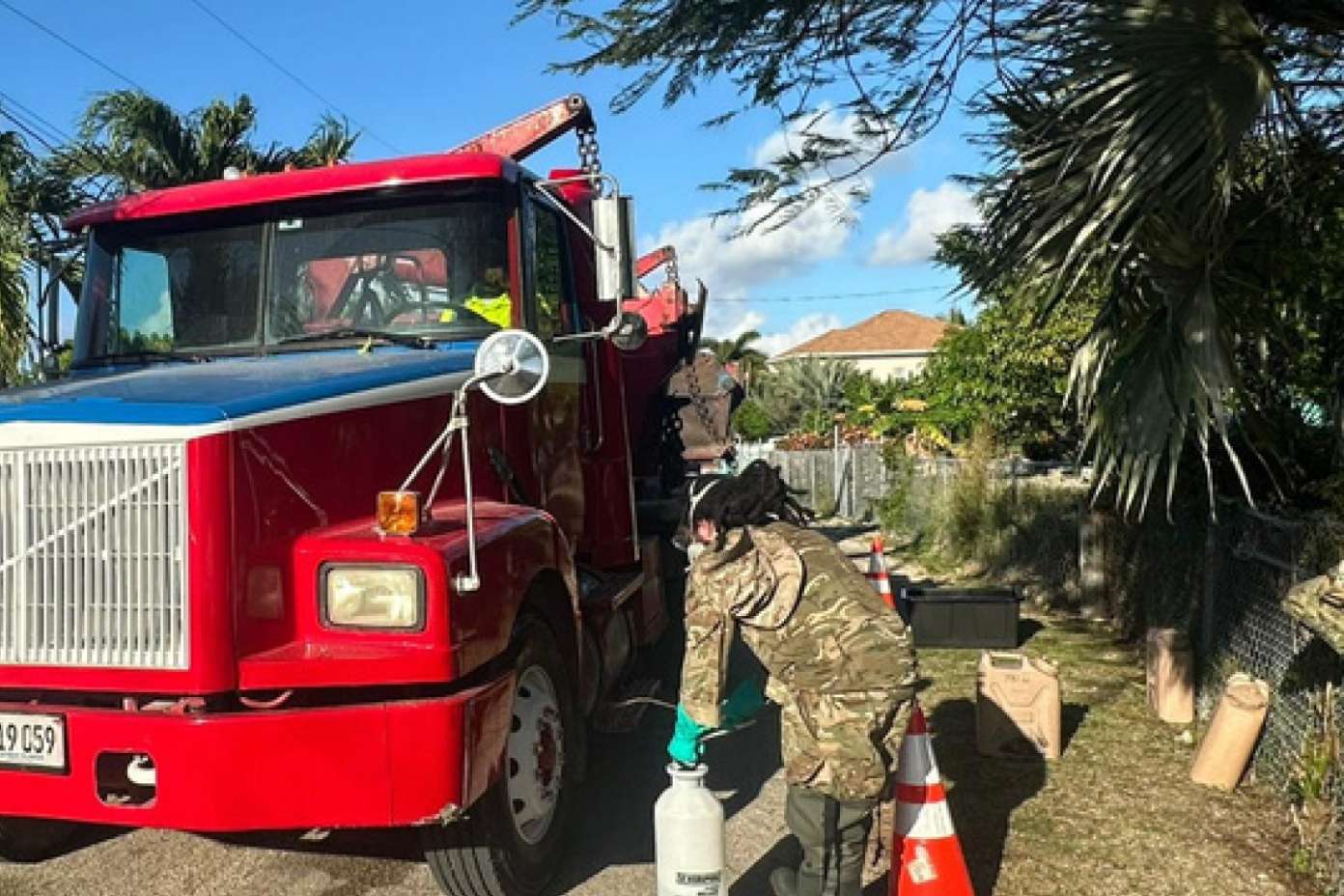
Drivers and pedestrians moving through parts of West Bay are now facing sanitisation checkpoints as Cayman Islands Regiment ramps up biosecurity following confirmation of H5N1 avian influenza at a single poultry farm on Cemetery Road.
In a community advisory issued on 3 Dec., the regiment said it has begun precautionary spraying of vehicles and screening of foot traffic near Genevieve Bodden Drive to help prevent any potential spread of the virus.
The move is described as a pre-emptive step driven by the close proximity of nearby residential poultry facilities. At designated checkpoints, vehicles are having tyres and wheel arches sprayed with a standard biosecurity-grade Clorox solution, while pedestrians may be directed through footwear disinfection mats.
Officials say the process is quick, with minimal disruption to traffic. Operations are running 24 hours a day, with extra personnel deployed during peak commuting times to keep delays to a minimum.
Authorities also stress the disinfectants in use are safe and pose no contamination risk and that regiment personnel are wearing protective gear as a further precaution.
The advisory emphasises there is no heightened threat to the public, noting that the infection risk to people remains low and that the measures are designed to keep it that way.
Inside the infected farm
Containment measures were put in place immediately after H5N1 avian influenza was confirmed on 28 Nov., following the discovery of several dead turkeys and the first confirmed infection in a chicken at a farm on Cemetery Road in West Bay.
Laboratory testing the following day identified seven more infected birds, prompting a multi-agency response to secure the site and stop further spread.
Senior Veterinary Officer Dr. Tiffany Chisholm said the farm has been placed under lockdown, with tight restrictions on access.
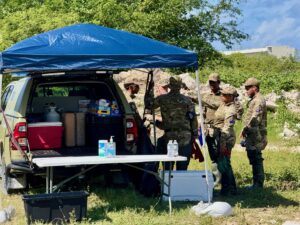
Anyone entering the property must wear full personal protective equipment, including bodysuits, masks, goggles, hair covers and waterproof boots, and on exit all protective gear is removed under a strict protocol, sealed in biohazard bags and collected by the Department of Environmental Health. Vehicles and footwear are disinfected on departure, and all exposed areas are sanitised.
Authorities have already disinfected the farm twice, removed all birds, emptied water sources and begun stripping the top layer of litter and coop material in line with international disease-control standards.
Chisholm said that because the virus does not survive long without a live host, the land is expected to be safe for re-entry after a 21-to-28-day period following depopulation.
All livestock on the property have been sampled, and while officials say there are no plans to remove any animals unless they test positive, monitoring is continuing as a precaution.
The outbreak is believed to have been introduced through migratory birds or chickens that came into contact with them, according to Chisholm. Further testing later detected the virus in chickens, quail, farmed ducks, a wild whistling duck and a goose at the same site.
All 69 birds on the farm have since been culled. No other farms have tested positive so far, and two additional locations are now under quarantine as testing and surveillance continue.
Related Videos









The price of jerk chicken going to become a real jerk.
Why they are not wearing full body protection suits?