

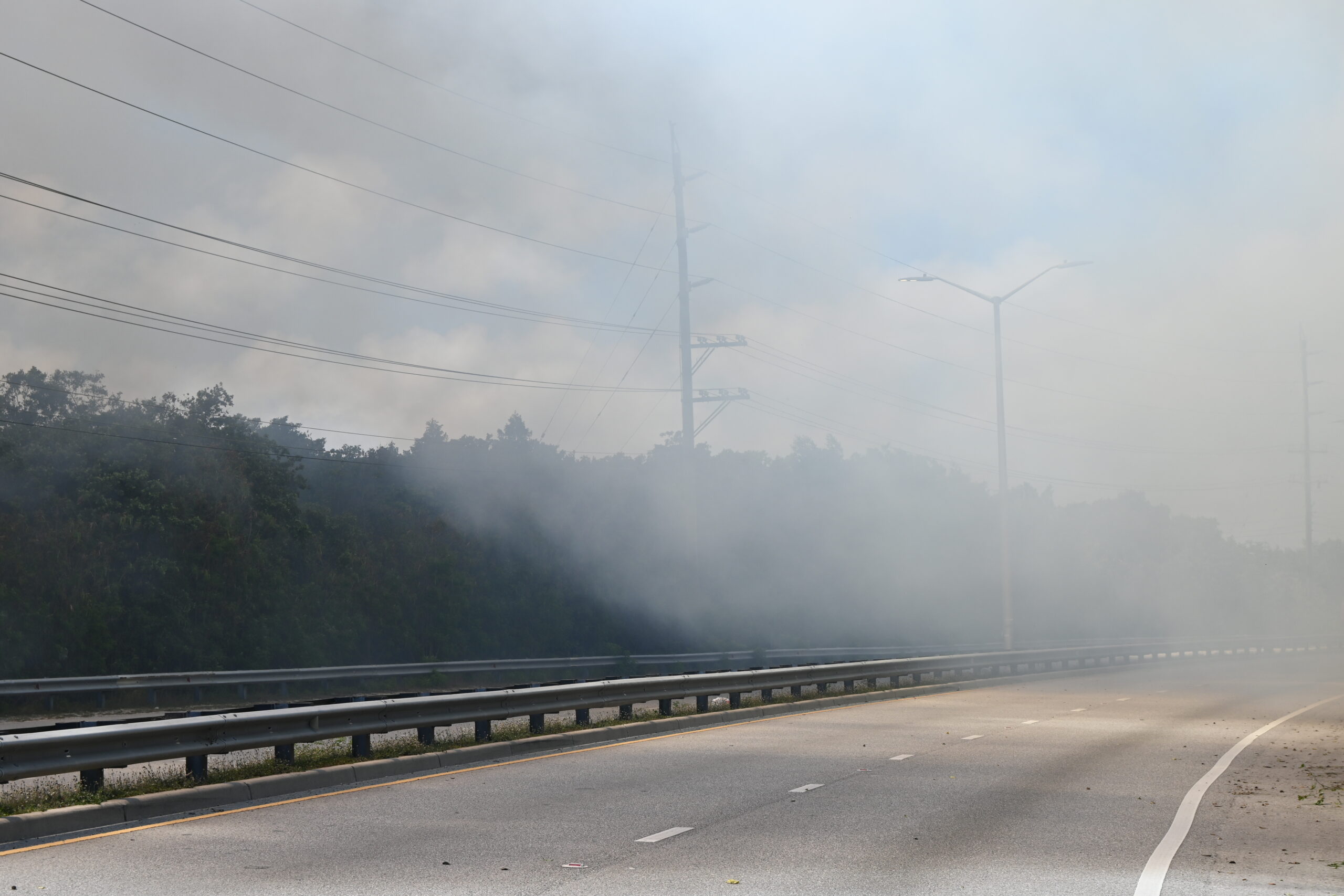
The government is set to carry out health checks in areas affected by clouds of smoke billowing from Cayman’s massive landfill fire.
Multi-agency teams will fan out across Grand Cayman from Friday as smoke continues to cause problems, despite the fire, which started on Thursday, being largely under control and smoke emissions were “moderate to light” as of 5pm Friday.
Dr Hilary Wolf, the chief medical officer, said, “Smoke from the landfill may affect air quality in surrounding communities.
“It is for this reason that we issued a public health advisory to provide the community with smoke exposure guidelines and why now multi-agency teams will also be conducting welfare checks in key communities impacted by the fire.
“We must ensure that residents can access care if they need it and at the very least know when and how to access medical help.”
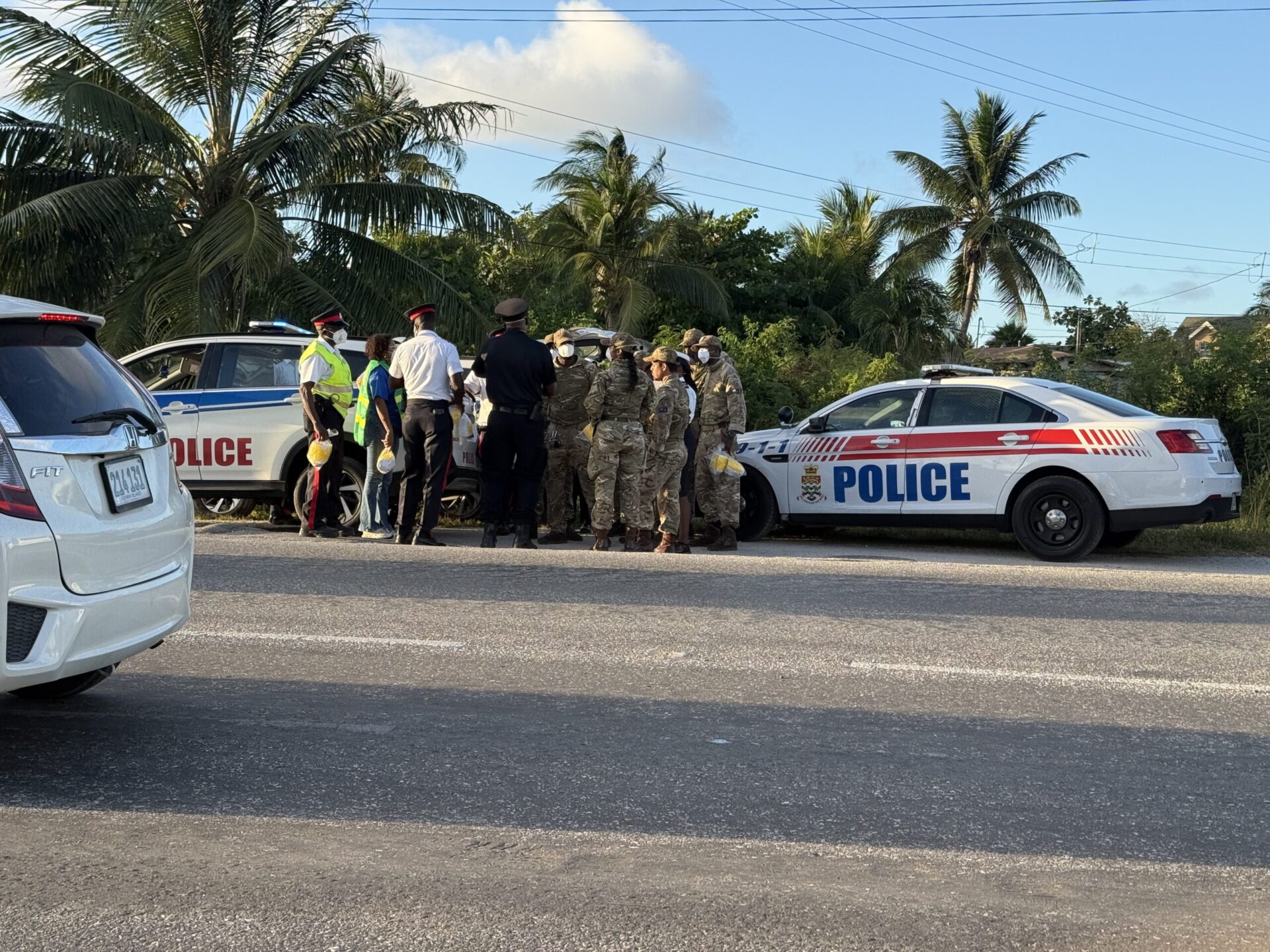
The teams will be staffed with personnel from the Health Services Authority, the police and the Cayman Islands Regiment.
Katherine Ebanks-Wilks, the minister responsible for health, said, “Our main priority is to ensure the welfare of our people, particularly those who were directly impacted by the fire.”
She added, “The health and well-being of our communities are paramount, and our responsibility does not end at issuing alerts and guidance.
“We have to be proactive in offering assistance where it may be needed.”
Health officials said the fire at the George Town landfill had now been “contained”, but people who had remained in smoke-affected areas overnight should “remain vigilant” and be alert for warning signs.
Warning symptoms
These include persistent shortness of breath or wheezing, chest pain or tightness, severe headaches, dizziness or vomiting, as well as confusion, unusual drowsiness or changes in behaviour.
Other symptoms include irritation of the eyes, nose or throat or coughing up dark or unusual sputum.
Dr. Samuel Williams-Rodriguez, medical officer of health, said, “Anyone who is experiencing any of the above-named symptoms should seek medical attention immediately.
“Particular care should be given to individuals with asthma, chronic obstructive pulmonary disease, heart disease, neurological conditions or other chronic conditions that weaken immune systems … .”
He added that children, seniors, pregnant women, those living alone or with restricted mobility were also among the vulnerable sectors of society.
Health officials said the teams will continue their work until all the most at-risk communities had been completed and the operation would be evaluated at the end of the day.
Officials added, “Educational and support materials will be distributed to ensure information is readily available.”
Anyone with health concerns can contact 949-8600 (Option 2) for further information.
But officials emphasised that anyone in an emergency situation should call 911 immediately.
Air quality checks
The Department of Environmental Health is also carrying out air quality testing in the worst affected areas.
Environmental health officials said, “Based on the readings, the ministry … will make determinations regarding public health advice or potential evacuation orders for residents.”
They added people in affected areas should stay indoors and keep windows and doors closed, set air conditioning to recirculate mode if available and reduce outdoor activity until conditions improve.
The announcements came as Governor Jane Owen and Nickolas DaCosta, the district administration and home affairs minister, praised the efforts of the fire service, police and other agencies for their response to the crisis.
Owen said, “I commend all our emergency responders and partner agencies for their continued dedication and professionalism in managing this incident.”
DaCosta highlighted the “swift and coordinated response” to the blaze.
He added, “Crews on the ground acted decisively to assess, contain and manage a highly complex situation, while also supporting members of the public and staff on site.”
Two fire officers had to be taken to hospital for medical evaluation during the night and government said that the safety and wellbeing of first responders remained a priority.
Both officers received medical evaluation and care, and their conditions were not considered life threatening at this time. One firefighter was treated for respiratory-related issues, including smoke inhalation and the other officer was treated for back pain and strain sustained during prolonged operations.
Related Videos











“Health officials said the fire at the George Town landfill had now been “contained”, but people who had remained in smoke-affected areas overnight should “remain vigilant” and be alert for warning signs.”
This advice is missing several specific, actionable components.
It lacks specific instructions on how to create “clean rooms” (e.g., sealing rooms with painters tape), the use of HEPA air filters, and the necessity of wearing N95 masks if venturing into smoke-heavy areas.
The advice does not provide real-time, localized data on particulate matter (PM2.5) or specific toxic chemicals (such as benzene or dioxins) being released by the fire, making it difficult for residents to measure the exact danger.
It fails to address potential chronic health impacts from long-term exposure to toxic ash and fumes, focusing only on immediate symptoms.
Contextual factor that are missing:
Detailed, real-time maps showing exactly which neighborhoods are most impacted based on current wind direction.
The situation involving the two fire officers hospitalized during the George Town landfill fire in April 2026 illustrates several critical aspects of occupational hazard rules and regulation compliance:
Smoke inhalation often indicates a failure in equipment (e.g., seal leak), late deployment, or premature removal during overhaul phases (assuming they were using Self-Contained Breathing Apparatuses). Department must conduct annual fit testing and training to ensure a proper seal and correct usage.
The officer treated for back pain and strain points to hazards associated with “tactical athletes” performing high-intensity work over extended periods.
Occupational hazard rules and regulation compliance requires mandatory rehabilitation (rest, rehydration, and medical monitoring) during prolonged operations to prevent fatigue-related injuries.
Sustained physical strain often results from inadequate staffing or a failure to implement proper rotation schedules, which are essential to mitigate musculoskeletal risks in demanding environments.