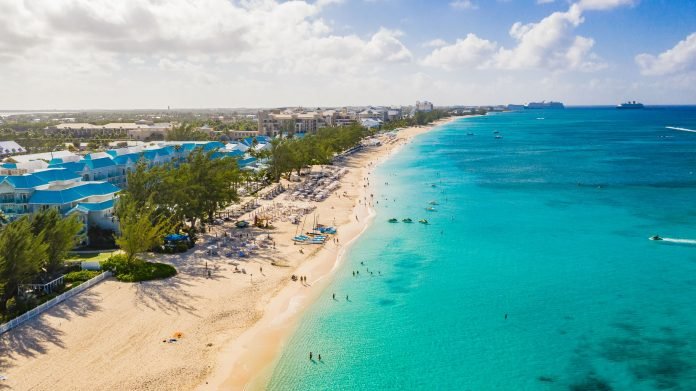
The Department of Environment has issued a sea itch advisory for Seven Mile Beach.
In a social media post on 8 Dec., the Department of Environment said, “There have been reports of jellyfish along Seven Mile Beach. When south-westerly winds occur, jellyfish traveling on offshore currents can be blown onshore. These appear to be thimble jellyfish larvae, which are known to cause sea itch when the larvae get trapped under swimwear.”
The advisory states, “Sea itch may cause skin irritation, itching or rash. Reactions may vary, and some individuals may experience stronger symptoms than others.”
According to the Department of Environment, if you do get sea itch, “Spray vinegar on the affected areas, and anti-sting / itch treatments may also be effective.”
Mark Orr, Department of Environment’s chief conservation officer, noted that the wind direction has now moved back round to the northeast and that “the easterly winds are expected to improve the situation for Seven Mile Beach”.
In the meantime, the environmental agency suggests that beachgoers should avoid jumping into a freshwater pool, or into a shower immediately after swimming, as the freshwater can worsen the irritation.
Swimmers are instead encouraged to use vinegar first to treat the issue, then take their bathing suit off before showering in freshwater, wash the swimwear off in hot water and then put it into a dryer to make sure all the larvae are gone.
Portuguese man o’ war sightings
Orr added there have been a couple of reports of the more unusual and hazardous Portuguese man o’ war – a marine organism often mistaken for jellyfish – in Cayman waters over the past few days. He encouraged watersports operators to be aware, and look out for them, because, he said, “if they make contact with skin they can deliver a nasty sting.
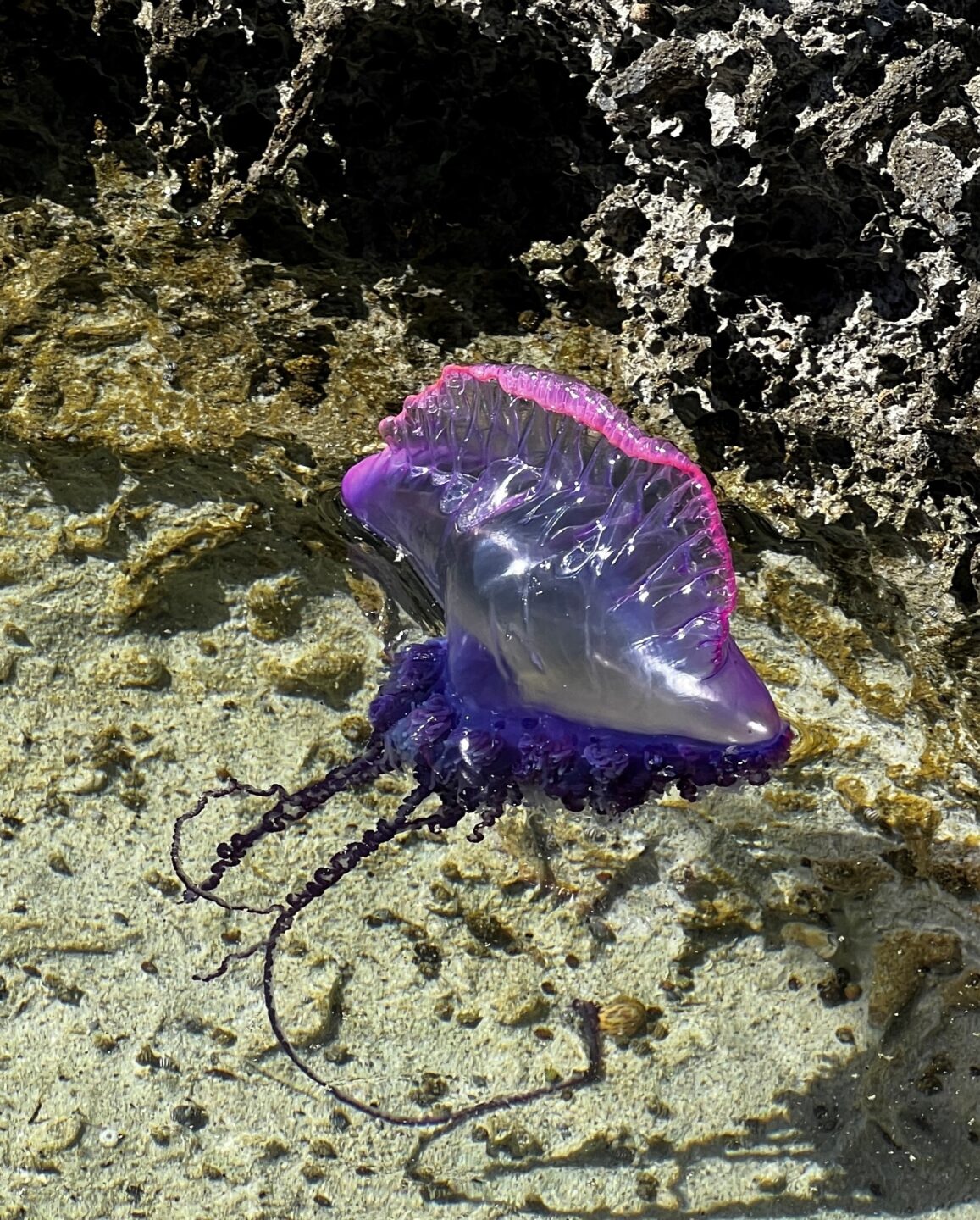
“They are not very common in Cayman waters, and they are usually visible on the surface because they have a purple or pink float. If you spot one of these, you should avoid diving or snorkelling in those specific locations.”
Orr added, “Our normal weather pattern and the wind direction is now returning to the typically easterlies, but between December and February, we sometimes see these creatures in our waters, and over the next few days people should keep an eye out off the north coast in particular, where there have been a couple of sightings,” he said.
Related Videos