


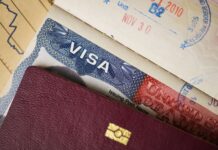
The H-1B visa, a gateway for global talent into the US workforce, is under growing strain as rising costs, tighter scrutiny and deepening uncertainty reshape who can work in America.
As the door narrows for Caymanian and other foreign professionals, industry players say the fallout may be redirecting jobs elsewhere, positioning Cayman as a beneficiary of a shifting global labour map.
US clampdown on skilled foreign labour
The US squeeze on foreign skilled labour has intensified since September, as new restrictions have made the H-1B visa process slower, more expensive and increasingly unpredictable.
Expanded background checks and mounting visa-stamping backlogs have increased the risk of refusal for new applicants and left existing H-1B holders reluctant to travel overseas. Media reports say Google and Apple have advised staff on H-1B visas against leaving the country over concerns of extended embassy delays.
That climate is now feeding through to jurisdictions positioning themselves as alternatives, including China, Canada and even Cayman.
“Historically, we’ve seen steady interest from companies affected by H-1B constraints,” said Sara Merino Ellis, senior manager of business development at TechCayman, which provides work permit and relocation services for technology and IP companies setting up in Cayman. “What has changed more recently is the scale, consistency and urgency of that interest following the increase in H-1B fees, which took effect in September 2025.”

That shift was formalised on 19 Sept., when the White House issued a proclamation stating that abuse of the H-1B programme had undermined US economic and national security.
Signed by US President Donald Trump, it ushered in a tougher regime that has made hiring skilled foreign workers both more restrictive and far more expensive, including a new US$100,000 fee for H-1B petitions, up from roughly US$2,000 to US$5,000 under the previous system – changes that could reshape how companies hire and where they base work.
“Unless there is a strong need for them to be in the US, they’re probably going to try to offshore [the roles],” said Britta Glennon, an assistant professor at the University of Pennsylvania’s Wharton School, citing research showing that when visa rules tighten, multinationals tend to move jobs abroad rather than hire more domestic workers.
That dynamic is being reinforced by tougher visa rules. Alongside sharply higher fees, the US has expanded vetting requirements, with guidance issued in December instructing consular officers to carry out more detailed reviews of applicants’ work histories and online presence.
A 2 Dec. memo directed officers to assess whether applicants had worked in areas such as content moderation, fact-checking, compliance or online safety, particularly in technology and financial services and to consider refusals where there was evidence of involvement in censorship of speech.
Since 15 Dec., mandatory social-media reviews have been extended to all H-1B applicants and their H-4 dependents, with applicants required to make profiles public. The United States Department of State has said it is using all available information to identify applicants who may pose national-security or public-safety risks.
In a more recent development, the H-1B programme, which has traditionally relied on a lottery, is set to shift to a weighted selection model that prioritises higher-skilled and higher-paid applicants, a change due to take effect on 27 Feb. 2026.
“One interesting unintended consequence may be that certain global experts may end up in jurisdictions outside the US,” said Tim O’Brien, managing director, North American Financial Institution Ratings at Morningstar DBRS, in an interview with Reuters.
Cayman as a viable alternative
Combined with reduced consular capacity and interview backlogs that in some locations stretch for months, the new changes have made the H-1B process slower and more uncertain.
By contrast, Cayman is positioning itself as an open, well-regulated base for offshore operations, as companies increasingly rethink where and how they build global teams.
In a recent blog post, Cayman Enterprise City emphasised the flexibility of its special economic zone model, noting that companies are free to recruit skilled employees globally.
“You are free to bring your own specialised skilled employees from anywhere in the world to work in your Cayman Islands office with no restrictions on the number of people you can place,” it said.
Work permits issued under its Special Economic Zone framework are treated differently from standard Cayman permits, with companies paying a flat annual fee per non-Caymanian employee rather than the tiered fee bands that apply elsewhere.
The organisation drew a direct contrast with the US system, stating: “Rest assured that there are no H-1B visa restrictions here and five-year renewable work/residency visas can be processed within five working days.”
It added that Cayman has “long had a reputation for openness and diversity,” urging firms affected by the US H-1B clampdown to consider relocating operations to the islands.
TechCayman said it offers a government-enabled pathway to expedited work permits, with approvals typically issued within 10 business days, while Charlie Kirkconnell, CEO of Cayman Enterprise City, said that its model “is designed to provide a globally competitive fast-tracked option, with the full set-up process completed within 4-6 weeks”.

Kaitlyn Elphinstone, chief marketing and strategy officer at Enterprise Cayman, said the organisation does not formally track whether companies are directly displaced by US H-1B policies, but positions Cayman as an option for building distributed international teams.
That framing is shared by Merino Ellis, who said Cayman is increasingly viewed as a complementary jurisdiction rather than a replacement.
“Cayman is positioned as a strategic, complementary option within global workforce planning, particularly for companies looking to build resilient, multi-jurisdiction teams alongside their US presence,” she said. “From our perspective, this also represents an opportunity to thoughtfully grow Cayman’s technology ecosystem over the long term.”
Merino Ellis explained that the appeal is driven by a mix of practical advantages, including Cayman’s alignment with US time zones, its regulatory credibility, strong connectivity and clear pathways for skilled workers.
When growth is structured carefully, she added, technology-led expansion can deliver broader local benefits, from skills transfer to new roles and opportunities for Caymanians, something she said is already evident across companies at different stages of growth.
A similar message was highlighted by Chris Morgan, global mobility manager at Cayman Enterprise City.
“Perhaps the greatest benefit to setting up offshore for those facing the H-1B issue is that it is no longer an issue in the Cayman Islands,” he said.
Analysts say the broader implication of “the H-1B issue” is a shift in the nature of work itself, as the United States becomes a less reliable option for building global teams.
Cayman is well placed to capture some of that fallout under specialised arrangements, such as those offered by entities like TechCayman and Cayman Enterprise City.
Industry providers emphasise that the opportunity is not about competing with the United States, but providing a competitive alternative.
“It’s about offering stability and opportunity for innovative companies, not competing with the US,” said Kirkconnell. “Our role is to provide globally focused projects with a platform for growth.”
Related Videos











I see an opportunity for those Caymanians with US citizenship (who have years’ experience and training in their field) to explore the US labour market. Who knows? This may be their chance to get the overseas’ experience local employers are always saying we need.
I know many of these privileged Caymanians that are US citizens and they don’t file taxes in the U.S. but are required to. They are scheming the U.S. system.
After what is happening in Minnesota in the U.S., I wonder if the US will look into this fraud.
I assume local employers will pay for their driving licences.
They better because most people coming here can’t afford it.
Some accounting firms here like Erine Young target Indians, and Asians in the U.S. whose visa isn’t getting renewed in the U.S. and tries to bring them to Cayman. This has been going on for years.
We don’t need more expats in Cayman though. Remember what the government has constantly been pushing the past few months. Along the lines of “get rid of all expats!”
These expats from the U.S. will go to Canada , Singapore, China , Dubai, Bermuda. Author can relax, I doubt they come to Cayman with how our government has been talking down on them and treating them. Plus they would have to buy a discrimination drivers license here.
And no downside. Be sure to enlarge your hospitals (no insurance), more free food handouts, don’t have to check social media or posts (the Iranians and North Koreans will be pleased) and $600 driver licenses, you betcha!
Sooooooooo how does this address the issues of housing costs, not enough housing, jobs for Caymanians etc. Interesting how this is an opportunity for Cayman to bring foreign employees to work from Cayman.
The Caymanians like our Immigration Minster Michael Myles profit off the backs of imported labor at places like Cayman Pickleball, so basically it is an opportunity for Caymanians to hire foreign labor and make money off them. These rich Caymanians then buy up the housing along with rich expats. These normal expats aren’t the ones buying houses, they struggle just affording a $600 drivers license and getting locked into jobs that are exploitative.
Instead of attempting to exploit for short term advantage the tightening of immigration systems into the US we might be better to adopt a strictly neutral policy on the matter, leaving our own entry requirements in place and doing nothing at this early stage to attempt to exploit the predictable blowup.
May I explain? The US is responding not to industry’s needs for innovation and research leadership but to the much more basic illegal immigrant problem it claims to have.
( I say “claims to have” because the reality is its entire economic structure would collapse without the six millions illegals Trump claims exist many of whom have lived and worked and paid US taxes for decades doing jobs no citizen wants.)
This program is a direct descendent of the US post war recruitment of German rocketry and space race talent, regardless of the scientist’s previous political ties.
We would have not got to the moon first without recruiting the head of the Nazi V2 rocketry — a man who but for his talents –would have been hanged as a war criminal for killing so many random British civilians in their homes after the war was lost.
What Trump has yet to figure out is human talent, highly trained talent, is a very, very scarce commodity and if you are about to divide the world up into political sphere’s of influence you best make sure your pool of that talent is not only deep but deep and consistently renewing.
The US doesn’t need barriers to talent it needs incentives and, right now, removal of its disincentives, or it will lose the race to the next metaphorical moon and with it, global power and influence.
So, watch and wait. Don’t try and outthink the White House, you can’t because they are not thinking they are reacting.
The 20 million illegals I wonder what percentage were rocket scientists? They are living off the US peoples taxes, and services just like they will do in the Caymans. They will keep their language, customs, culture and refuse to assimilate. You get terrorists not future Caymans.
Thank you for reading my comment and your thoughts, Greg.
I am not entirely sure I understand your point. Surely you are not suggesting people who travel from one country and live in another are terrorists because they continue to use their own language?
I note for instance there are rather a lot of Brits living on this small island and using English rather than any local language, but surely that doesn’t make us terrorists?
As to the notion that people who move to the US and end up doing all the rather grubby jobs Americans avoid like the plague are living off the US taxpayer, I am not sure that the US taxpayer does much for them at all.
They pay taxes deducted at source but they are entitled to zero benefits unless registered. One wonder if perhaps some industries in the US aren’t rather living off them rather than the other way round?