Note: This article originally appeared in Compass Media’s 2026 CayWoman special publication.
Following the 2025 Cayman Islands general election, there was a call to increase the number of women in Parliament.
A team of international observers from the Commonwealth Parliamentary Association highlighted that women – a little more than 49% of the population at the 2021 census – had about 26% representation in the group of MPs elected last April.
In their final report, the observers suggested that the Cayman Islands should consider the introduction of affirmative action measures to support the candidature of more women.
As well as political parties fielding women candidates for office, five women stood as independents in the election. In total, there were 19 female runners out of 58 candidates, with women taking five of the 19 seats in the House of Parliament.
Juliana O’Connor-Connolly, Katherine Ebanks-Wilks and Heather Bodden were returned to the House, while Pearlina McGaw-Lumsden and Julie Hunter were elected for the first time.
Commonwealth women parliamentarians branch launch
In a step towards increasing female representation, 6 March saw the launch of the Commonwealth Women Parliamentarians (CWP) – Cayman Islands Branch.
Commonwealth Women Parliamentarians is a global network of women members of the Commonwealth Parliamentary Association Parliaments and Legislatures.
The network works to build the capacity of women elected to parliament, promote gender-inclusive legislative practices, and support parliament in becoming gender-sensitive institutions. It also encourages the full and equal participation of women at all levels of political and parliamentary leadership.
The Cayman Islands branch will work in close collaboration with the wider organisation and its networks across the Commonwealth to deliver training, mentorship, and knowledge-sharing initiatives that support women in public service and legislative leadership.
“The launch of the CWP Cayman Islands Branch marks a milestone in empowering women leaders and strengthening representative democracy in our jurisdiction,” said Ebanks-Wilks, member of the regional CWP steering committee. “By establishing this branch, we reaffirm our commitment to fostering an inclusive parliamentary culture that supports women’s voices, advances gender-responsive policy, and inspires future generations.”
Recent experiencs
Here, CayWoman talks to McGaw-Lumsden and Hunter about their experiences of running for election in 2025, including societal, familial and economic considerations.
Donna Bush, who ran unsuccessfully, also gives her views on the challenges of campaigning, and the importance of female representation.
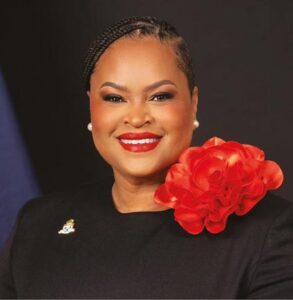
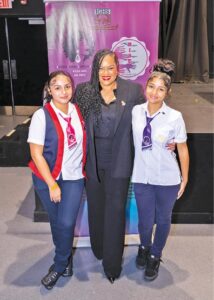
Pearlina McGaw-Lumsden
People’s Progressive Movement Deputy Speaker and Member of Parliament for George Town West
Why do you think it is important to have women in government?
Photos: Submitted.
I truly believe that true representation cannot exist without women in government. Women bring lived-experiences and perspectives that are essential when shaping policies that affect families, communities, and society as a whole. Their presence in leadership allows for greater understanding of social and economic issues and ensures a more balanced and inclusive approach to decision-making.
Why, personally, did you decide to run for office?
I decided to run for office because I wanted to help my fellow Caymanians. Coming from a background that was not particularly privileged, I experienced, first-hand, how government decisions and public policy can directly impact people’s lives. Those experiences shaped my understanding of the importance of representation, fairness, and accountability, and ultimately motivated me to step forward and serve.
What did you do prior to running for office and being elected?
Before entering politics, I served as the director and managing partner of Cayman Business Consulting.
Once you had thrown your hat in the ring, how did it unfold from there?
Running for office is often misunderstood – it is neither easy nor straightforward. In addition to the physical demands, there is significant financial pressure. Candidates must raise funds, whether running independently or as part of a party, while also managing campaign expenses.
Beyond fundraising, campaigning involves preparing for debates and media interviews, maintaining a strong and consistent social media presence, organising rallies and community meetings, and developing clear messaging and speeches. All of this often happens while balancing full-time work and personal responsibilities. It requires discipline, resilience and a genuine commitment to public service.
When canvassing in person around the constituency, did you find any particular prejudices or encouragement because you were a woman?
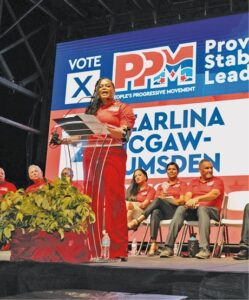
To some extent, yes. There were individuals who expressed the belief that women do not belong in politics. However, I also experienced strong encouragement and support. I believe attitudes are changing, and more people are recognising the value women bring to leadership and governance.
Do you think, as a female candidate, you were able to offer insights that perhaps a male candidate might not be aware of?
Yes. Women often bring a different perspective shaped by lived experiences, particularly around issues such as family life, healthcare, education, and social services. These insights help ensure that policies are more inclusive and reflective of the realities faced by a broad cross-section of the population.
Do you think it is harder for a woman to run for office than a man, and if so, why?
Yes, absolutely. Women often face greater scrutiny, higher expectations, and more personal criticism than their male counterparts. Balancing professional, family, and community responsibilities can also present additional challenges. Despite these barriers, many women continue to step forward and lead effectively.
What would help to overcome these barriers?
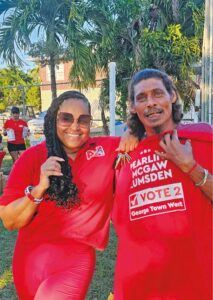
Education, mentorship, and strong support networks are key. Encouraging women from an early age to engage in leadership, and providing support from those already in positions of influence, can help break down barriers and build confidence.
What are your thoughts on the Commonwealth Parliamentary Association’s call for affirmative action to increase the number of women in Parliament?
I support efforts that encourage greater female representation in Parliament. Increasing the number of women in decision-making roles strengthens democracy and ensures that diverse perspectives are reflected in policy development.
Do you have any ideas on how this could be achieved?
This could be achieved through targeted leadership programmes, mentorship initiatives, political training for women, and encouraging parties to actively support and promote female candidates. Creating an environment where women feel empowered to run is essential.
Now that you are elected, how does it feel and what are you enjoying about your role so far?
It is both humbling and rewarding. I am most enjoying the opportunity to advocate for my constituents, contribute to meaningful discussions, and play a role in shaping policies that positively impact our country.
What would be your advice to women thinking of running for office in the future?
Believe in your abilities and do not be discouraged by challenges or criticism. Seek support, stay informed, and remain focused on why you want to serve. Your voice and perspective matter, and leadership needs women at the table. Women in leadership contribute to stronger, more inclusive decision-making. Their presence encourages collaboration, empathy, and balance – qualities that are essential in governance. When women lead, they not only influence policy but also inspire future generations to see leadership as attainable.
Julie Hunter
Cayman Islands National Party Parliamentary Secretary, and Member of Parliament for West Bay West
Why do you think it is important to have women in government?
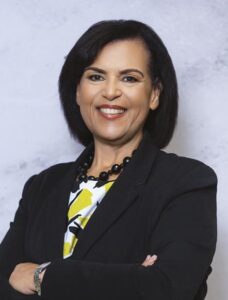
In the history of Cayman’s Legislature, we have only had 14 females successfully elected to office and this can be perceived as an indictment to the people of the Cayman Islands.
The majority of our women parliamentarians have served us very well and have been very effective. Men often come with a different agenda from women, and women see things in a much different light, thus the reason why issues of importance to children, family and women are usually addressed by our women parliamentarians.
For those that do not know, or might be considering the idea, how did you go about running?
Once I had prayed about it and felt clear that I was going to offer myself as a candidate, I conferred with key mentors within the district and then formed a core base, that supported my decision to put myself forward. Once I felt confident in my decision, I wanted to approach my declaration with uniqueness and authenticity, so I crafted a very intimate verbal message to the people via social media. I then registered as a candidate through the elections office and paid the required $1,000 deposit.
From a personal and family perspective, what were the factors you had to take into consideration while thinking about running?
I had to consider family support, but that was the easy part, as my family has always supported me in anything that I have undertaken… I knew that they would fully support me in this endeavour as well. The public scrutiny and possible criticisms were a consideration factor, but just like I ran my campaign with integrity, I knew I had lived my life with integrity, so that was not an issue.
When canvassing in person around the constituency, did you find any particular prejudice, or encouragement, because you were a woman?
Because I was a woman, I was strongly encouraged, as the constituency was ready for a change.
Do you think, as a female candidate, you were able to offer insights that perhaps a male candidate might not be aware of?
Yes, compassion.
Do you think it is harder for a woman to run for office than a man, and if so, why?
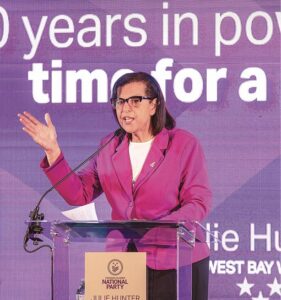
Yes, it is harder because women are not as readily accepted for high office as a man; for instance, Hilary Clinton and Kamala Harris.
What would help to overcome these barriers?
More females taking that courageous leap to put themselves forward, would break that trend of perceived masculinity.
What are your thoughts on the Commonwealth Parliamentary Association’s call for affirmative action to increase the number of women in Parliament?
I do agree with the CPA call for more women parliamentarians.
Do you have any suggestions as to how this could be achieved?
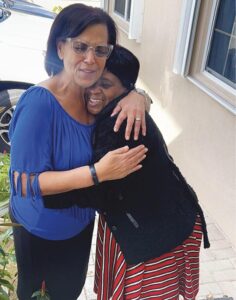
A public campaign prior to the election cycle on the benefits of females in parliament. More funding specially for women legislators as funding is an issue. Implementation of a female Caucus which has been strongly advocated for by former Member of Parliament, Ms. Lucille Seymour.
Now that you are elected, how does it feel and what are you enjoying about your role so far?
Now that I am elected, it is still a bit surreal, knowing that I had planned to retire after my 35-year banking career. I am enjoying being able to drive West Bay‘s infrastructural upgrades as Parliamentary Secretary for Infrastructure, connect with my constituents, and provide support to them.
What would be your advice to women thinking of running for office in the future?
Just do it. Don’t second guess yourself and always be bold in your endeavours and in making your voice known.
Anything else you think may be relevant or would like to add?
The experience of knocking on doors and connecting with my community was such a nice motivator to get up the next morning and do it all over again.
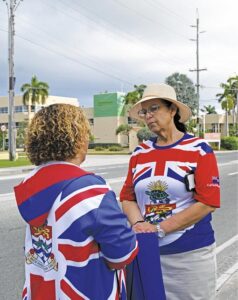
Donna Bush
Constituency in which campaigned: Savannah. Party represented: People’s Progressive Movement
Why is it important to have women in government?
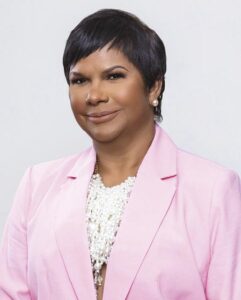
Women bring perspectives shaped by our lived experiences such as caregiving, healthcare decisions, household economics, education, and life in general. These are not abstract issues; they are daily realities. When women are part of government, policy becomes more balanced, more grounded, and more reflective of the people it is meant to serve. Representation matters, not symbolically, but practically.
Why did you decide to run for office?
After decades of working in media and public communication, I had spent my career asking the questions and telling the stories. At some point, I realised that if I truly believed in service and change, I had to be willing to step forward myself. My decision was not driven by politics, but by purpose, by a desire to serve directly and contribute in another meaningful way.
What did you have to do in order to run?
Running required significant personal and professional sacrifice. I made the difficult decision to give up my job in order to campaign fully and ethically. A national campaign demands total commitment, and I believed it deserved nothing less. It was a leap of faith, one taken with intention, but it also came with real consequences once the campaign ended.
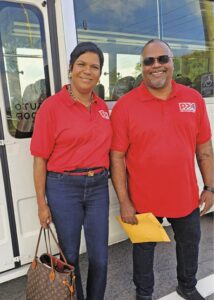
Did you experience any prejudice or encouragement while canvassing because you were a woman?
I experienced a great deal of encouragement, from many people from all walks of life and particularly women who were grateful to see themselves represented. At the same time, there were quieter, more subtle moments and questions because I declared my candidacy late. These weren’t always spoken directly, but they were felt. Still, the support outweighed the doubt.
Did you offer insights that a male candidate might not have been aware of?
Yes. My perspective was shaped by lived experiences such as the loss of my son, who I had many conversations with about politics and the direction in which our home was headed in; raising children as a single parent; navigating career transitions; caring for family; and balancing professional and personal responsibility. These experiences inform how I view policy and leadership. They allow me to see beyond statistics and into real lives, which I believe strengthens decision-making.
Is it harder for women to run for office than men?
In many ways, yes. Women often face greater scrutiny, higher expectations, and fewer safety nets. The financial risk can be significant, particularly when stepping away from secure employment to campaign, with no guarantee of success or re-entry afterwards. The personal cost is real.
What would help overcome these barriers?
Stronger institutional support, mentorship, and practical protections such as job security or transition support after elections would make a meaningful difference. Cultural change is also essential. Leadership should not be seen as an exception for women, but as a natural extension of their contribution to our society.
What are your thoughts on the Commonwealth Parliamentary Association’s call for affirmative action to increase women’s representation?
I support the intent. Affirmative action is not about lowering standards; it is about correcting long-standing imbalances. When systems have historically excluded women, intentional action is necessary to create fairness and access.
How could this be achieved in practice?
Through candidate development programmes, financial support for women candidates, leadership training, and clear commitments from parties to field more women. Visibility matters when women see other women leading, it reshapes what feels possible. Nineteen women, the most in our history, ran in the political sphere in 2025. Only five were elected, but women make up the largest number of voters. There is something wrong with the picture.
What were your key takeaways from the campaign?
The experience deepened my connection to my community and reinforced my belief in service to our country. I gained invaluable insight into the hopes and concerns of the people, and I learned the courage it takes to stand publicly for one’s convictions. That lesson remains, regardless of the outcome.
What advice would you give to women considering a run for office?
Prepare thoroughly, build a strong support system, and understand the personal and financial realities involved. Most importantly, do not wait to feel ‘ready’. I decided after being encouraged for several political seasons to run for what was a very short campaign because I believe leadership grows through action, not perfection.
Anything else you would like to add?
One of the less discussed realities of campaigning is what happens afterwards, particularly when you do not win. The financial impact, and challenge of re-entering the workforce are significant and often overlooked. Yet despite those challenges, I do not regret running. Democracy is strengthened when citizens are willing to step forward, and I am happy to have done so.
Related Videos