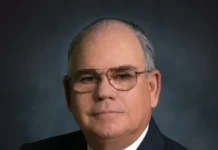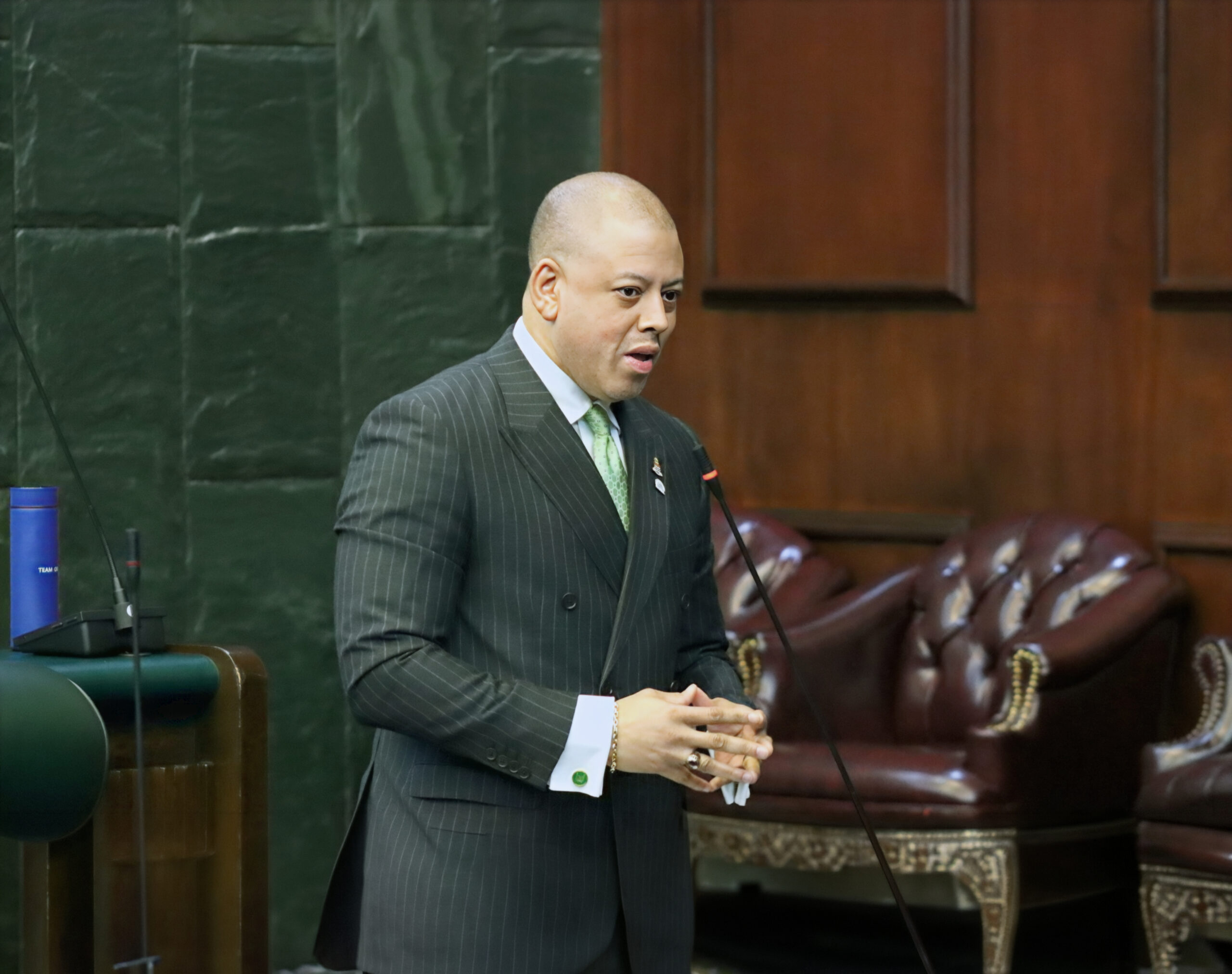
Following a government motion passed in Parliament this week, Premier André Ebanks said Cayman will stick with a beneficial ownership register open only to those with a legitimate interest, despite UK pressure.
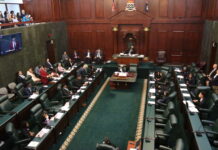
On 10 March, Cayman’s Parliament approved the motion to update the fees charged to ‘legitimate interests’ seeking to access the jurisdiction’s beneficial ownership register.
While the motion called for a relative minor amendment to the fee structure for those wishing access to the beneficial ownership register, it involves one of Cayman’s most important pieces of financial legislation.
The Beneficial Ownership Transparency (Legitimate Interest Access) (Amendment) Regulations 2026 incorporated input from the UK regarding the fees that Cayman should charge for access to the register. It introduced a $250 annual fee for people with a legitimate interest – defined as journalists, civil society organisations, financial crime investigators or potential business counterparties – to make multiple searches during a year.
The amendment also raised the cost of a single search from $30 to $75, which the government said was to cover the administration cost.
That change was in response to a UK call for the information in the beneficial ownership register to be more accessible. But, while the government was willing to make small adjustments to the legislation, the premier, supported by MPs from across Cayman’s political spectrum, made it clear that Cayman would not bow to UK pressure for a fully open ‘Google-style’ register that anyone can access.
“It is important that we stand firm,” said Leader of the Opposition Joey Hew, speaking in support of the motion presented by the premier to Parliament. “We are well advanced in our standards, well ahead of the FATF [Financial Action Task Force] requirements,” said Hew.
In an interview with the Cayman Compass on 11 March, Ebanks promised that – minor tweaks notwithstanding – Cayman would continue with its legitimate-interest-style of register “for the foreseeable future”.
“There is a growing body of evidence that this [legitimate interest] will be the standard,” said Ebanks. “Even FATF, which is who really grades us, hasn’t adopted this yet, so we’re ahead.”
With a FATF re-evaluation looming in 2027, Ebanks believes Cayman now has other regulatory priorities.
“Why risk a move to a complete Google-search-style register … when there are a whole plethora of standards that we still have to hit for the FATF examination?”
The UK relationship
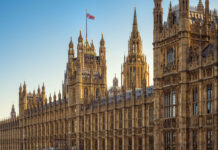
That stands in marked contrast to UK demands for Cayman to move to a fully open public register. In January, UK Minister of State for the Overseas Territories, Stephen Doughty, told Parliament in London that the UK will “continue to pursue” Cayman’s transition to a fully open public register.
In the interview with the Compass, Ebanks acknowledged the UK position but remained adamant that Cayman would stick with its register unless the UK’s preferred system became “a global standard”.
Ebanks was also confident that Cayman could defend its position legally.
“Our constitution is substantially similar to the European Convention on Human Rights,” the premier said.
Referencing the landmark European Court of Human Rights ruling that Luxembourg’s fully open register violated individuals’ right to privacy, Ebanks noted that “our counsel believes it is more than likely that [Cayman’s] Grand Court would arrive at the same decision”.
Given the difference between the UK and Cayman positions, Ebanks is keen to change opinions in Westminster. “There are a number of UK MPs that might not even be aware that investment funds are our primary business,” he said. “They still view us, like many other jurisdictions in the ’70s, ’80s and ’90s, as places that held cash or assets that were off the books.”
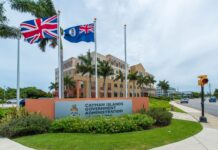
Ebanks, who previously served in the Cayman Islands Government Office in London, believes that Cayman has to engage with international stakeholders that hold negative views about the jurisdiction. “We made the decision to testify at one of the subcommittee meetings at the EU Parliament … and just as I sat in the EU Parliament, I’m happy to go to a House of Commons Select Committee and explain our system,” he said.
Why it matters
The amendments to the regulations approved in Parliament on 10 March are the latest in a long string of beneficial ownership laws, regulations and amendments passed since Cayman first centralised its register in 2015.
Yet, during its parliamentary approval, members made clear that this is an essential issue for everyone on the islands.
“Financial services, being such a huge part of our economy … it is paramount that we protect the rights and privacy of our clients and those who use the Cayman Islands,” said Hew in Parliament.
Expressing widely held fears that, if Cayman adopts a fully open register, it may lose business to other jurisdictions, Hew said, “It’s time that we stop leading now and allow the rest of the world, our competitors to catch up.”
The new regulations passed with all present in favour, apart from one abstention from Chris Saunders, the independent MP for Bodden Town West.
“I normally vote no, so it says a lot that I only abstained this time,” said Saunders in a 10 March interview.
“We are already far ahead of most jurisdictions. Around 95% of our financial services business is American, and maybe only 3% comes from Europe. At the same time, we are losing business to places like Delaware, Wyoming and South Dakota, so we have to protect our financial services industry.”
With recent figures showing that financial services account for approximately 60% of Cayman’s GDP and two-thirds of government revenue, Saunders believes this is an issue that impacts his voters.
“My job, first and foremost, is to protect the Caymanian people and the Cayman economy, and our bread and butter is still financial services,” he said.
Related Videos