

The 2026 sargassum season is already building at an unusually early pace, with scientists warning that the Caribbean could be heading toward another major, and potentially record-breaking, year.
Satellite monitoring systems run by the University of South Florida, in collaboration with the US National Oceanic and Atmospheric Administration, show that sargassum levels across much of the Atlantic and Caribbean were already at record highs for January, February and March – a pattern that typically signals a heavy season ahead.
Data from the University of South Florida’s Sargassum Watch System show that the algae has continued to expand and drift westward in recent months, forming large, distinct masses across the eastern Atlantic, western Atlantic and the Caribbean.
“Except for the Eastern Atlantic region, every region continued to see record-high sargassum amount for the month of March,” researchers said in their 31 March update, adding that 2026 is “set to be another major sargassum year (i.e., sargassum amount exceeds 75% of the historical values), and likely to be a record year by summer 2026”.
Early signs already visible across the region
In the Caribbean, the season has already started earlier than usual.
In Mexico, sargassum began washing ashore in the second week of January – weeks ahead of typical seasonal patterns. By February, 244 tonnes had been collected in Tulum, compared with just 59 tonnes during the same period in 2025, according to industry data reported by Mexican media.
“This year is going to be terrible,” Rosa Rodríguez, a researcher at the National Autonomous University of Mexico, told local outlets.
Satellite observations cited in reports from the University of South Florida show 9.5 million tonnes of sargassum present in the Atlantic in January, rising to 13.6 million tonnes in February and climbing to 19.1 million tonnes at the end of March, far exceeding previous records for those months.
Because the seaweed is carried by currents and wind, even a fraction of that mass reaching shorelines can result in significant beaching events.
What this means for Cayman
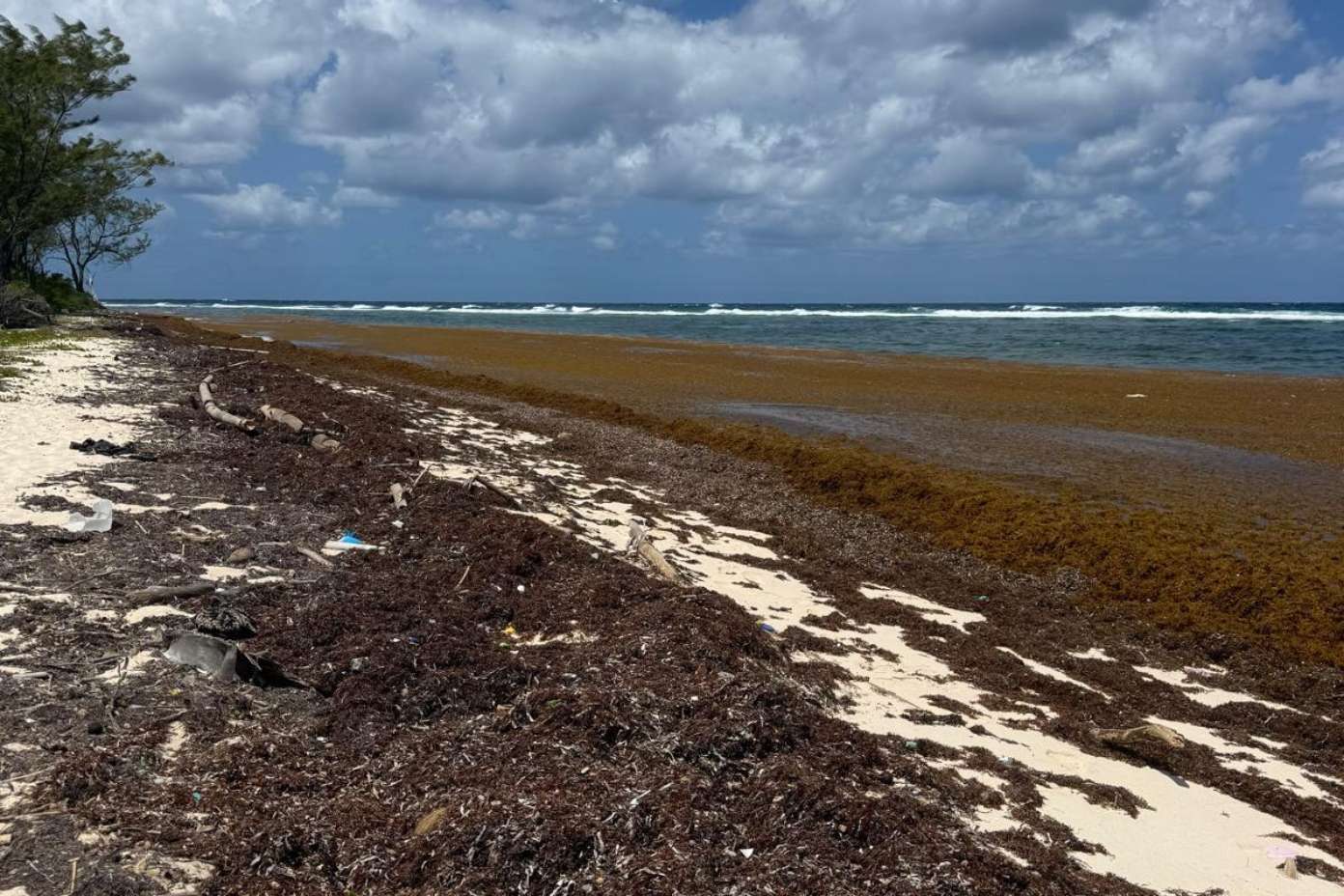
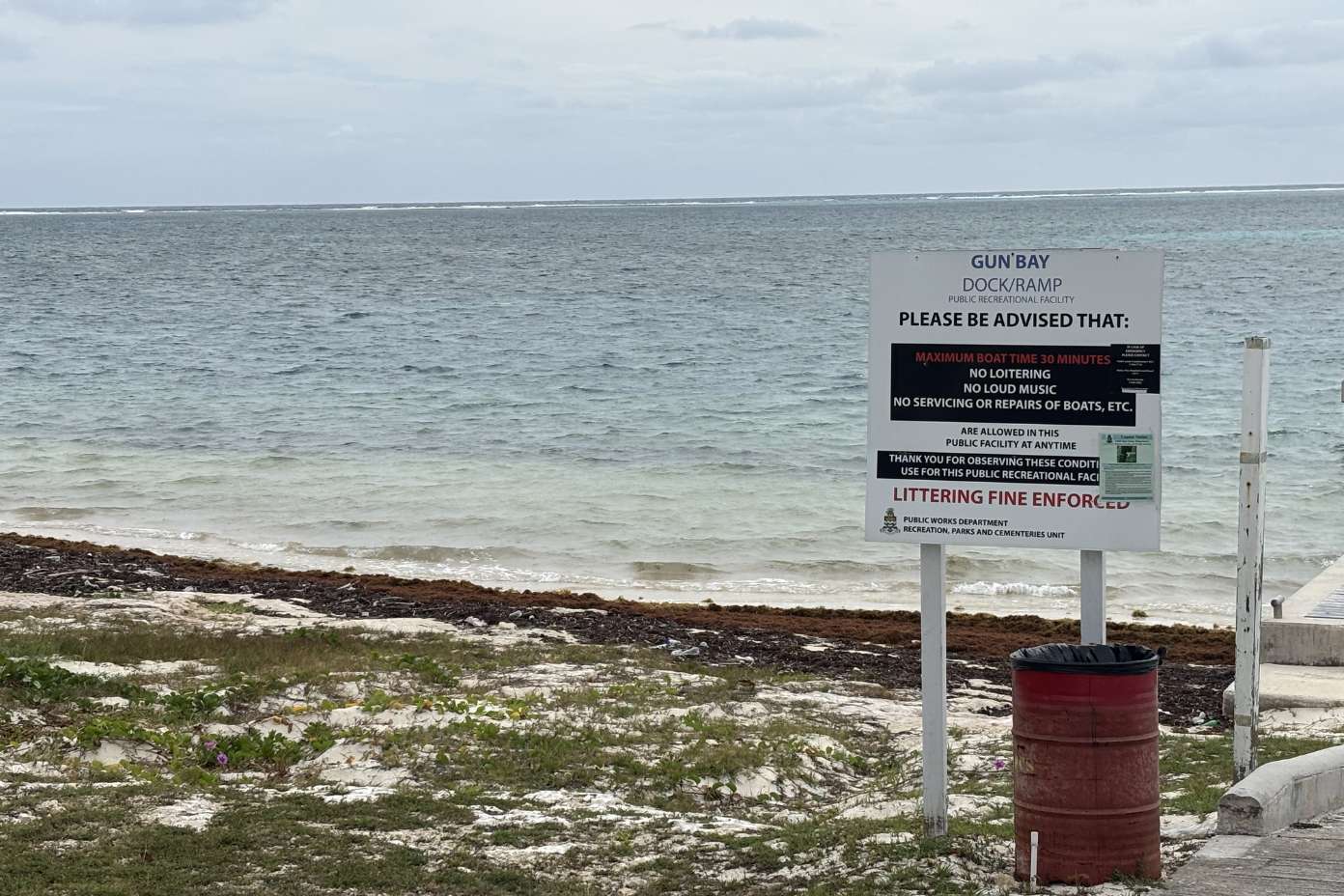
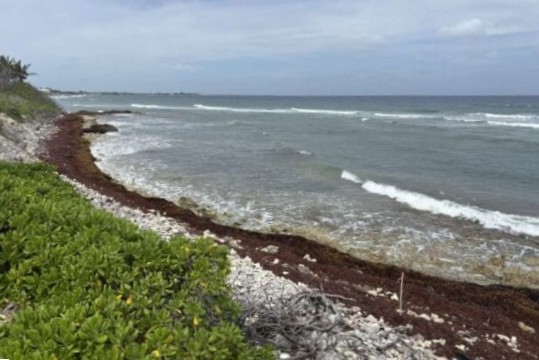
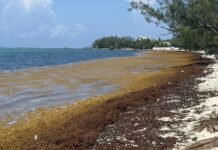
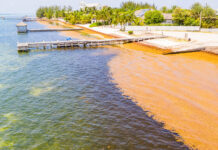
Observations by the Cayman Compass in late March show early sargassum already building up along Grand Cayman’s eastern coastline, reflecting regional forecasts that point to a heavy season ahead.
Notably, these accumulations are occurring weeks ahead of the traditional peak period, which typically begins in May.
However, because Seven Mile Beach faces west, Cayman’s leeward side, it has not had any sargassum accumulations as of yet and likely will not unless a weather system were to bring westerly winds towards Grand Cayman.
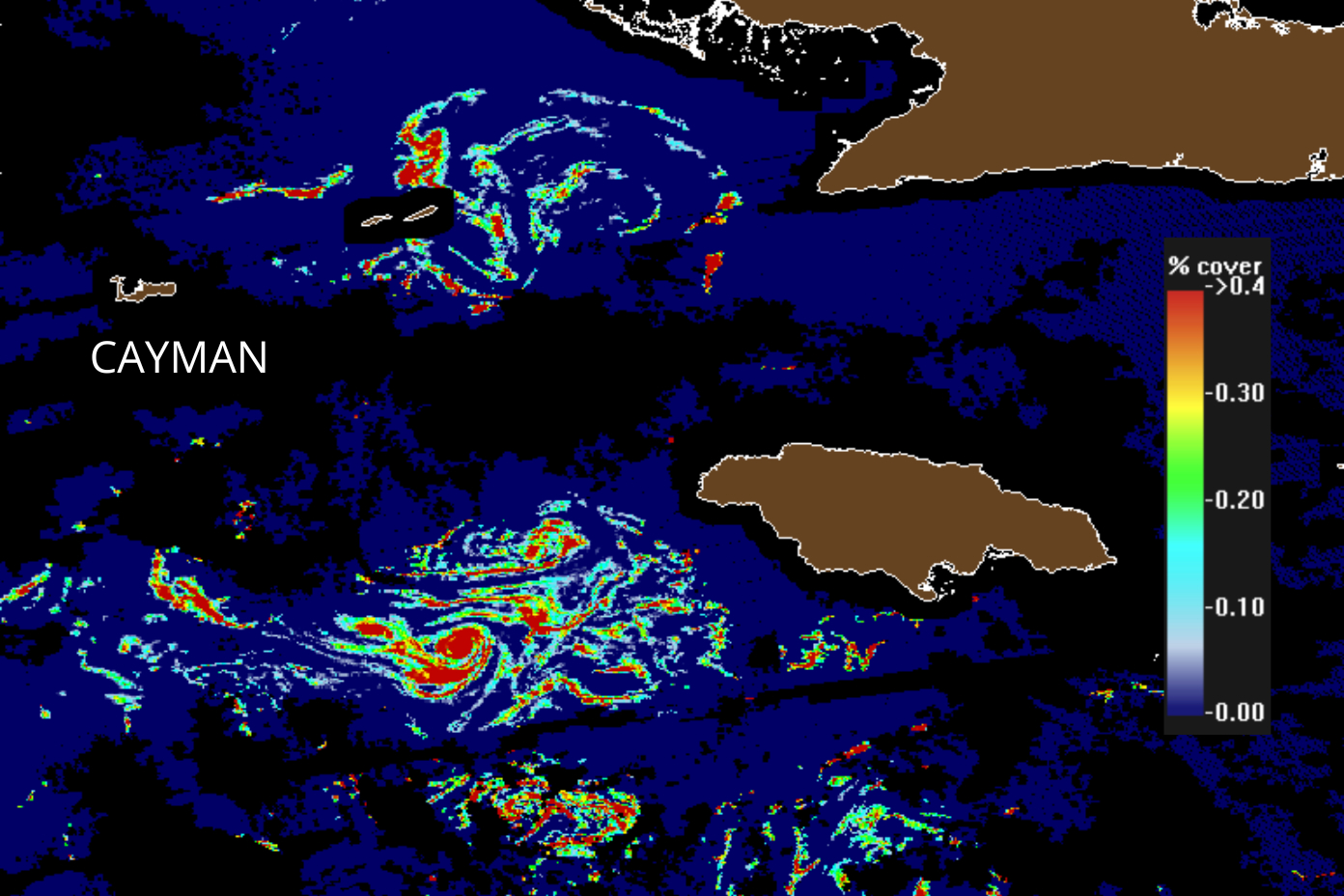
Satellite imagery from late March shows the Cayman Islands sitting in what appears, for now, to be a relative pocket of low sargassum concentration. Data from NOAA and the University of South Florida’s Sargassum Watch System indicate that waters immediately surrounding the islands remain largely clear, with only scattered, low-density patches.
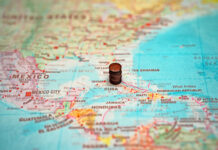
The same imagery reveals more dense systems across the wider Caribbean.
Sargassum moves with ocean currents and wind patterns, and large blooms typically migrate westward over time, placing the western Caribbean, including Cayman, at increasing risk as the season progresses.
A problem growing in scale
The current outlook builds on a trend that has intensified over the past decade.
The frequency, scale and geographic spread of sargassum blooms in the Caribbean have been rising since 2011, driven by a combination of ocean warming, nutrient inputs and shifting currents.
In 2025, the region experienced its most severe year on record. By July, more than 37.5 million tonnes of sargassum had accumulated across the Atlantic-Caribbean system, based on satellite observations from the Copernicus Sentinel-3 mission.
That was roughly 70% higher than the previous record set in 2022 and several times larger than major influxes earlier in the decade.
Related Videos










Those folks that are paid to measure, accumulate data, pay to do the numbers of Sargassum in the oceans, should at this juncture have come up with a plan of either collecting and recycling, or disposing it in a way that would not disrupt the eco system further. There is always a way. It’s unacceptable that creative minds haven’t taken action by now, unless of course you don’t care about your beautiful beaches, and the impact on tourism. Good luck
This is good news it makes fertilizer .. why not use it???
If anyone has suggestions for using/disposing Sargassum, please comment.
1. Agriculture and Gardening
Fertilizer and Soil Amendment: It is rich in potassium (up to 8% in wet weight) and other minerals, making it an excellent organic fertilizer when washed to remove salt.
Compost and Mulch: It is used as a nitrogen-rich composting material, helping improve soil aeration and water retention.
2. Construction and Materials
“Sar-Blocks” (Eco-Bricks): Dried sargassum is ground into a powder, mixed with organic material, and turned into durable, lightweight bricks for building homes.
Bioplastics and Packaging: Seaweed polymers are extracted to create biodegradable food packaging, containers, and disposable items.
3. Industry and Environmental Applications
Biofuel/Biogas: Through anaerobic fermentation, sargassum can be converted into methane gas (biogas), used to fuel vehicles.
Cosmetics and Skincare: Its antioxidants and polysaccharides are used to create natural emulsifiers (SeaBalance) for lotions and creams.
Water Treatment (Biosorption): Due to its high absorption capacity, processed sargassum can be used to remove heavy metals and pollutants from wastewater.
Erosion Control: Compacted bales of seaweed are used to stabilize sandy beaches and build up natural sand dunes.
4. Other Uses
Animal Feed Supplement: It has potential as an alternative ingredient in livestock feed, although its high salt and potential heavy metal content (arsenic) require careful treatment.
Important Considerations
Safety Warning: Sargassum can accumulate heavy metals like arsenic, especially if collected after it has begun to rot on the beach. It is highly recommended to wash it thoroughly with fresh water before using it in gardens and to avoid eating it unless it is tested and verified safe.
Harvesting Best Practice: It is best harvested directly from the water or immediately after landing, as it decomposes quickly (approx. 48 hours), releasing toxic hydrogen sulfide gas, which causes respiratory problems and has a bad odor.
There must be a way of collecting the Sargassum, washing, treating to remove the arsenic, and then using it as Belinda D. stated. Do something with, not just research it, provide data, studies, talk, more data, blah, blah, blah. Get on it already, before it turns into blobs and consumes everything. Cayman has too much to lose.