A month-long scientific expedition in Cayman waters is providing new insights into one of the least understood marine environments: the mesophotic reef ecosystem, the transition zone between shallow coral reefs and the deep sea.
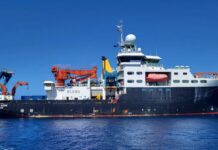
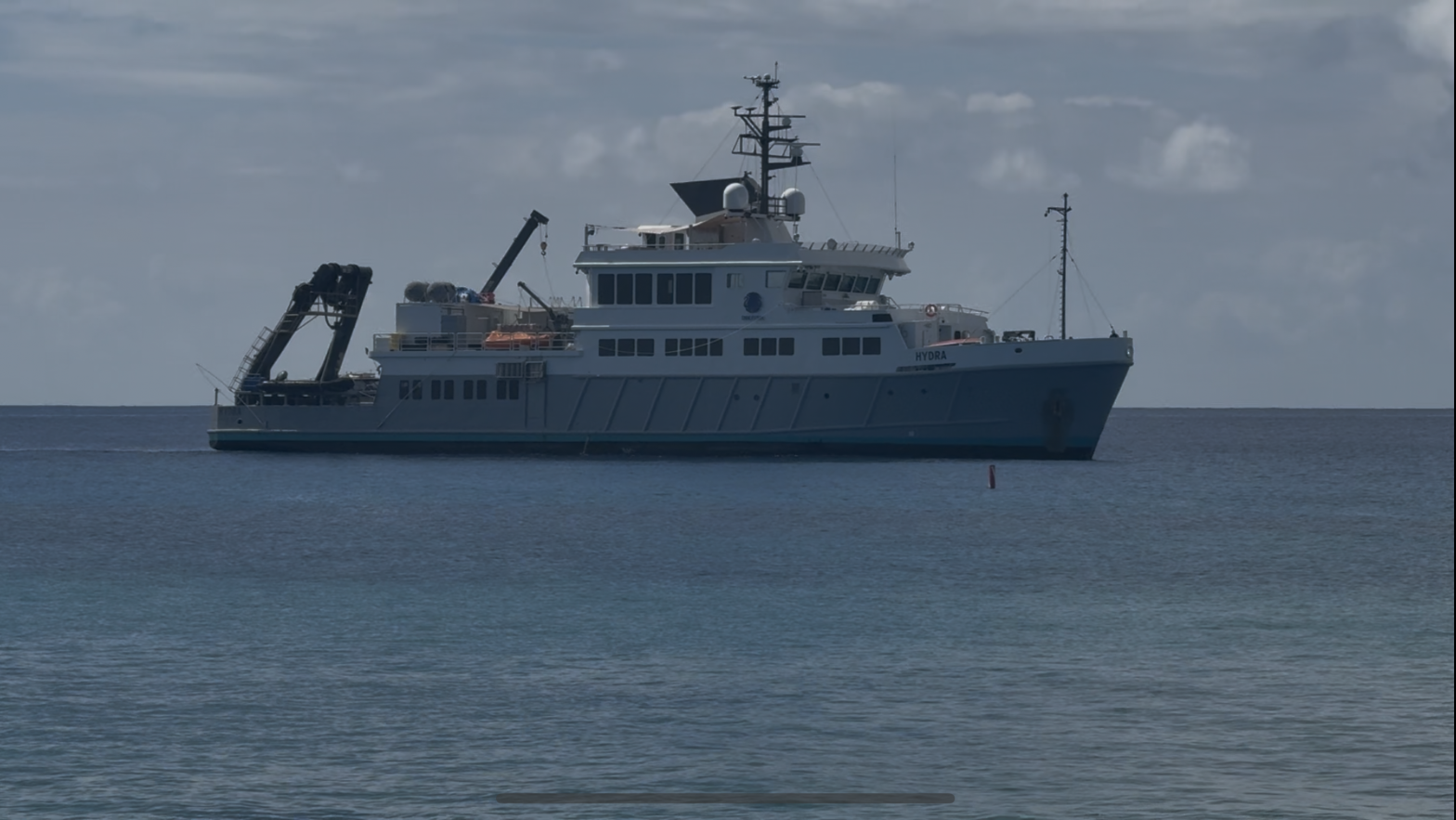
The research vessel Hydra, registered in the Cayman Islands and currently operating off North West Point, Grand Cayman, is in local waters through mid-June as part of a five-year regional research programme led by marine research organisation Inkfish, founded by Gabe Newell.
The project brings together international scientists and researchers from the Cayman Islands Department of Environment to study how deep reef habitats function and how they connect to the shallow coral reefs that support Cayman’s fisheries, tourism industry and marine biodiversity.
Inkfish
Inkfish is a deep-sea research organisation established by Newell, the billionaire entrepreneur best known for co-founding Valve, the company behind the Steam gaming platform and the Half-Life and Portal franchises. In recent years, Newell has invested heavily in ocean exploration infrastructure, building a fleet of research and expedition vessels that support long-duration scientific missions and contribute data to open-source marine science initiatives.
According to Cayman’s marine resources unit manager Croy McCoy, the research aims to determine whether deep reefs serve as reservoirs for coral larvae and fish populations that help replenish shallower reef systems.
“We know very little about our deep reefs,” McCoy said. “This work is going to answer a lot of questions about the types of corals present, coral cover, fish assemblages and how these ecosystems are connected.”
The expedition is using an extensive range of technologies, including autonomous underwater vehicles (AUVs), remotely operated vehicles (ROVs), manned submersibles, multibeam sonar mapping systems and advanced underwater photogrammetry.
Researchers are surveying habitats from shallow reef areas just a few metres below the surface to abyssal depths approaching 10,000 feet.
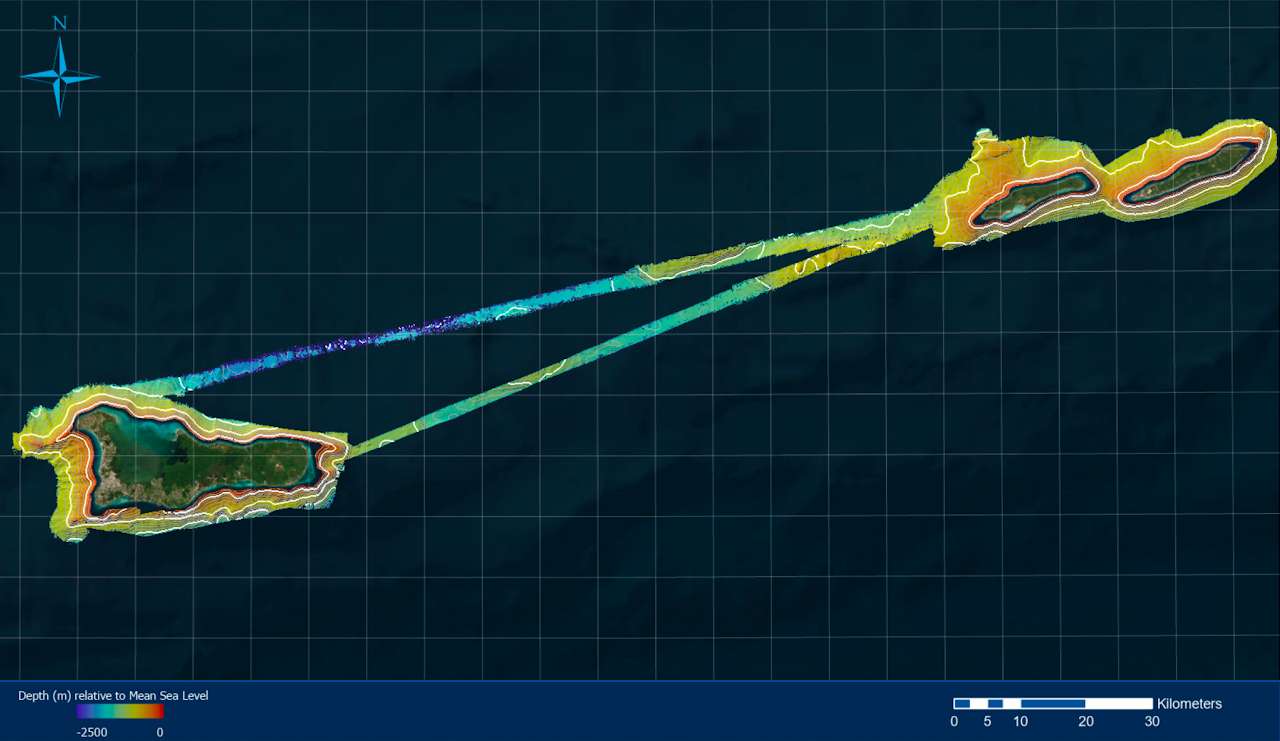
The vessel’s multibeam sonar systems are generating detailed maps of Cayman’s underwater landscape, while divers using closed-circuit rebreathers are creating ultra-high-resolution three-dimensional models of reef sites at depths ranging from five to 60 metres.
Department of Environment Research Officer Paul Chin recently spent two weeks aboard Hydra during the Cayman phase of the expedition.
“It was an amazing experience,” Chin said. “This is pioneer work. There is a lot of information that we are yet to gather, and it was a privilege to see that information being collected in real time.”
Chin said early observations indicate Cayman’s deeper reefs may be among the healthiest encountered during the broader regional programme.
“The formations and corals they were finding at those depths are some of the biggest they’ve found on the trip so far,” he said. “That’s something we should be grateful for.”
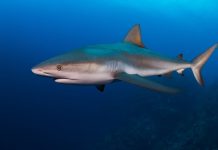
Using deep-water drones and ROVs, researchers documented active reef communities hundreds of feet below the surface, including hammerhead sharks and reef sharks at depths approaching 600 feet.
The team is also collecting genetic samples from coral colonies, conducting fish surveys using baited remote underwater stereo-video systems and exploring depths between 150 and 900 metres using submersibles.
The Caymanian marine scientists, Paul Chin, Claire Fletcher and Cody Panton, are participating in the project, and all data collected will be shared with the department to support future marine management and conservation planning.
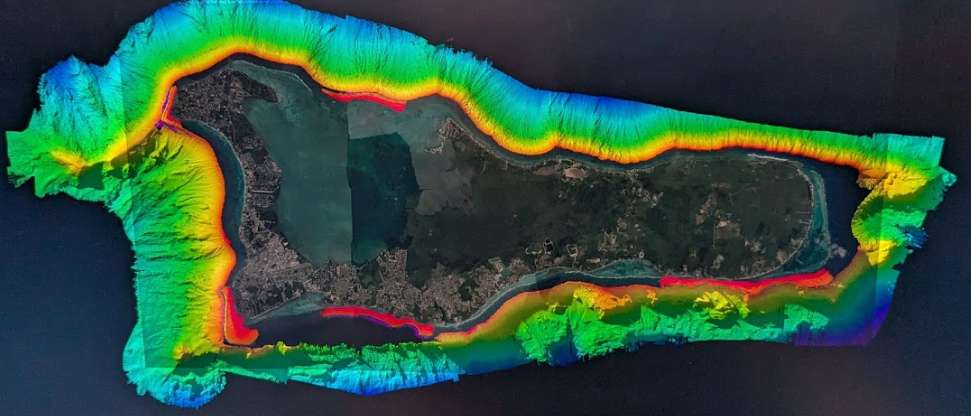
Early results from the Cayman phase have already been notable. According to expedition updates published by the research team, scientists mapped approximately 1,350 square kilometres of seafloor around Grand Cayman, Little Cayman and Cayman Brac.
They also completed 24 high-resolution photogrammetry plots, collected tissue samples from more than 1,000 coral colonies representing over 20 species, and documented mesophotic coral ecosystems at 18 locations between 60 and 130 metres deep.
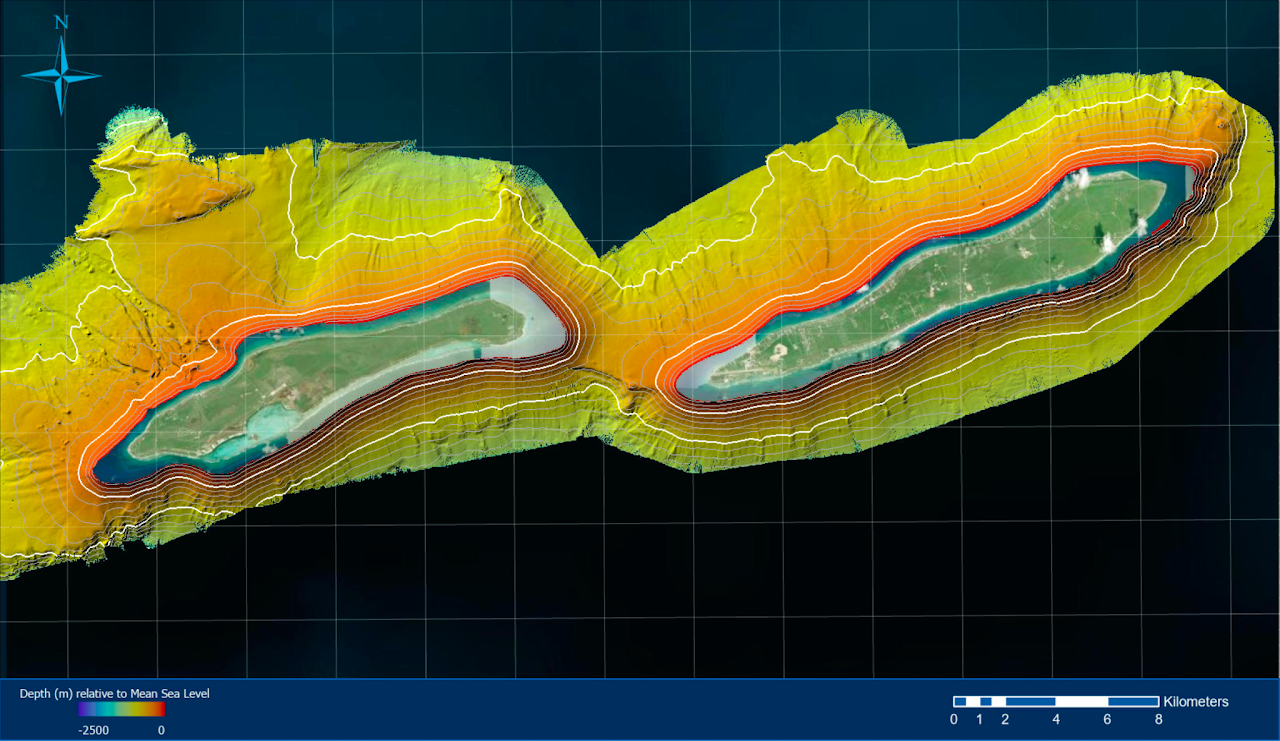
While it may take months to fully process and analyse the data collected, researchers believe the findings could significantly improve understanding of Cayman’s reefs and their resilience in a changing ocean.
“We’re waiting with bated breath for the results,” Chin said. “There’s still so much to learn about what’s happening beneath the surface around our three islands.”
The MV Dawn
The MV Hydra is not the only ship funded by a tech billionaire that is conducting missions in Cayman and around the Caribbean region. Another Cayman-registered vessel with scientific and humanitarian capabilities is the MV Dawn, funded by an organisation controlled by Google co-founder Sergey Brin.

The vessel has supported disaster response and humanitarian operations across the Caribbean following hurricanes and earthquakes and has previously conducted exercises with Hazard Management Cayman Islands.
Dawn, currently located off St George’s, Grenada, is equipped with a landing pad for helicopters, small craft and logistics capabilities that enable it to assist with emergency response, transport and offshore operations throughout the region.
Related Videos