At a glance
- A new study aims to protect sharks, with a focus on identifying Cayman’s shark birthing sites
- Researchers will deploy a special ‘shark tag’ to pinpoint where sharks give birth
- Attitudes toward sharks in Cayman have evolved over the past two decades
A new three-year scientific study aimed at protecting sharks in the Cayman Islands is set to begin after the Department of Environment secured a significant international grant to investigate some of the most mysterious parts of the animals’ lives.
The project, funded through the UK Government’s Darwin Plus programme, will focus on understanding where sharks reproduce, where pregnant females travel and where young sharks are born – information scientists say is critical for protecting vulnerable species.
Johanna Kohler, manager of the Department of Environment’s Shark Research and Conservation Programme, said securing the highly competitive funding was both rewarding and essential.
“We are grateful to be one of five UK Overseas Territory applications that were successful,” Kohler said. “Darwin Plus funding is highly competitive and the application process is a lot of work over many months. We really had to show the benefits that this study will bring to the Cayman Islands and present a robust, evidence-based scientific project design.”
She added, “Now that we’re approved, we can focus on getting the logistics in place to begin this critical research.”
The £619,181 grant will support a detailed study of shark reproduction in Cayman waters, with a particular focus on Caribbean reef sharks, one of the region’s key coastal species.
Sharks in Cayman’s waters
Scientists say the research comes at an important time. Seventeen species of sharks are known to inhabit Cayman’s waters, many of which are listed globally as vulnerable, endangered or critically endangered. Historical exploitation in the 1960s and 1970s significantly reduced local shark populations.
Despite decades of conservation work and legal protections, major gaps remain in understanding how these animals reproduce and where they give birth.
“One of the biggest missing pieces of information is where sharks go for gestation and pupping,” Kohler explained. “We don’t know the full life cycle of shark species that reside in Cayman. But now, we can harness new technologies to really dig deeper into the life cycles of these incredible species.”
To answer these questions, researchers will capture mature Caribbean reef sharks to collect several types of data before safely releasing them.
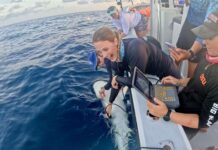
Blood samples will be analysed to study shark sex hormones, helping scientists understand reproductive cycles. Portable ultrasound equipment, similar to medical scanners used in hospitals, will be used in the field to determine whether female sharks are pregnant and how far along they are.
In pregnant sharks, researchers will deploy specialised satellite tags to pinpoint where they give birth.
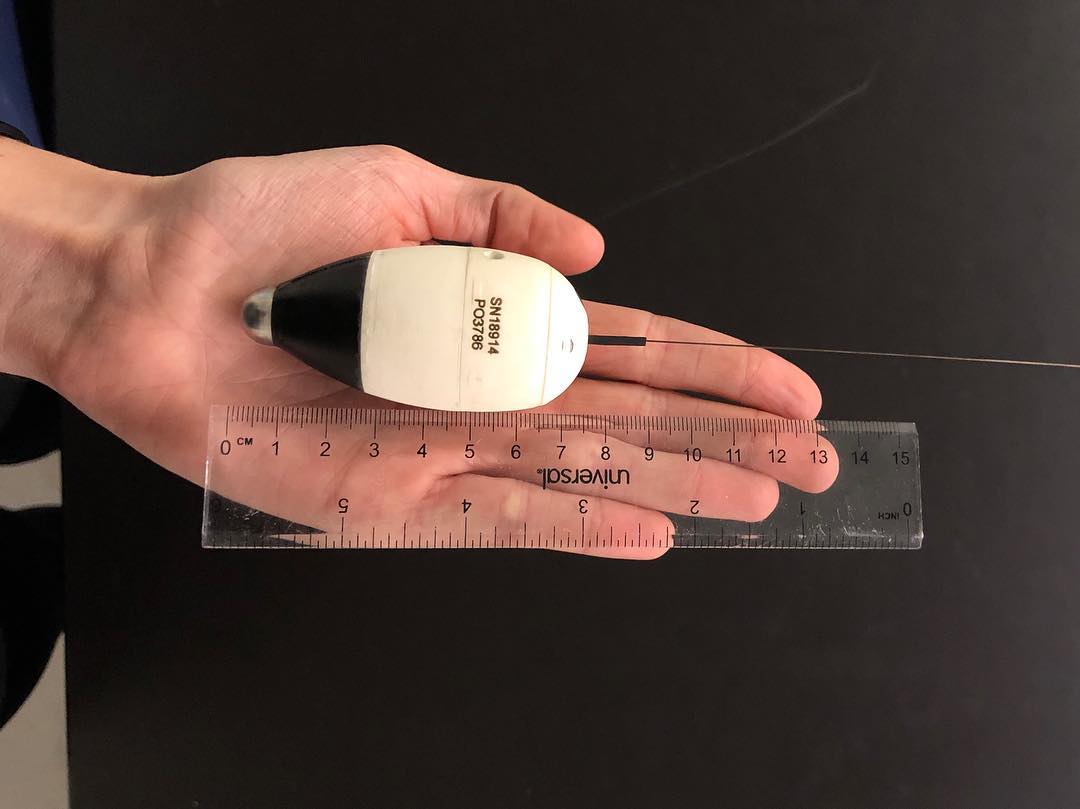
One of the most innovative tools is a ‘Birth-Alert-Tag’, a small satellite transmitter inserted into the uterus of a pregnant shark. When the pups are born, the tag is expelled and floats to the surface, transmitting the exact location, date and time of the birth.
The project will also use satellite telemetry tags attached to sharks’ dorsal fins to track movements during pregnancy and mating periods.
The research is being conducted with support from James Sulikowski, director of the Coastal Oregon Marine Experiment Station at Oregon State University, who helped develop the Birth-Alert-Tag technology.
Alongside the scientific research, the project will also address concerns raised by local fishermen who sometimes report sharks taking fish from their lines.
Volunteer fishermen will test a device called ‘Rplex’, which creates a small electronic field around a hooked fish that overstimulates sharks’ electro-receptors, encouraging them to avoid the area without affecting the fish being caught.
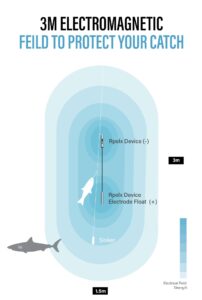
“Since sharks are naturally attracted by struggling fish hooked on the line and fish blood in the water, the device can help fishermen by creating an electronic ‘fence’ around the hooked fish,” Kohler said.
Shifting attitudes toward sharks
Kohler added that attitudes toward sharks in Cayman have evolved significantly over the past two decades.
“Fishermen do not target sharks anymore, and if accidentally caught, most make an effort to release them as unharmed as possible. Offering the device as an additional measure to avoid unwanted shark encounters will benefit both the fishing community and our vulnerable shark populations. It’s a win-win,” she said.
The project will also rely heavily on community involvement through the Department of Environment’s Sharklogger Network, which allows divers and snorkelers to record shark sightings and behaviour.
John Bothwell, manager of the Department of Environment’s Legislation Unit, said the study will help strengthen both conservation policy and marine park management.
“As we celebrate 40 years of marine parks in the Cayman Islands, it is timely that we secure the funding support needed to better understand the life cycles of these keystone species which are critical to the health of our oceans,” Bothwell said.
A workshop for fishermen interested in testing the shark deterrent device will be held on 24 March, while divers and snorkelers are invited to participate in the Sharklogger citizen science programme.
Related Videos