

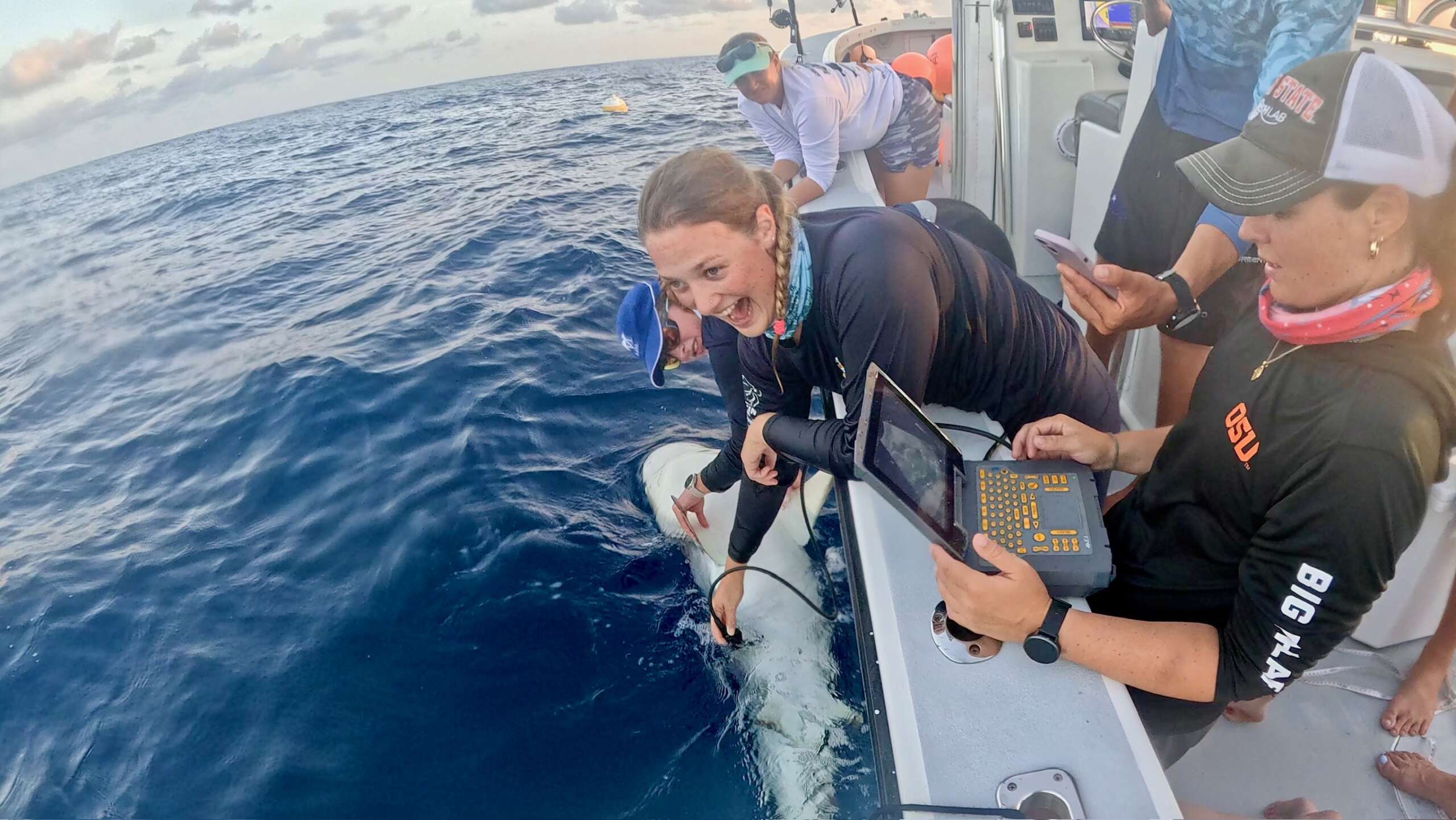
The Cayman Islands Department of Environment’s Shark Research Team has achieved a significant scientific milestone by successfully deploying the first Birth-Alert Tag in a pregnant Caribbean reef shark, providing an unprecedented look at one of the least understood stages of a shark’s life.
The tag was deployed on 5 June in a 2-metre female Caribbean reef shark as part of ongoing research conducted by the Department of Environment in partnership with Oregon State University’s Coastal Oregon Marine Experimental Station.
Researchers safely secured the shark, collected biological samples and used a portable veterinary ultrasound to examine it. The scan revealed three large pups in the uterus, confirming the female was close to giving birth.
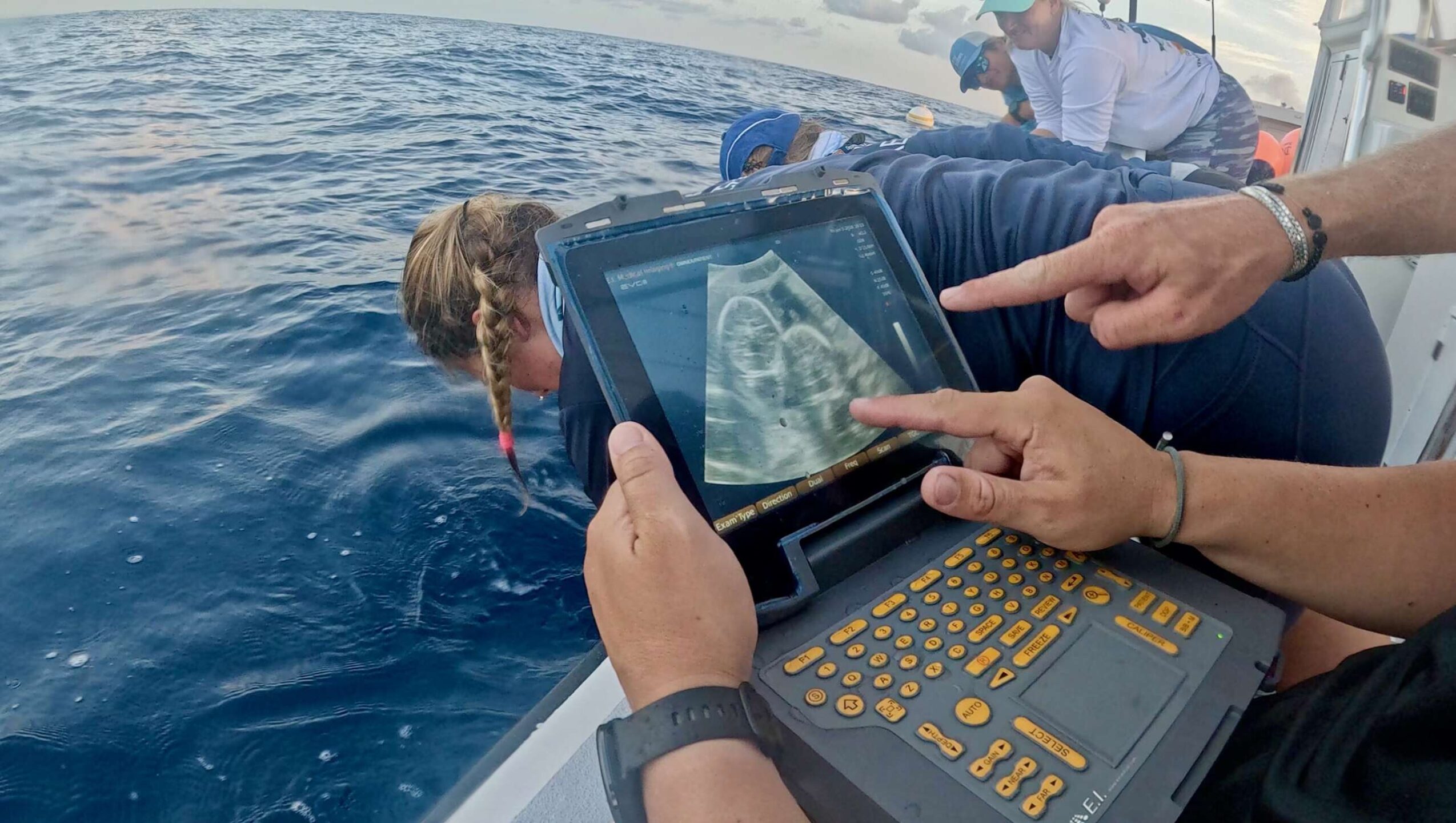
“This marks the first time we have confirmed a pregnancy using the ultrasound,” said Anne Veeder, research officer with the Department of Environment Shark Research and Conservation Programme. “It was exciting to count three pups, each very large. The size of the pups tells us that this female will give birth very soon.”
After the ultrasound examination, researchers inserted the specialised Birth-Alert Tag into the uterus, where it will remain dormant until the pups are born.
“The BAT is a small, positively buoyant satellite device designed specifically for pregnant sharks,” explained James Sulikowski, director of the Coastal Oregon Marine Experimental Station. “It will be expelled with the pups when the female gives birth and float to the surface. Once on the surface, the BAT will transmit the exact time and location of the birth via satellite.”
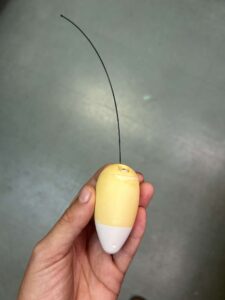
The team also attached a Pop-up Satellite Archival Tag to the shark’s dorsal fin. The device will record depth, temperature and movement data for the next year before detaching and transmitting the information via satellite.
Together, the two technologies will enable scientists to determine where the shark gives birth and how she uses Cayman’s coastal and offshore habitats before and after the event.
Major breakthrough
Johanna Kohler, manager of the Department of Environment Shark Research and Conservation Programme, described the achievement as a major breakthrough for shark conservation in the Cayman Islands.
“The confirmation of pregnancy with the ultrasound and the deployment of the first BAT in a Caribbean reef shark is an incredible moment for Department of Environment shark research,” she said. “It is a major step forward in understanding the reproductive ecology of local sharks and will ultimately lead to evidence-based management decisions to better protect our coastal shark populations.”
The research builds on more than a decade of shark conservation efforts in Cayman. All shark species have been legally protected in Cayman waters since 2015, and ongoing studies have revealed increasingly complex behaviour patterns.
Previous satellite-tagging projects have shown that Caribbean reef sharks routinely move between all three Cayman Islands and occasionally travel beyond Cayman waters. Researchers have also found that reef sharks regularly dive to depths of 300 to 400 metres, linking shallow coral reef ecosystems with the deep ocean.
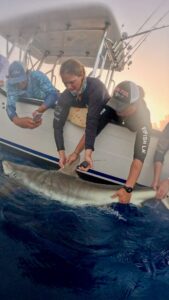
Scientists believe Cayman’s six coastal shark species likely give birth between May and September, though the exact timing and nursery areas remain largely unknown. The new Birth-Alert Tag technology could help identify critical pupping habitats for the first time.
The findings are important not only for shark conservation but also for the health of Cayman’s coral reefs. Caribbean reef sharks are top predators that play a vital role in maintaining healthy reef fish populations and preventing ecological imbalances that can contribute to coral decline.
The Department of Environment estimates there are fewer than 200 resident Caribbean reef sharks in Cayman waters, making each new piece of information valuable for the long-term management of the species and the marine environment.
Related Videos










What is the long-term management of the species and the marine environment in practical terms with examples.
We are already aware of the need to protect turtles during their nesting period, yet replacing outdoor lights with amber-colored, turtle-friendly LEDs during nesting season is not even enforced.