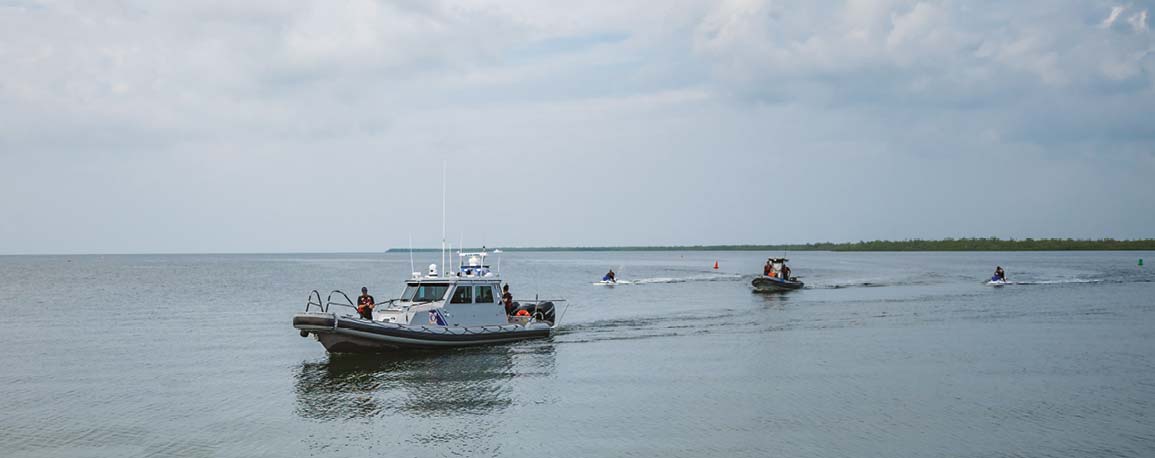
In the event of a marine emergency, the first priority is life safety.
Prioritise life safety first:
Immediately ensure that every person on board secures and properly fastens a life jacket.
Communicate the distress:
 VHF Radio: Broadcast a distress call on VHF Channel 16 (the international distress frequency). State clearly: “Mayday, Mayday, Mayday”, for grave and imminent danger or “PanPan, Pan-Pan, Pan-Pan”, for urgent situations not posing immediate danger to life or vessel.
Phone: If a VHF radio is unavailable, dial 911 and ask for the Coast Guard. Crucial information to relay: Be prepared to provide your exact location (GPS coordinates if possible, or notable landmarks), the nature of the emergency, the number of people on board, and a description of your vessel.
Activate emergency beacons: If the situation is life-threatening e.g. rapid sinking and you are equipped with an EPIRB or PLB, activate it to transmit your location to search-and-rescue authorities.
Prepare visual signals: Have visual distress signals like flares ready to deploy but only use them when you see or hear another vessel or aircraft in the vicinity to ensure they are actually seen.
Address the immediate threat if safe to do so:
For sinking: Turn on all bilge pumps, if there is a failure with your electric bilge pumps, use your manual bilge pump, if you have one, and attempt to locate and plug the source of water ingress.
For medical emergencies: Administer immediate first aid, stabilise the patient, and seek direct medical advice from emergency responders via VHF radio or phone.
Stay with the vessel: Unless the vessel is completely submerged, on fire, or otherwise unsafe to remain on board, do not enter the water. A vessel is a much larger target for search-and-rescue crews to spot than a person floating in the water.
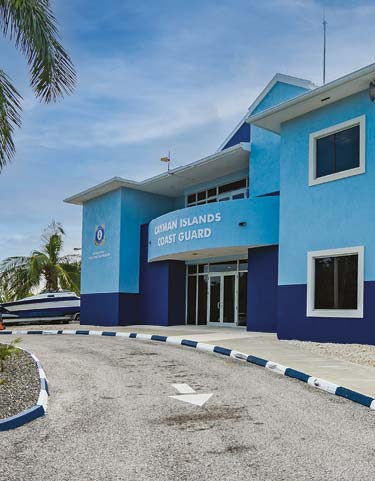
Information provided by the Cayman Islands Coast Guard.
This article originally appeared in Compass Media’s 2026 Emergency Guide.
Related Videos