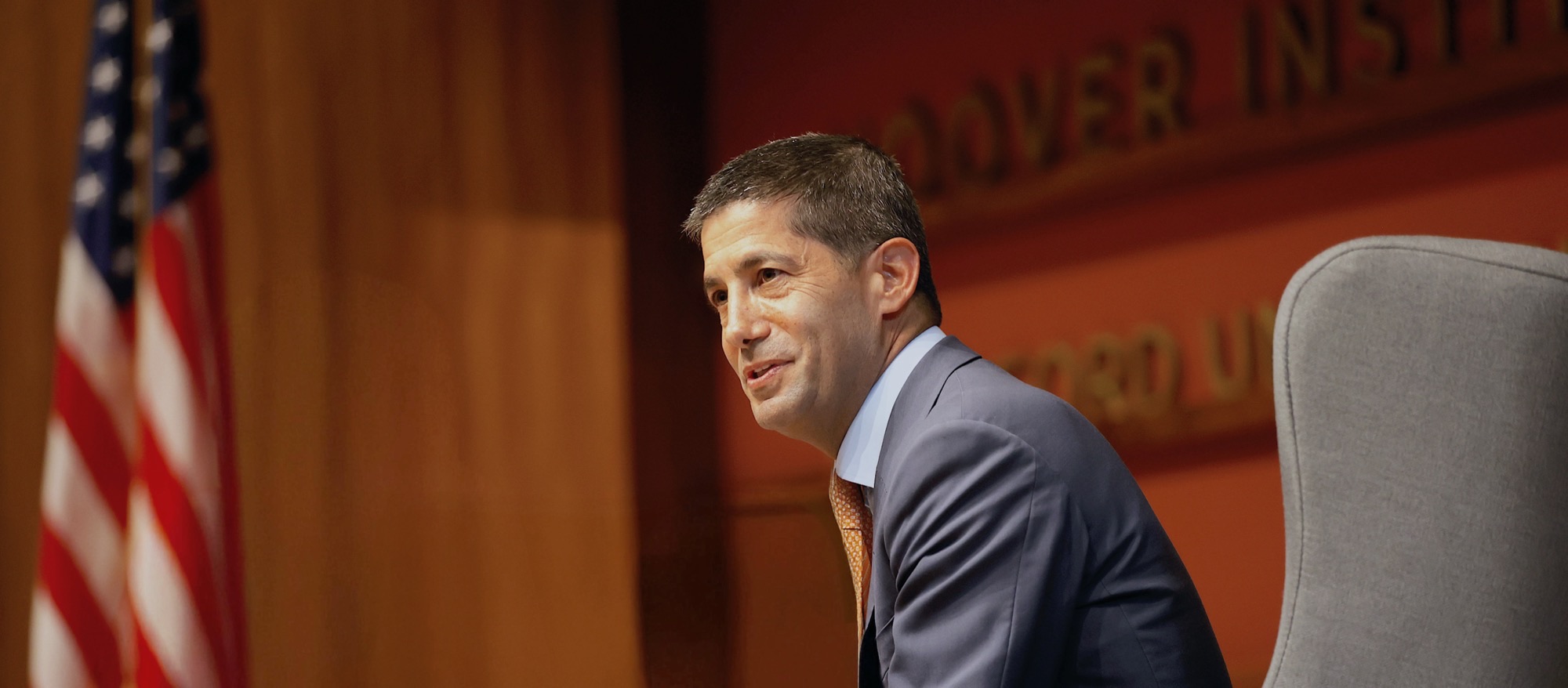
 On 17 June, Kevin Warsh will lead his first Federal Reserve meeting as chair, giving markets their first real sense of how he may approach interest rates, inflation and Fed independence.
For many people, the Federal Reserve can feel distant and complicated. But its decisions affect everyday life in important ways. The Fed influences interest rates, which can affect mortgage payments, credit card rates, car loans, business borrowing, bond yields and even stock market valuations. This is why investors pay close attention whenever the Fed meets.
Warsh is not new to the Fed. He previously served on the Fed’s Board of Governors during the global financial crisis, one of the most difficult periods for markets in modern history.
Still, his appointment comes with an important political backdrop. US President Trump frequently criticised former Fed chair Jerome Powell and pushed for lower interest rates. So, it’s natural for investors to ask whether Warsh’s nomination means the Fed may now be more willing to cut rates.
There’s no way to know what was discussed privately before Warsh was nominated. However, investors will be watching closely to see whether he acts independently or appears more aligned with the White House’s preference for lower rates. That question makes his first Fed meeting especially important.
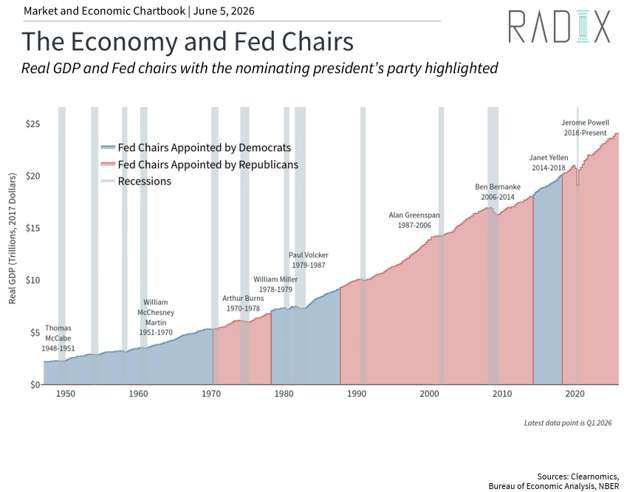
The economy has grown under many Fed leaders
It’s helpful to start with some perspective. The Fed has had several well-known leaders over the past few decades, including Paul Volcker, Alan Greenspan, Ben Bernanke, Janet Yellen, Jerome Powell, and now Kevin Warsh. Each faced different challenges, from high inflation and recessions to financial crises and the pandemic.
The accompanying chart shows that the US economy has grown across the tenures of different Fed chairs, regardless of which president nominated them. This doesn’t mean that Fed policy is unimportant. It simply means that the economy is bigger than any one person or institution.
The Fed’s main job is to keep prices stable and support a healthy job market. In plain English, this means trying to keep inflation under control while also helping the economy grow. The main tool it uses is interest rates. When inflation is too high, the Fed may raise rates or keep them higher for longer. When the economy is weak, it may lower rates to encourage borrowing and spending.
But the Fed can’t control everything. It can’t directly control the price of oil, the cost of groceries, wars overseas, government spending, or how quickly new technologies change the job market. It can only respond to these forces using the tools it has.
This is why investors should be careful not to focus too much on every Fed meeting or every comment from the Fed chair. Interest rates matter, but they are only one part of the bigger picture. Company profits, innovation, productivity, consumer spending and long-term economic growth matter too.
Warsh may be more flexible than expected
Warsh has often argued that the Fed should stay focused on its core responsibilities: inflation, jobs, interest rates and financial stability. He has also emphasised that the Fed should make decisions independently, rather than simply doing what politicians want.
This matters because elected officials often prefer lower interest rates. Lower rates can make it easier for consumers, businesses and governments to borrow. But lower rates are not always the right answer, especially if inflation is still too high.
Historically, Warsh has been viewed as more concerned about inflation than some other policymakers. That reputation would suggest a cautious approach to cutting rates. More recently, however, his comments have sounded more flexible. He has argued that productivity gains from artificial intelligence could help reduce inflation pressure over time. In other words, if businesses can produce more efficiently because of AI, the economy may be able to grow without prices rising as quickly.
This is an important shift. It gives Warsh an economic argument for lower rates, even if inflation is not yet fully back to the Fed’s target. It also lines up more closely with the Trump administration’s desire for easier monetary policy. Whether that reflects genuine economic analysis, political pressure, or some combination of both will be one of the key questions investors watch.
My view is that Warsh should be judged less by his reputation and more by how he uses his influence. The Fed chair is only one vote, but the chair helps shape the debate, the message and the market’s understanding of policy.
If Warsh pushes too hard for cuts while inflation remains elevated, markets may question the Fed’s independence and inflation-fighting credibility. But if he argues for keeping rates too high despite improving inflation and productivity, he could add unnecessary pressure on households, businesses and markets.
That’s what makes this moment difficult. Warsh takes over at a challenging time, when the Fed is not facing an obvious choice. It’s trying to judge whether inflation is still the bigger risk, or whether high interest rates are becoming too much of a burden on the economy.
The most important point is that a new Fed chair may affect the tone and direction of policy, but doesn’t change the long-term foundations of investing. Markets have performed well under many different Fed chairs, presidents, interest rate environments and economic cycles.
The bottom line? Kevin Warsh’s first Fed meeting as chair will be closely watched, not only for what the Fed does, but for what it signals about independence, inflation and the future path of interest rates. The Fed matters, but long-term returns are driven by broader forces, such as earnings growth, innovation, productivity, and the ability of businesses and households to adapt. Investors should pay attention but avoid overreacting to a single meeting or headline.
Jessica Jablonowski, CFA, is the managing director and investment advisor at Radix Financial Cayman, LLC.
Disclaimer: The views and opinions expressed in this article are Jablonowki’s own and do not necessarily reflect those of Radix Financial Cayman, LLC. This article is for informational purposes only and should not be taken as financial advice. Radix Financial Cayman, LLC accepts no liability for any actions taken based on the information presented here.
Related Videos