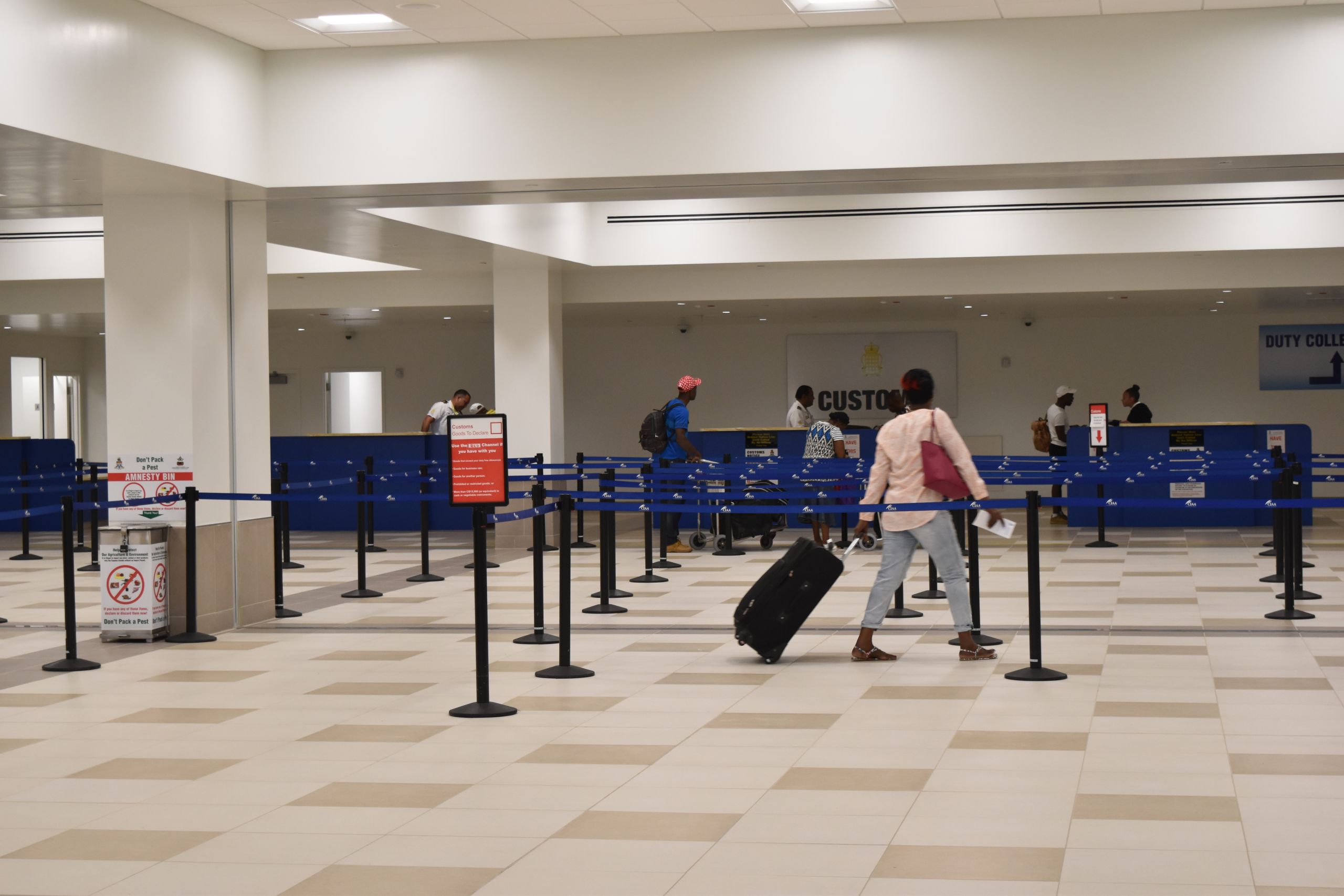
The organisation that represents Cayman’s business world has said that a just-approved increase in the duty-free allowance could pose challenges for domestic retailers.
The Chamber of Commerce said the increase to $800 from $500 for items bought abroad, plus a temporary $1,000 allowance in July, August and December, which came into effect on 1 July, would be welcome, but that the impact on Cayman-based businesses had to be considered.
“Unlike larger countries, Cayman has less room for redundancy. A niche retailer, family-owned business or longstanding local supplier may not be easily replaced once it disappears,” the chamber posted in statement on its website that also appeared in its emailed newsletter.
“Capacity that has taken years or decades to build can sometimes be lost surprisingly quickly.”
The group spoke out after Parliament last week backed increases in duty-free allowances, sparked by a private member’s motion tabled by Opposition MP Pearlina McGaw-Lumsden.
She highlighted at the time that it was the first increase in eight years and the increases would better reflect inflation, and the rising cost of living.
McGaw-Lumsden said the increased allowances would help families and single parents struggling to cope and help them stretch their budgets by making it more cost-effective to buy essentials overseas.
She added that the motion was not designed to disadvantage Caymanian businesses, but to strike a fair balance between backing domestic commerce and helping out consumers.
Retailers already challenged
It its statement, the chamber said, “Local retailers are already operating in a challenging environment. In addition to high operating costs, many compete daily with global online marketplaces and large overseas retailers offering vast product ranges and competitive pricing.
“The increased allowance does not create those pressures. Still, it may reinforce a trend that many businesses have been navigating for years; a growing share of consumer spending occurring outside Cayman’s shores.”
The chamber said the issue involved where money circulated and was not just about individual purchases.
“When residents spend at local businesses, those dollars continue to move through the Cayman economy, supporting jobs, suppliers, service providers and countless other commercial relationships.
“When spending overseas, consumers may benefit from lower prices, but much of the broader economic activity leaves with it.
“For a small island economy, that distinction matters.”
The chamber said a “balancing act” was needed to reconcile relief from the high cost of living and businesses that faced increased competitive pressures.
“Both realities are valid. The challenge is not choosing between consumers and businesses. It is finding ways to improve affordability while preserving the local enterprises that provide jobs, investment, resilience and many of the social connections that help communities thrive.
“In a small island nation, those things are often more interconnected – and more fragile – than they first appear.”
Cayman companies ‘integral’
The chamber added that Cayman companies were an integral part of island life and sponsored youth programmes, supported charities and helped people get their first jobs.
“When a business closes, the loss is not always limited to a storefront or a balance sheet,” the chamber stated.
“Communities can lose experience, local knowledge, sponsorship, relationships and places where people connect in everyday life.”
The chamber added that some business, such as freight-forwarders, logistics providers and businesses linked to overseas shopping, could benefit from increased activity.
It said, “Some specialist retailers may continue to compete successfully by offering expertise, service, installation support and convenience that overseas sellers cannot readily match.”
The chamber said, “Few would disagree with making life more affordable. The broader question is how Cayman balances that goal with the long-term health of its local economy and communities.”
Related Videos