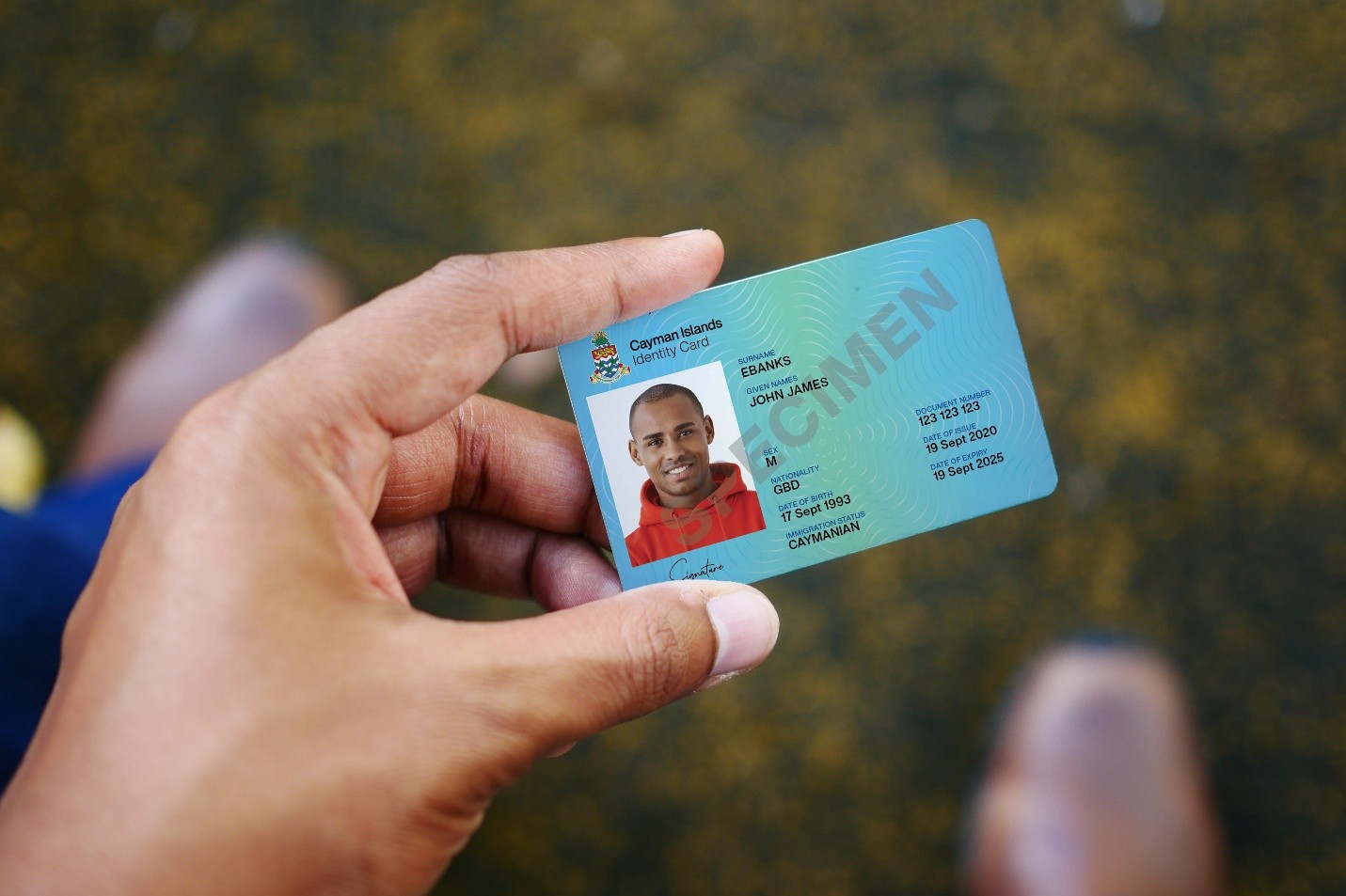
The Cayman Islands government’s national digital identity programme has entered its next phase, with eligibility for My eID expanding to permanent residents and eligible dependents from 1 July.
The Department of eGovernment announced on 8 July that applications are now being accepted from all permanent residents, whether or not they have the right to work, as well as eligible spouses, civil partners and other dependents of Caymanians and permanent residents who qualify for registration under the Identification Register Act, 2025.
The move significantly broadens access to the government-issued identity card, which was initially launched for Caymanians in February before expanding to civil servants and their dependents. The service was introduced in the Sister Islands in May.
The expansion comes as government continues to position My eID as the cornerstone of its future digital services, allowing residents to verify their identity securely, access government services online and digitally sign official documents.
The eventual impact of the programme, however, will depend on how widely it is adopted.
1,229 cards already issued
According to the Ministry of Social Development and Innovation, 1,229 My eID cards had been issued as of June. That represents less than 3% of the eligible population at the time, based on the latest available figures, suggesting uptake will need to increase substantially if the card is to become the primary method of verifying identity.
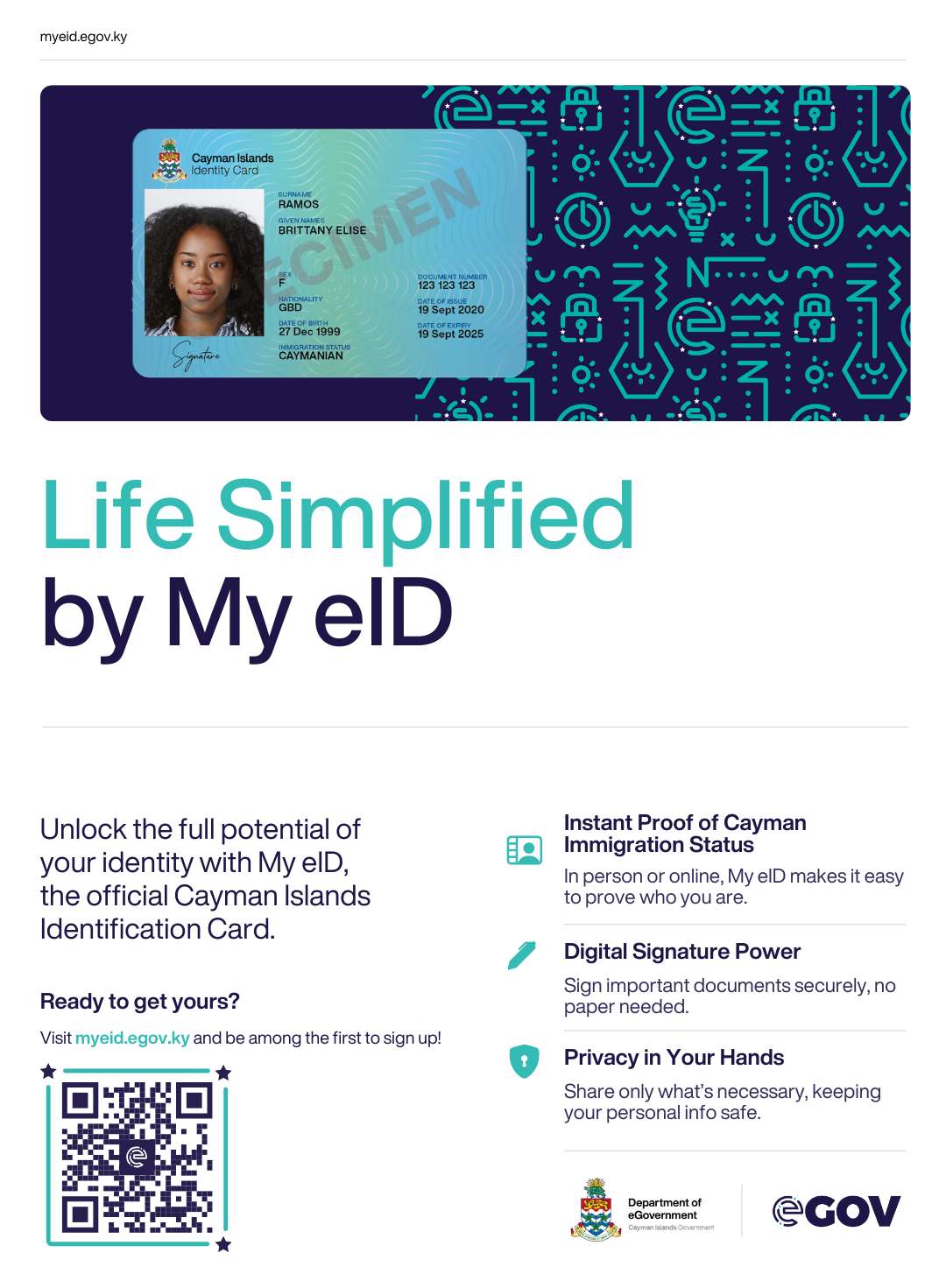
The issue has taken on added significance following government’s decision to introduce differential vehicle and driver’s licensing fees for Caymanians and non-Caymanians from 1 Sept.
Earlier this year, Premier André Ebanks acknowledged that one of the challenges in implementing the new fee structure was the absence of a simple way for Caymanians to prove their status. He said at the time that My eID could provide the solution by offering a secure means of verifying both identity and Caymanian status.
The card is designed to serve as both a physical and digital identity credential. It includes a QR code and near-field communication chip that can be read by compatible phones, computers and scanners, while each holder receives a unique PIN linked to an online My Info Portal.
The system allows users to manage their personal information, authenticate their identity and, over time, complete an increasing range of government transactions digitally.
Under Cayman law, businesses are required to accept My eID as proof of identity. Government hopes wider adoption across both the public and private sectors will reduce paperwork, improve efficiency and make digital transactions more secure.
Eligible residents can now book appointments to enroll for a My eID card. During the appointment, applicants will have their identity verified, their photograph taken and receive information about the card’s features and digital capabilities.
The Department of eGovernment said additional categories of residents will become eligible as the phased national rollout continues.
Further information on eligibility and appointments is available on the My eID website.
Related Videos