Government is preparing to examine a decades-old immigration issue affecting some descendants of Caymanians who returned from Cuba after the 1959 revolution but never formally regularised their status.
The proposal, brought by Minister for Finance and Economic Development Rolston Anglin, received the backing of the National Coalition for Caymanians caucus. It would establish a working group to identify affected families, trace Caymanian lineages and recommend solutions to address their status.
Anglin has stressed that the initiative is not a broad immigration proposal, but is intended only for a specific group of Cuban-Caymanians with direct Caymanian ancestry who are already living in the Cayman Islands.
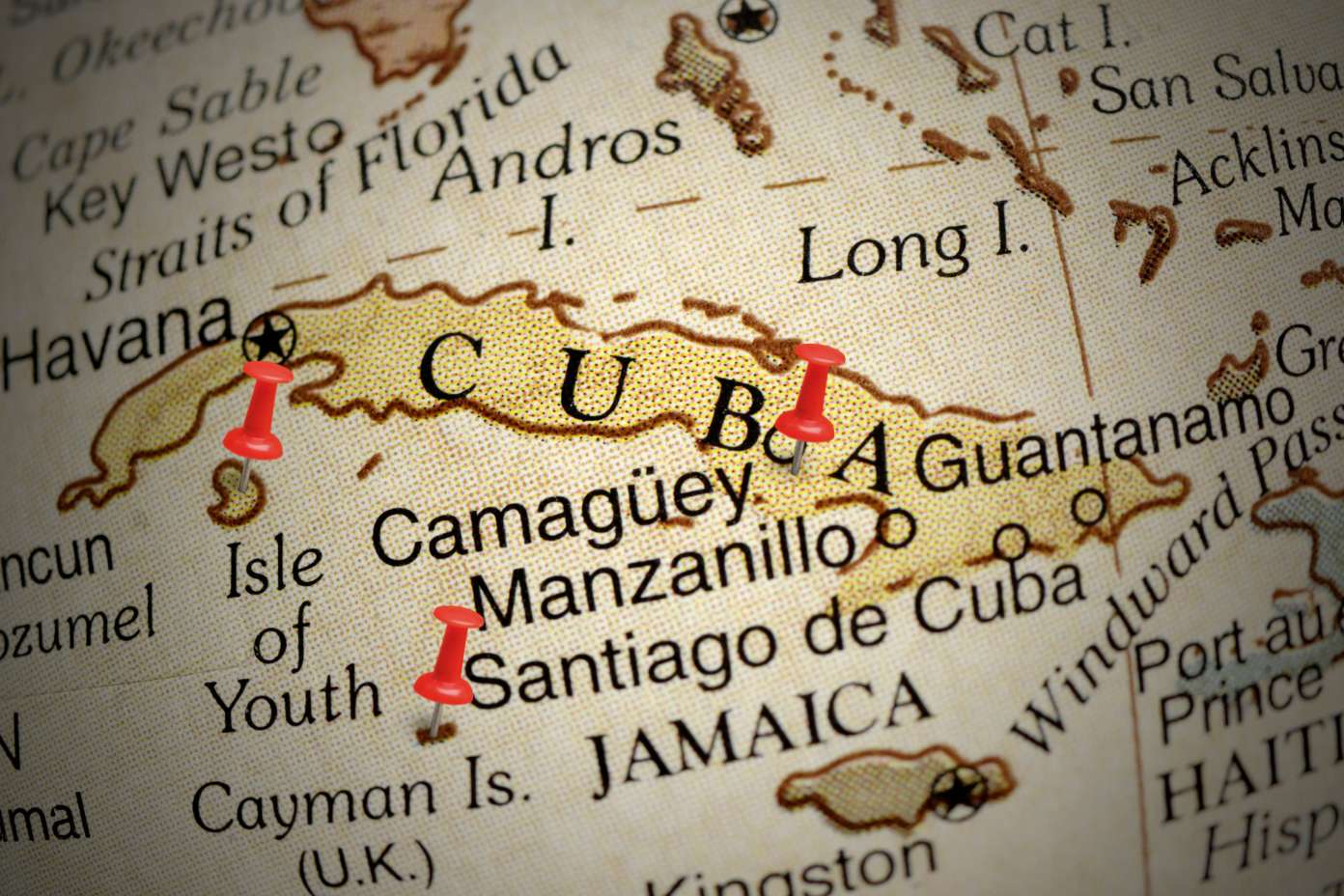
Speaking on Radio Cayman on 3 July, Anglin said the issue has its roots more than a century ago, when many Caymanians migrated to Cuba in search of work, particularly on the Isle of Pines, now known as Isla de la Juventud.
According to Anglin, who is also minister for education and training and the MP for West Bay North, many found employment before the Cuban Revolution dramatically altered their circumstances.
“The Caymanians who were in the Isle of Pines working in factories and working in the citrus industry and sending money home got trapped because at that point, they could not leave,” Anglin said.
He said Caymanians living elsewhere, such as in the United States, were generally free to return home whenever they wished, but those in Cuba were unable to do so until permitted by the Cuban government.
“My grandfather went to Tampa in the ’50s. You were free to come back home. … Cuban Caymanians didn’t have that option. They literally could only come out once allowed by the regime over there,” he said.
Organised repatriation from Cuba
According to Anglin, organised repatriation efforts eventually brought many families back to Cayman, but the legal arrangements used at the time varied. Some returning families received letters allowing them to live and work indefinitely without work permits, while others entered a pathway toward permanent residence.
Many believed those arrangements were sufficient and never completed the formal process of obtaining Caymanian status.
“Those two scenarios are what still cause havoc in families today. Firstly, we have, believe it or not, people who have never taken up the permanent residency route. … Then you have others who’ve now gone to three generations. … Those children and grandchildren now don’t have the type of rights that they ought to have,” Anglin said.
He added that some descendants have encountered legal difficulties because, at the time they were born, their parents had not formally obtained Caymanian status.
“We’re dealing with their descendants that are in Cayman who have a disadvantaged position. … We’re now seeking to just regularise Cuban-Caymanians with direct Caymanian lineages who are in the Cayman Islands as we speak but are disadvantaged because of how the process evolved,” Anglin said.
Working group
West Bay West MP and Parliamentary Secretary Julie Hunter, who Anglin said would lead the working group, noted that many affected families had simply assumed their legal position had already been settled after returning to Cayman.
During the same Radio Cayman discussion, she spoke about her own family’s ties to Cuba, explaining that her father was born there to Caymanian parents who had later returned home.
According to Anglin and Hunter, the working group would identify eligible families and recommend a bespoke legal pathway for addressing the issue. They estimated it could affect around 300 people, although one of the group’s tasks would be determining the number of eligible descendants.
“We’ve put together what we feel is a comprehensive working group. … They’re going to be the ones to gather these people together, find out who exactly they are, trace their lineage, and make recommendations,” Hunter said.
Former premier McKeeva Bush has also publicly supported efforts to help regularise the immigration status of Cuban-Caymanians, arguing that the current problems stem from historical administrative decisions rather than actions by the returning families themselves.
Bush said efforts to bring Caymanian families home began before the well-known Freedom Flights, crediting National Hero Willie Farrington with initiating those efforts during the 1950s and National Hero Benson Ebanks with later expanding them.
He said many returnees were issued exemption letters allowing them to live and work in Cayman with the expectation that they would eventually receive legal status.
“We gave those we brought back exemption letters, but with the understanding that they would be regularised at some point,” Bush said during a Radio Cayman interview on 13 July.
According to Bush, many families were focused on rebuilding their lives after leaving Cuba rather than completing immigration paperwork.
“When they came here, their thing was to get a job, get money, get working, live as decent a life as possible, to get a home,” he said.
Bush argued that the consequences of those decisions did not become apparent until years later, when subsequent generations began applying for passports or attempting to establish their Caymanian rights.
“But this other situation is that we have people still from the exemption stage who have children born here now and looking for their rights,” he said.
Related Videos