After nearly two decades of debate over the future of George Town’s Ironwood Forest, Cabinet has approved a plan aimed at preserving part of the ancient woodland while moving ahead with a long-awaited highway extension designed to ease traffic congestion.
At its meeting on 15 July, Cabinet approved, subject to public consultation, the designation of the Crown-owned land within the Ironwood Forest as a protected area under the National Conservation Act.
During the same meeting, ministers also approved the extension of the Linford Pierson Highway between Outpost Road and Olympic Way, with the proposed route following the forest’s northern boundary rather than cutting through its centre.
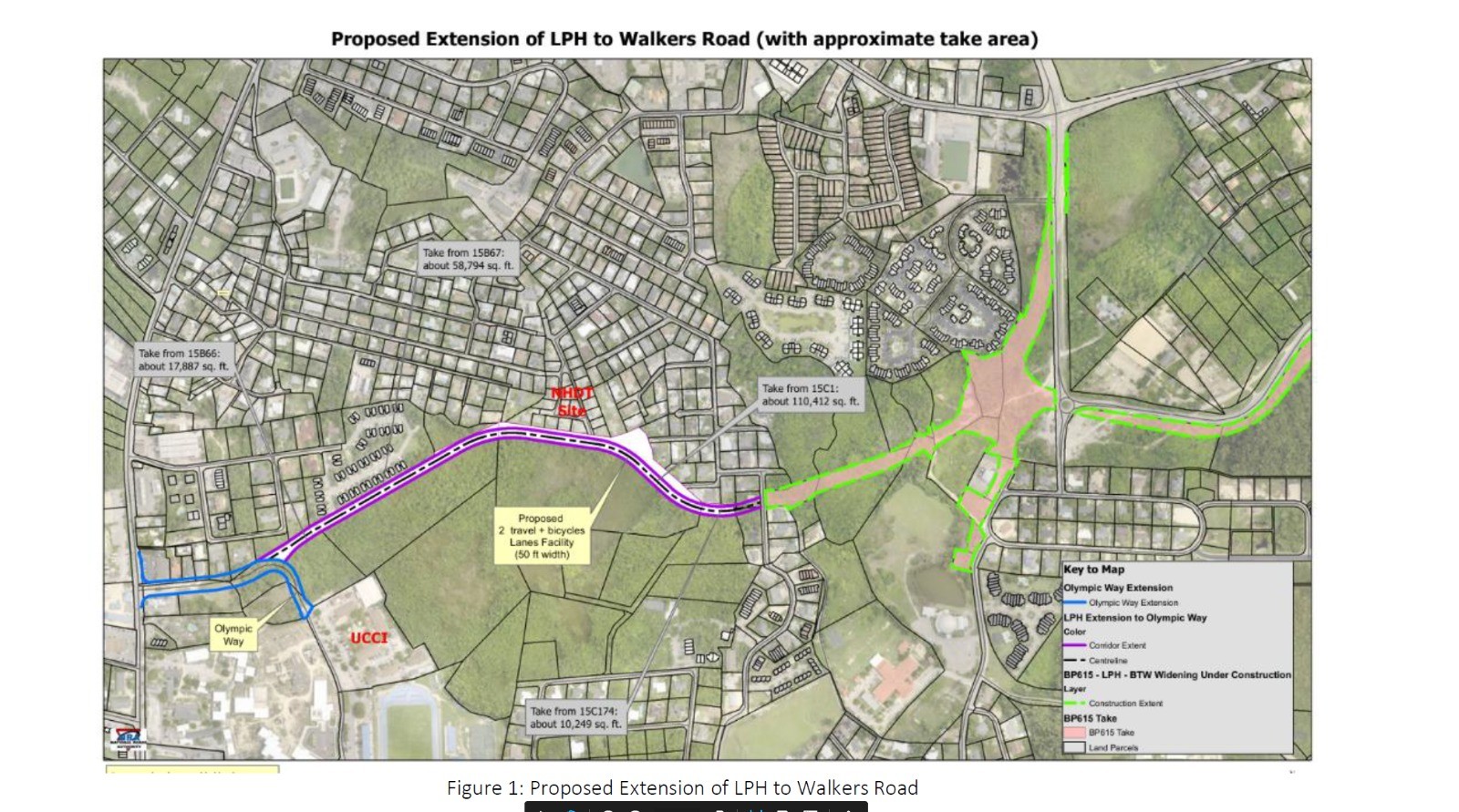
The decision marks a significant departure from earlier proposals dating back more than 20 years, when plans called for the road to pass through the heart of one of Grand Cayman’s last remaining fragments of ancient dry forest.
Premier André Ebanks described the decision as an example of how environmental protection and national development can be pursued together.
“For many years, our country has faced a vexing issue which sat unresolved,” he said. “How do we preserve the heart of our natural environment while building the vital infrastructure our country needs? Leadership means finding a way forward where others see only conflict.”
Question over how much land will be protected
While the announcement has been welcomed by many as a breakthrough after years of deadlock, one important question remains unanswered.
Although the premier described the Ironwood Forest as a 54-acre national treasure, Cabinet appears to have approved protection only for the 10.3 acres of Crown-owned land within the forest, which amounts to about one-fifth of the site.
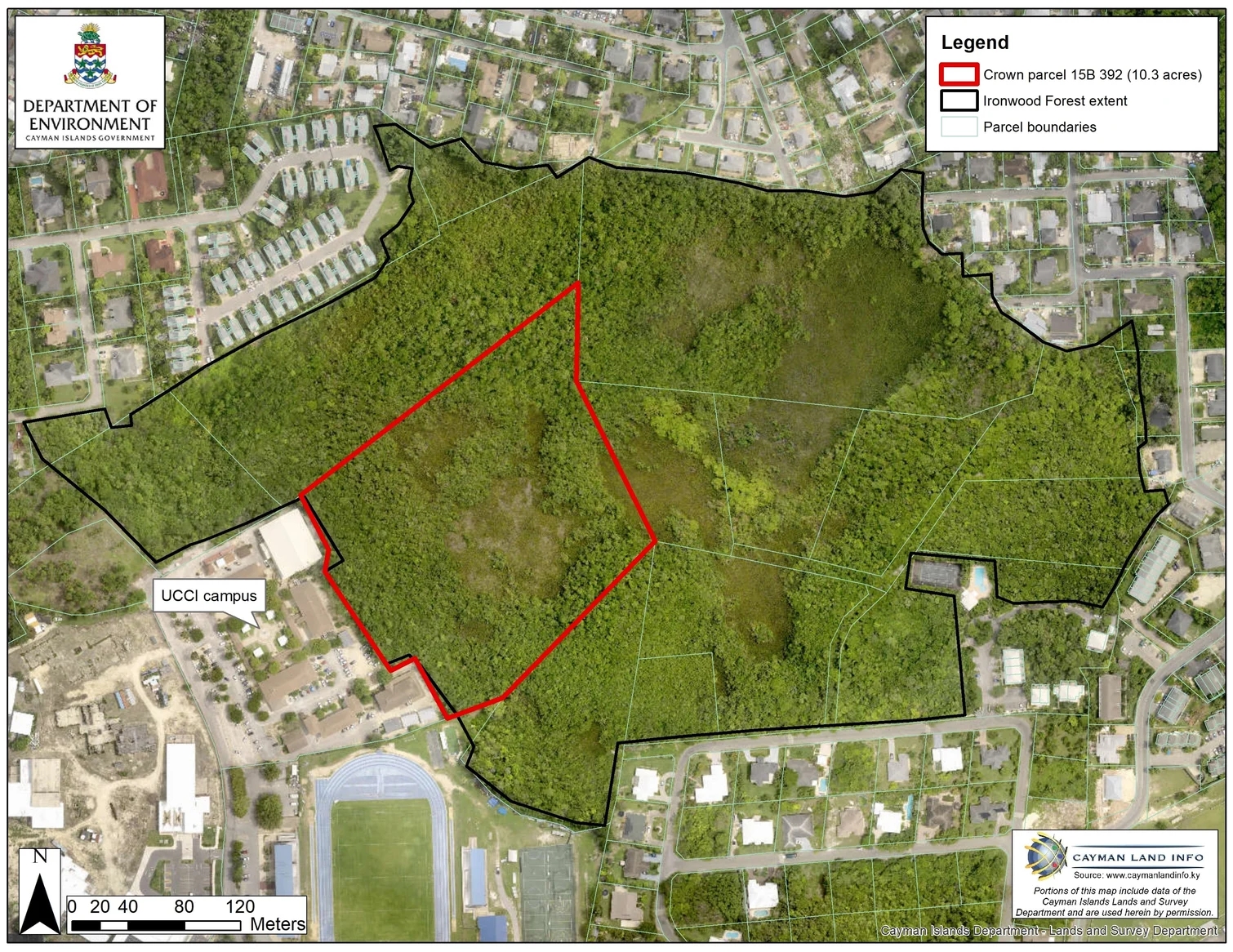
Government has not yet indicated whether it intends to seek protection of the remaining privately owned portions of the ancient woodland through future land purchases, conservation agreements or other mechanisms.
That distinction could prove significant because the forest functions as a single ecological system, with rare plants and wildlife extending beyond public land boundaries.
The Cayman Compass has asked government to clarify its long-term vision for the remainder of the forest, including whether additional conservation measures are being considered for privately owned land and how the ecological integrity of the wider forest will be maintained.
Ancient forest
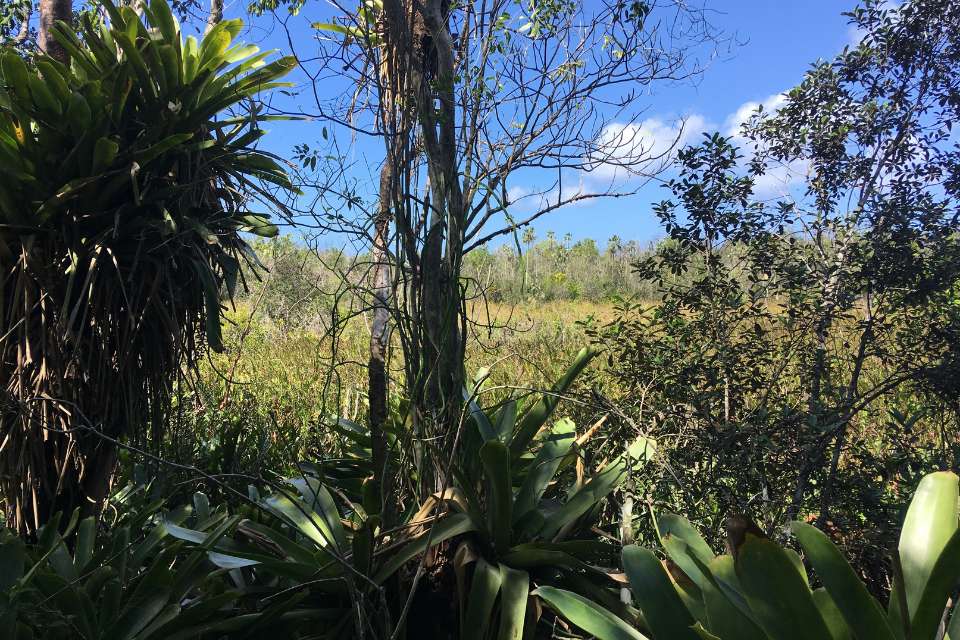
The premier noted that the 54-acre Ironwood Forest is one of Cayman’s rarest ecosystems and the largest remaining fragment of George Town’s ancient forest.
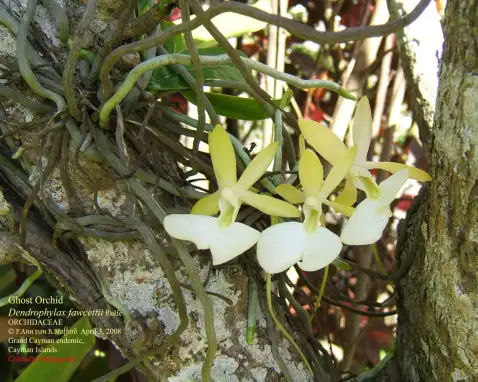
It supports species found nowhere else, including nearly the entire Cayman population of the critically endangered Old George bromeliad and a significant proportion of the world’s ghost orchids.
“We can preserve the forest and deliver the road,” Ebanks said. “We do not need to choose between our environment and our development.”
Health, environment and sustainability minister Katherine Ebanks-Wilks said the agreement represented an important milestone.
“This is a proud day for the Cayman Islands,” she said. “Many countries grapple with balancing environmental protection and developing modern infrastructure as we have done for decades. But this government and our people are demonstrating that with integrity and vision, both priorities can be met.”
“The Ironwood Forest is home to certain species that aren’t found anywhere else in the world. By protecting it, we are protecting the uniqueness of our islands.”
Minister: Infrastructure and environment ‘not competing interests’
Planning and infrastructure minister Jay Ebanks said careful planning had demonstrated that road improvements and environmental stewardship could work hand in hand.
“Greater infrastructure and a healthy environment are not competing interests,” he said. “When we plan properly and support each other, this allows us to deliver the road improvements our community needs while protecting an area that matters deeply to our people. That is responsible planning, responsible governance and it is good for Cayman.”
The Cayman Islands National Trust also welcomed the announcement.
Executive Director Frank Roulstone said, “We feel that our small community can best benefit when we work together to preserve our ever-dwindling unique natural resources and the Trust will continue to be involved as this project moves forward.
“We love the abundance of unique plants and animals which inhabit the Ironwood Forest and will continue our mission of preserving what we love, forever.”
The proposal to designate the Crown land as a protected area will now proceed to public consultation through the National Conservation Council before returning to Cabinet for final approval and gazettal.
Meanwhile, the National Roads Authority will begin the statutory process required under the Roads Act for the highway extension. Government says no construction will begin until all environmental permits, mitigation measures and management plans required under the National Conservation Act are in place.
Once completed, the extension will complete the Olympic Way Connector, improving access between Walkers Road, the University College of the Cayman Islands, John Gray High School and surrounding neighbourhoods.
Related Videos