Although its doors have been shut for more than a year, it is clear that West Bay Heritage Museum owner Tony Powell would love to see it re-open to the public.
Sadly, a lack of funds to run it and a lack of tourists to visit it forced Mr. Powell to close in December 2003. But behind the shutters everything has remained intact: the plethora of ancient and rusted objects of all shapes and sizes depicting Caymanian heritage during 250 years and more.

Angela Powell leans over the door from her craft shop next door to the museum. Photo: Cliodhna McGowan |
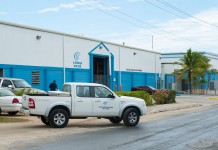
Perched on the corner of the entrance to Boggy Sand Road in West Bay, the Heritage Museum and Craft Shop building stands beside the Heritage Kitchen, which Mr. Powell has leased out. The craft shop, which stocks a mix of local and non-local crafts, operates from 9am to 4pm and is run by Mr. Powell’s wife, Angela.
The museum however, remains shut to the public. The atmosphere within is otherworldly. Once you enter, it is a place long forgotten, there for your taking to be relived. It both enchants and fascinates.
Mr. Powell set up the museum in 1989/90 because he had always liked saving what he refers to as ‘junk’. He was also involved with the West Bay Heritage Committee and started collecting antiques for Heritage Day.
‘I had so many antiques saved up I decided I’d need somewhere to put them on show the whole time,’ Mr. Powell said.
The result is a startling array of old-fashioned utensils from cooking pots to elegant timepieces, old sewing machines, water pitchers, washboards and wooden tubs to gas irons, coal irons, vases and decorative items.
Some of the objects in Mr. Powell’s museum date back to the 1700s. Some of the more interesting items include cannonballs found in West Bay, and spikes from the Wreck of the Ten Sails. A collection of nails dates from 1794 to 2002.
One area of the museum is devoted to Cayman fishing equipment, including a cast net, trap net and turtle net.
Although Mr. Powell carried leaflets throughout the island from Rum Point to the Turtle Farm advertising his museum, it never became very popular in more than a decade of operation, despite a bargain cover charge of only $2 per visitor.
Mr. Powell said tourists never had enough time to visit the museum when touring West Bay.
Although he admits he would have liked the museum to make money, one of the main reasons he opened it was as an educational tool for young people and to keep old traditions alive.
‘Young people seemed to think you just turned a knob and you had water. I wanted them to know it wasn’t always like that,’ he said.
He also would have liked to have put a lump sum of money into the museum to keep it afloat, but said he was struggling with $800 a year to cover the license for both the craft shop and the museum.
Although the building was not insured, it did not suffer extensive damage in Hurricane Ivan. The wall parallel to the sea came down, but has been repaired, and the museum could be up and running in as little as two months if funds were available, he said.
Another problem is that the existing 20 foot x 24 foot building has become too small to showcase the 3,000-plus items Mr. Powell has accumulated throughout the years.
A collection of all the native wood in Cayman, along with a 65-year-old bicycle and a ship’s steering wheel don’t do much to alleviate the congestion. One thing is for certain, however: The older these items become, the more charming they will seem, and with a little help from the public or private sector this little hideaway in West Bay could easily stir itself awake once more.
Related Videos