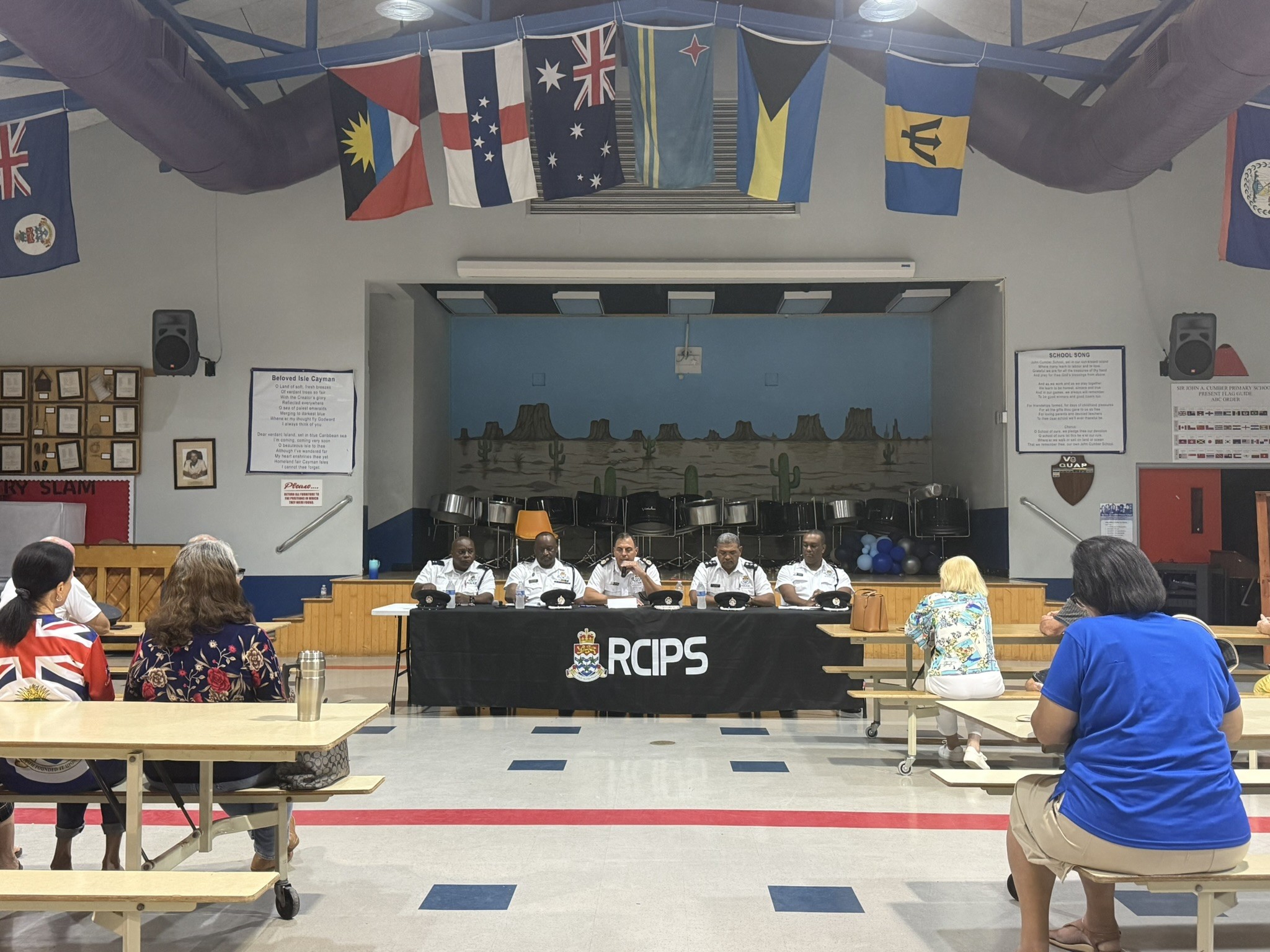
The Royal Cayman Islands Police Service concluded its series of community engagements with a meeting in West Bay on 4 June, with Commissioner of Police Kurt Walton updating residents on community policing, recruitment and upcoming advances in technology.
Recalling the previous West Bay community meeting he had led two years previously, Walton said that the conversation then had been “very different” and, coming in the early months of his tenure, was “really, really tough”.
Past anxiety
Speaking to about a dozen West Bay residents at the evening meeting held at Sir John A. Cumber Primary School, Walton said, “If you recall, we sat here two years ago in the same hall, and the conversation at the time was about guns, gangs, guns, gangs … there was a lot of anxiety, given what we had just went through on February 25 2024, with the shooting at Ed Bush Stadium.”
Walton said that a lot of work had been done since “to do everything possible to stop people killing each other”, but added that he was pleased to be able to talk now about more grassroots community issues.
“The important thing for me,” he said, “is to be open, be honest, be candid, don’t hold anything back. Let us know what’s bothering you and tell us as it is … we can’t police this country without community engagement.”
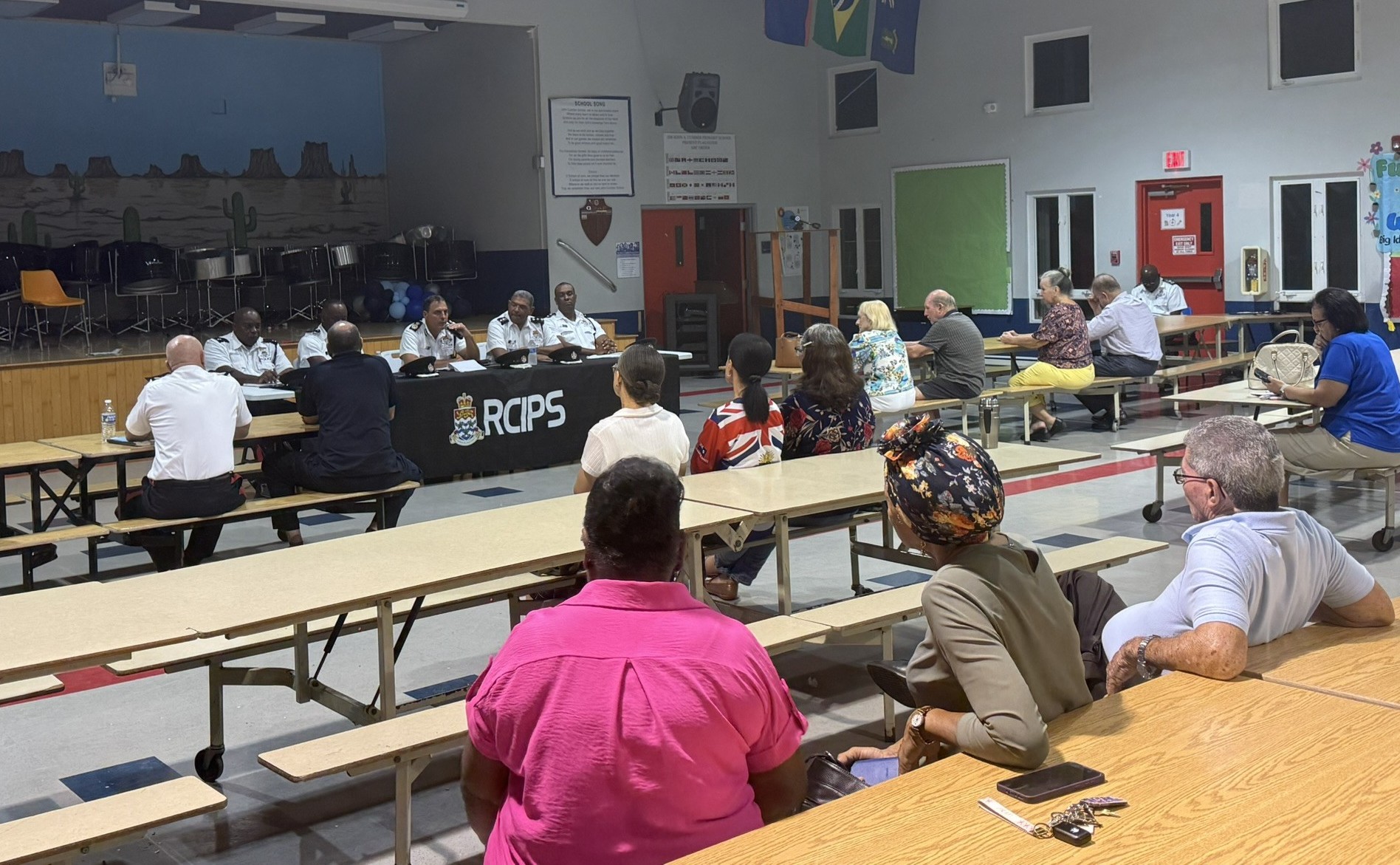
Attendance was sparse but there was no shortage of issues raised. Anti-social behaviour from drivers was a hot topic, from dangerous driving, inconsiderate parking, excessively bright headlights, illegal tint and loud music.
West Bay West MP Julie Hunter asked when numbers of community police were going to increase, with just two officers currently on the West Bay beat.
“I have yet, in the year that I’ve been elected, to see any police cars anywhere around our public beaches or cemeteries or parks – nothing,” she said. “Those are some of the places that are being misused, and a lot of things are happening there that should not be happening. So, if we started by targeting some of those places, we could solve a lot of the things that are happening in our district.”
Walton answered by saying “community policing is really the crux of everything we do”, and that the target was 25 community officers up from 11, aided by the current recruitment drive.
Staff shortage
Speaking of the police force’s chronic staff shortage that meant police officers had to be redeployed away from community policing, Walton said, “We were bleeding. We were literally down to numbers that we had in 2008,” which he said made covering all the different departments an impossible task.
“We’re not where we need to be, and it is certainly the top priority for me,” he said. “I would envision certainly by the start of August, we will start to see a gradual increase in community policing, and by the end of year, we should get to those [target] numbers.”
It emerged that landlord-tenant disputes took up a huge amount of police time, with 314 incidents taking place in West Bay by this time last year, but it is currently just half that, with the intention that other agencies share some of the workload.
Walton said he was “100% an advocate for speed cameras” which were going to be “a game changer” when they are implemented, both by doing the work of the police but also the huge potential revenues they could generate.
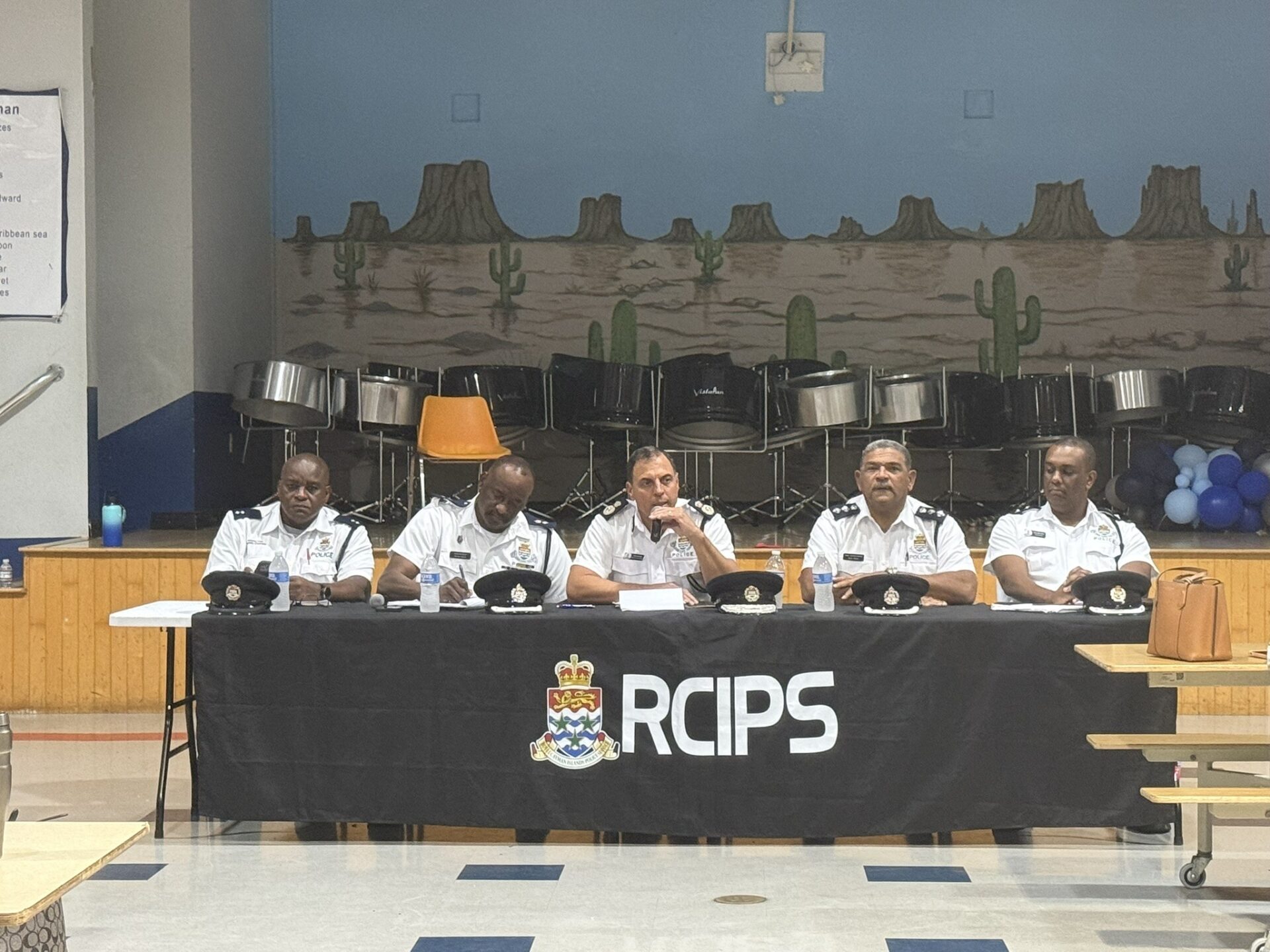
He welcomed the arrival of body cameras that are going to be rolled out by the end of July, and said the force was installing more in-car computers to cut down on paperwork, as well as investing in systems that connect different law enforcement agencies, including Workforce Opportunity and Residency Cayman, Customs and Border Control, the Department of Commerce and Investment and others.
“Ideally, what I want is that I can come in in the morning and turn on my computer, and I can press a couple of buttons and on my screen are dashboards that tell me what performance looks like overnight,” Walton said. “That’s what we can do with the technological enhancements.”
Related Videos