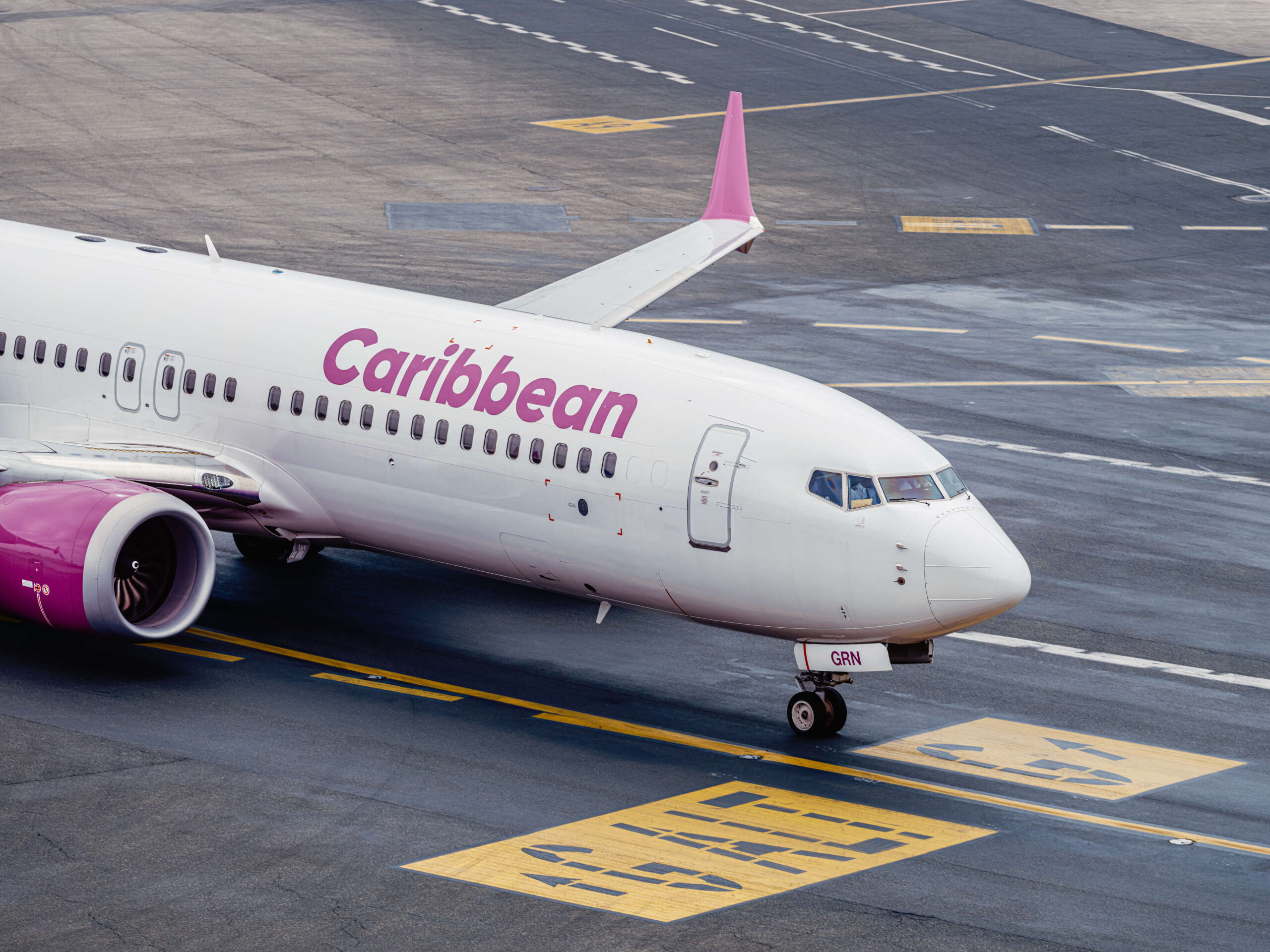
Caribbean Airlines passengers will no longer be able to travel from Trinidad to Dominica or from Antigua to St. Kitts. The Guyana to Suriname route has also been cancelled, while services from Trinidad to Guadeloupe and to Martinique have been reduced to twice weekly.
Those routes were launched in 2023 as part of the airline’s east Caribbean expansion. Trinidad and Tobago’s Minister of Transport and Civil Aviation Eli Zakour told that country’s Parliament that the routes had cost millions of dollars of accumulated losses since inception.
According to Zakour, the accumulated losses for each cancelled route as of 1 April were: US$1.65 million for St. Kitts; US$1.24 million for Guyana to Suriname; and US$730,000 for Dominica. Meanwhile, the reduced routes to Guadeloupe and Martinique have accumulated losses of US$1.86 million and US$1.23 million, respectively.
The losses follow the discontinuation of other unprofitable routes, including Jamaica to Fort Lauderdale, which racked up losses of US$7.2 million, and Trinidad to Puerto Rico, which lost US$4.92 million.
The current Caribbean Airlines board, which was appointed by Trinidad and Tobago’s Prime Minister Kamla Persad-Bissessar in 2025, established a Route Oversight Committee to evaluate loss-making services.
Caribbean impact
“This move is good for Caribbean Airlines because it will reduce its losses,” said regional aviation expert Richard Nanton. “But it’s bad for the Caribbean because the region benefits from air connectivity.

“It hinders the entire region, because with Caribbean Airlines restricting services you end up with greater economic fragmentation.”
A Caribbean Development Bank report, Air Transport Competitiveness and Connectivity in the Caribbean, found that boosting aviation in the region could add US$4.4 billion to GDP and create 288,000 jobs.
“Air connectivity is a critical element to economic growth and development, especially for the small island nations of the Caribbean,” read the 2018 report.
One reason that air connectivity is so important for the Caribbean is because many of its economies rely on tourism, said regional economist Marla Dukharan. “The IMF found that the single factor that drives higher levels of tourists to your island is airlift, not accommodation,” she said.
But as the region heads into hurricane season, Dukharan noted that more intra-Caribbean flights would also boost resilience. “We are a natural disaster-prone region. Being able to leave before a catastrophe – or being able to fly in supplies after one – has been shown to be important.”
Related Videos