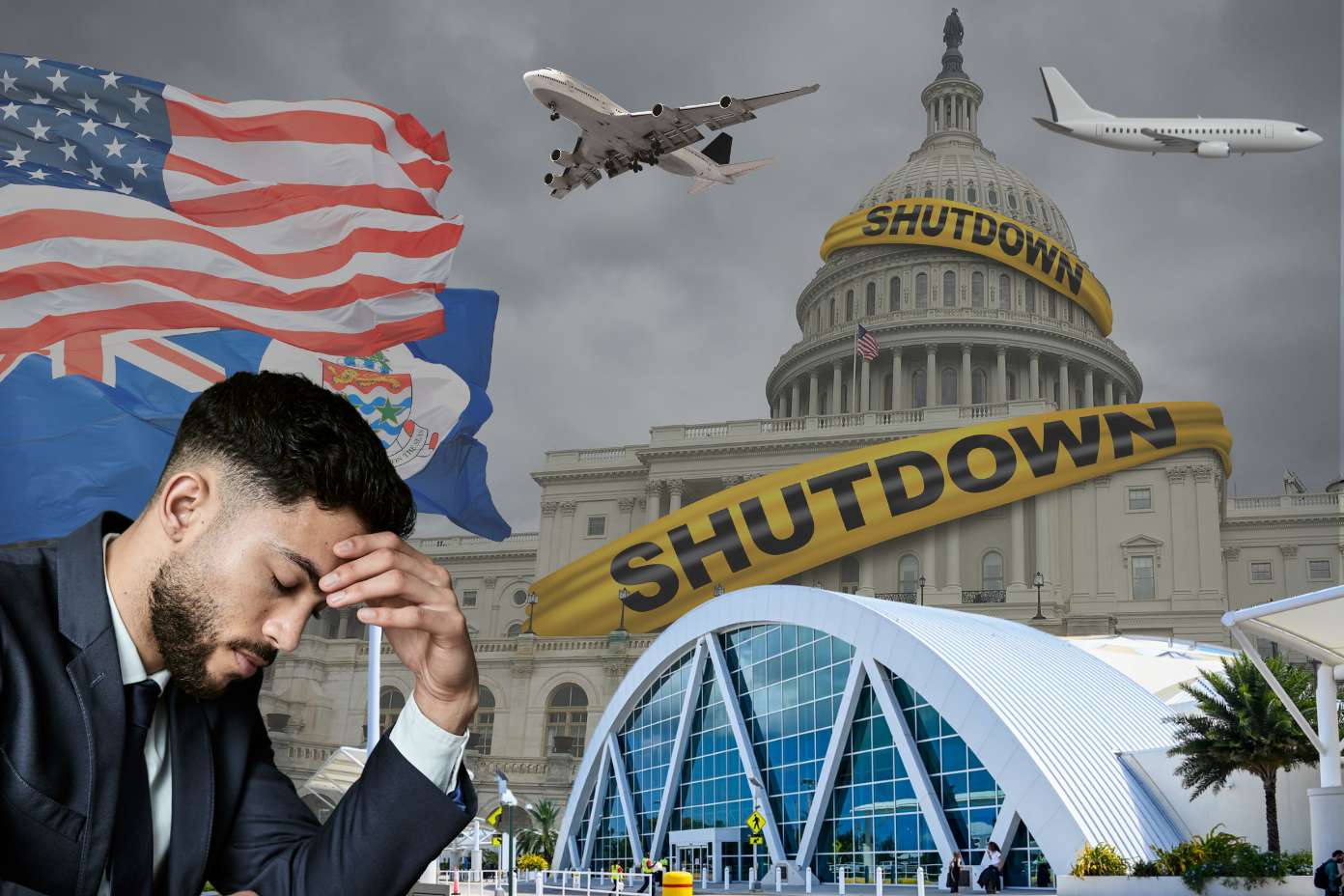
The US federal government shut down at midnight on 1 Oct. after lawmakers failed to agree on a budget, sparking concerns about air travel and the broader tourism industry. For Cayman, which depends heavily on travel to and from the United States, a prolonged standoff in Washington carries immediate weight.
Airline trade group Airlines for America, which represents carriers including United, Delta, American and Southwest, warned that the shutdown could slow the aviation system and reduce efficiency.
Local industry players say they are keeping a close eye on the shutdown’s impact.
“Depending on how long the shutdown lasts, it could certainly negatively affect travel,” said Mindy Hennings of Cayman Travel Services. She noted that while air traffic controllers, TSA officers and CBP staff are deemed essential and will remain on duty, travelers may still encounter delays at major US airports. Cayman Travel Pros said it has not encountered any traveller issues so far.
Reuters reports that about 50,000 Transportation Security Administration officers and all air traffic controllers are expected to keep working without pay. During the 35-day shutdown in 2019, unpaid absences among staff led to longer security lines at airports and forced the Federal Aviation Administration to slow flights in New York, helping to push lawmakers to resolve the impasse.
Despite concerns, Cayman’s tourism sector has historically proven resilient during past US shutdowns. Data show that the 20.5% drop in arrivals between December 2018 and January 2019 – during the longest shutdown in US history – closely mirrored the typical seasonal drop that happens every year after Christmas. The same was true in January 2018, when a three-day shutdown coincided with Cayman posting its highest January arrivals on record up to that point. Even further back, in October 2013, when Washington was at an impasse, Cayman registered its strongest October tourism numbers in a decade.
Outbound travel from Cayman to the US has also shown little disruption during past shutdowns. The 35-day standoff from December 2018 to January 2019 saw a 30% drop, less than the usual post-holiday decline of more than 40%, with both months still surpassing earlier years. January 2018, also a shutdown month, was stronger than 2017, while the October 2013 gridlock aligned with one of the strongest October records for Cayman–US traffic.
On its website, the US Department of State confirmed that consular services such as passports and visas will continue, though some domestic support will be suspended.
But US travelers and the industry as a whole remains on edge.
The US Travel Association warned Congress that a shutdown would inflict a “wholly preventable blow” on the $1.3 trillion travel industry, costing US$1 billion a week and worsening shortages of TSA officers and air traffic controllers. It said the fallout – airport delays, cancelled flights, stalled upgrades, and shuttered attractions – would impact the entire country and hit local economies.
A survey by Ipsos found that 60% of Americans said they would cancel or avoid air travel if a shutdown persisted, while more than 80% agreed that shutdowns damage the economy and inconvenience passengers.
Although past US shutdowns have not disrupted Cayman–US travel in either direction, ongoing staffing shortages in the US aviation system introduce new uncertainty. If travelers lose confidence or delays build up at US gateways, Cayman could feel the impact – not so much in immediate arrivals, but in weakened consumer confidence from its largest source market.
Related Videos