The United States Congress’ decision to not include air travel in its recent decision to postpone passport requirements for cruise passengers returning to that country has been likened to a Category 6 hurricane.
Vincent Vanderpool-Wallace, secretary general of the Caribbean Tourism Organisation, of which the Cayman Islands is a member, said the decision could have crippling effects on the tourism industry in the region.
‘We know that all of the affected governments made their own representation through several diplomatic channels as recently as last Wednesday prior to the final vote of this Bill,’ he said. ‘Because of the potential far ranging effect of this action, there is nothing potentially more devastating. This is a Category 6 Hurricane.’
The Caribbean Hotel Association said it agrees with CTO’s thinking.
‘We fully concur with our public sector partner CTO in their statement equating this piece of legislation with a category 6 hurricane for the Caribbean hotel and tourism industry,’ said CHA President Peter Odle, who cautioned that the Caribbean countries affected stand to face a genuine economic and social upheaval caused by the inevitable shift in travel by US citizens
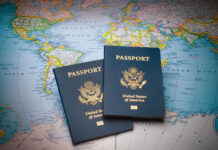
The decision made by Congress last week delays the implementation of the new passport requirements until June 2009 for cruise passengers coming to the US from the Caribbean, Mexico, Canada or Bermuda, but still requires all US citizens travelling by air to these regions to have a passport by 8 January 2007.
A statement from CHA said it has maintained that any postponement of the WHTI implementation should apply equally to all countries involved and equally to travel by land, air and sea and that no country or industry should be disadvantaged arbitrarily to the economic advantage of any other sector.
Mr. Vanderpool-Wallace said, ‘It is incomprehensible that the US Government would approve an amendment that excludes air arrivals from the Caribbean and thereby grant an additional advantage to cruise lines in the Caribbean who already enjoy a significant competitive advantage especially in light of the fact that the cruise lines supported the inclusion of air arrivals also.’
Cayman Islands’ Minister for Tourism Charles Clifford has worked with the Caribbean Tourism Organisation in lobbying on this issue and the original January 2006 implementation date was put back by one year to January 2007. In July of this year Mr. Clifford and Permanent Secretary with the Ministry of Tourism Gloria McField-Nixon visited Capitol Hill where they further lobbied with the International Council of Cruise Lines.
Executive Director of the Cayman Islands Tourism Association Ken Thompson said the organisation is obviously pleased in terms of the extension that has been granted for cruise tourists, but they are disappointed that it has not also been granted for air travellers.
‘This could have negative effects on tourism here,’ he said.
But the CITA still holds out hope and will continue working with the Cayman Islands’ government on trying to influence US officials to extend the deadline for air travellers. This will hopefully happen after the November elections in the US, he said.
According to statistics from the Department of Tourism and Immigration, the vast majority of the Cayman Islands’ US air arrivals, at least some 75 to 80 per cent currently possess passports.
Mr. Clifford said that approximately 20 to 25 per cent of affected air arrivals is a very significant portion. ‘The US is a key market for these islands. We are clearly interested in ensuring that all legitimate travellers who wish to visit from the US enjoy the unfettered ability to do so.’
Related Videos