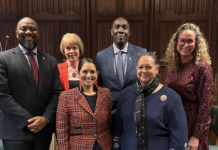
Luis Urrutia Corral, president of
the Financial Action Task Force, the body in charge of fighting money
laundering and terrorism financing, criticised the organisation’s Caribbean
regional associate body at the CFATF Plenary and Ministerial Meeting in the
Cayman Islands last week.
At the meeting that saw the Cayman
Islands take over the chair of the CFATF, Mr. Corral, in his own words, went
“beyond the general remarks that are usually made by FATF presidents at these
kind of events” to express his concern over the relationship between regional
CFATF and the FATF.
Stating that the FATF was in a good
position to compare the functioning of its regional member organisations
objectively, Mr. Urria said in his view “there is a perception that CFATF does
not compare as favourably as it should with other associate members in certain
relevant cases”.
The FATF believes the CFATF could
do more and has noted the absence of CFATF chairs and secretariat from
important FATF meetings as well as a general lack of policy papers and policy
discussions, Mr. Urria said. As a result, the CFATF’s input to FATF is very
limited and CFATF members rarely comment on FATF papers.
In addition “membership fees are
consistently paid late” and “agreed procedures, such as those to sanction
non-paying members, are not enforced,” Mr. Urria continued. “Budgets and
financial audits lack transparency and consistency, which is a serious concern
to FATF,” he said.
In addition, mutual evaluation
reports, the main mechanism of assessing compliance with anti-money laundering
and terrorism financing standards, “are often delayed, and too often not
consistent with other FATF or FSRB [FATF-Style Regional Bodies] reports,” he
said. “Finally, follow-up procedures are ignored by some members.”
Mr. Urria went on to say that the
recent departure of Costa Rica and Panama to the South American FSRB GAFISUD is
an indicator that concerns over the CFATF not meeting associate membership
expectations also exist among CFATF members.
“I would suggest that the
recommendations made by your members regarding your short and long-term
financial stability and viability are implemented as a priority, that
procedures regarding non-paying members are applied, that your plenary meeting
is reformed along the lines of other associate members’ meetings, including the
introduction of working groups, and that recommendations of the Working Group
for Reflection and Improvement are also implemented,” Mr. Urria said.
Assessment needed
Mr. Corral hopes the FATF
secretariat will call for an assessment of how FATF associate members meet
their status and lead to a subsequent debate at the FATF plenary in June 2011,
to which he invited Cayman Attorney General Samuel Bulgin as the new chairman
of the CFATF.
“Mr. Chairman, I have great trust
that CFATF will be able to meet the challenges facing it during your presidency
and that I look forward to providing a positive report on CFATF to the FATF
plenary in June 2011,” Mr. Corral said.
Mr. Bulgin acknowledged that
Cayman’s “important leadership role [in the CFATF] comes at a time of
considerable financial hardship for member countries” and that this is
impacting the ability of the organisation to meet its obligations. It also “has
the potential to affect the image and reputation of the organisation as an
effective partner in the international community in the fight against
transnational organised crime,” Mr. Bulgin said, demanding that the situation
must be resolved quickly.
The 32nd Plenary Meeting and 17th
Ministerial Meeting of the Caribbean Financial Action Task Force was held at
the Grand Cayman Marriott Beach Resort from 2-4 November.
Related Videos