

The Mosquito Research and Control Unit of the Cayman
Islands has been scrutinised in the foreign press in relation to a programme
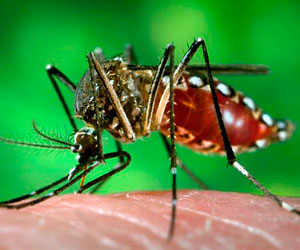
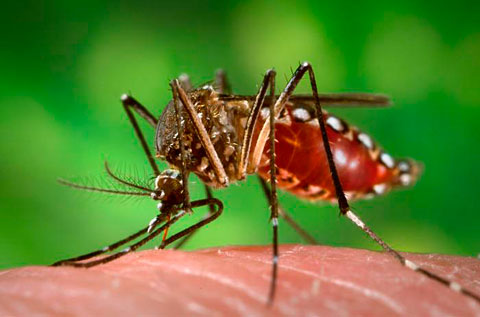
that genetically modifies Aedes Aegypti mosquitoes to combat the spread of
dengue fever.
The undertaking was not highly publicized, though the
Caymanian Compass published an article on 2 October, 2009, during the run up to
the campaign explaining the issue.
At the time, Bill Petrie, director of MRCU, explained
that the initiative was essentially a new spin on an old technique in which
males that were made sterile were released. He added that the difference here
is that the male mosquitoes’ genes were altered, as opposed to their sterility
being chemically induced by radiation.
Some opponents argue that getting rid of mosquitoes could
affect the food chain and throw the ecosystem off balance.
Pete Riley, the campaign director of GM Freeze, a British
nonprofit organisation that opposes genetic modification, said, “Humans have
had a disastrous record of introducing anything into the environment. This can
be classed as interference and the exercise may cause additional problems worse
than the one that is trying to be dealt with.”
Mr. Riley added that there are many possible outcomes to
such an endeavour, all of which are unpredictable, and that predators that feed
on the adult mosquitoes, larvae and eggs would be affected.
Mr. Petrie rejected the notion that this new approach
might be detrimental to other animals who share the ecosystem with mosquitoes
and may feed on their larvae and eggs. He lauded the experiment as a success.
“The Aedes Aegypti mosquito, which is the only mosquito
that carries dengue fever in the Cayman islands of the 35 species that live
here, is actually an invasive species. It has come along many times and each
time we have gotten rid of it. However, after Hurricane Ivan their numbers
exploded. That mosquito does not belong here, so there is no moral or ethical
dilemma in getting rid of it.”
Mr. Petrie explained that as humans, we have tried to rid
ourselves of the bacteria that causes cholera, and many other bacteria, all of
which affect the ecosystem, but it is a question of balancing what is best for
us.
“No one is upset about getting rid of roaches or rats,”
said Mr. Petrie. He added that a major benefit and a source of confidence for
conducting the programme in the Cayman Islands is that the Islands are isolated
in the Caribbean and as a result, the experiment would not affect any other
countries.
This particular method, though on a small scale, had
never been done in the world, he said, and this is one of the reasons it has
garnered so much international attention. He said the term ‘genetically
modified’ is probably another reason people are talking about it around the
globe.
“The real news is that MRCU along with Oxitec of Oxford
University ran the trial for six months and it was successful by all accounts.
We chose a small isolated area in East End. This was done in three blocks; one
block was where the method was introduced, while nothing was done in another
block and the third block was used to monitor the natural population of the
Aedes Aegypti mosquito.
“Once the team perfected the technique, monitoring was
done by traps. The final statistical analysis has shown a significant reduction
in the population of this potential dengue carrier,” said the MRCU director.
The next step is to increase operational field trials to
see if the technique can work under normal circumstances and incorporate it
into the MRCU’s normal programme and go after the worst affected areas of the
Island, such as George Town and West Bay, explained Mr. Petrie.
He said he does not know how the measure would work in
other places.
“I don’t know how this will work for Brazil, Honduras or
any other country. I am responsible for the Cayman Islands, and what I can say
is that the method seems to be working for us. With dengue on the rise and some
100 million cases reported each year around the world, in my opinion this
campaign will greatly reduce the risk of a dengue outbreak for us in the Cayman
Islands.”
Related Videos












Mr. Riley is correct; you have know way of knowing what the long term outcome will be in this experiment, which is using the residents of Cayman as human guinea pigs! No other location in the world hss permitted this experiment; after years of trying. I will suggest that Big Pharma or Chemical companies are behind all of this. Why is it so important that Cayman is isolated? Unintended consequences maybe? The history of these types of experiments is not good. This is scary.
I DON’T KNOW, BUT THAT GROUP FROM THE UK, SOMEHOW FAILED TO PROPERLY INFORMED THE PUBLIC OF THIS EXPERIMENT! AND WORSE, OUR POLITICIANS FAILED TO PICK IT UP AND PUBLICLY QUESTION IT!
FRIGHTENING! AND JUST TO KNOW MY CHILD COULD HAVE BEEN BITTEN BY ONE OF THEM!
Thank YOU Cayman Government for making us guinea pigs.
Unfortunately, history is replete with examples of what can go wrong when man interferes with nature. And while I respect the hardworking people of MRCU, think there should have been greater discussion about this before hand, there’s plenty of scientists just now learning about this and expressing concern. The Co-director of Eco-Nexus (a UK-based non-profit research organization) expressed surprise that the trials had occurred, saying that they had not been mentioned at the fifth meeting of the Parties to the Cartagena Protocol on Bio-safety, which addresses international safety issues relating to GM organisms. She described the lack of publicity surrounding the trials as worrying, both from the scientific perspective as well as public participation perspective. Until a full, long-term environmental assessment of the Cayman trials has been carried out, they’re advising to not go forward with Malaysian trials of the same strain.