Complaining that the US Agency for International Development is asking for risky information about how its Cuba democracy funds are spent, the Freedom House advocacy group has surrendered a $1.7 million grant from USAID.
Information about the identities and travel plans of the people involved in its Cuba programs could be leaked to Havana, said Daniel Calingaert, deputy director of programs at Freedom House.
“We take very seriously the need to be accountable for these programmes,” Calingaert said. But the USAID requests for information are “not just onerous. They really raise the risk of what we do, especially in the age of Wikileaks.”
The US programmes are designed to support peaceful civil society activities in the communist-ruled island, but Cuba has branded them as subversive and made it illegal to deliver or accept the US assistance, requiring what USAID calls “discretion.”
USAID subcontractor Alan P. Gross is serving a 15-year prison sentence in Havana on charges he violated the country’s sovereignty by delivering at least one satellite telephone to expand the Internet access of Cuba’s tiny Jewish community.
Controls tightened
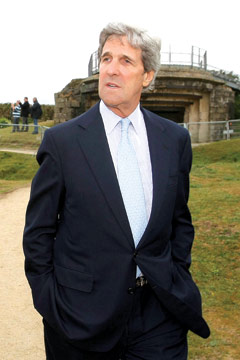
Controls over the funds have been tightened in the past two years, after Senate Foreign Relations Committee Chairman John Kerry, Democrat-Massachusetts, stepped up complaints that the Cuba programmes were ineffective and all but designed to provoke Cuban repression.
Last month, Senator Kerry asked for a detailed list of recipients of USAID and State Department funds for the Cuba programmes. He did not get the information, amid concerns that the information would fall into the hands of the Cuban intelligence services.
Freedom House said it is going ahead with its two current grants from the State Department’s Bureau of Democracy, Human Rights and Labor, totalling $1.3 million, to carry out some polling in Cuba and work in the field of youth culture.
But it is surrendering the $1,699,394 it was to receive for the last year of a three-year, $5-million USAID program, Mr. Calingaert said in a phone interview from Freedom House headquarters in Washington.
The program was designed to work primarily in the field of human rights documentation, showing activists how to move beyond simple alerts to abuses to gathering evidence and organizing case files, as well as to support digital platforms such as blogging or Twitter, Freedom House noted.
USAID’s official description of the programme in a document issued this year referred vaguely to focusing the funds on “increasing access to information to Cuban civil society groups through new media initiatives that include technical assistance and training.”
The problem with the $1.7 million instalment, Freedom House said, is that USAID added a requirement for the prior vetting and approval of every contractor and subcontractor involved in the Cuba program.
“That means everyone we send to Cuba” to deliver the USAID assistance,” said Calingaert, “and that prevents us from running an effective program.”
Freedom House said it spent four month negotiating with USAID on how it could meet the new requirements without endangering its Cuba operations, but in the end decided it was best to simply give up the money.
“I defer to Freedom House as to the reasons why they chose” to forgo the money, said Mark Lopes, USAID’s deputy assistant administrator for Latin America and the Caribbean. “We apply the same rules to every partner, these are not new rules, and we are committed to transparency and accountability in all of our programs.”
One other recipient of USAID’s Cuba funds is believed to have agreed to provide the required information in writing, while two others are providing only verbal reports, according to people involved in the programs. They asked for anonymity because of the sensitivity of the issue.
In a statement issued Friday, Rep. Ileana Ros-Lehtinen, Republican-Florida, blasted Kerry for his continued blockage of USAID and State Department efforts to spend another $20 million for the Cuban programs — money approved by the full Congress in 2008.
Senator Kerry has offered to lift his “hold” if the amount is cut by $5 million – including the $1.7 million that would have gone to Freedom House. State and USAID officials have not replied to the offer.
Created in 1941 with the support of Eleanor Roosevelt to counter the spread of Nazism, Freedom House is one of the oldest US democracy advocacy groups. After World War II it began working to spread democracy as the best way to fight communism.
Related Videos