

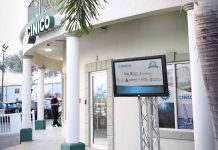
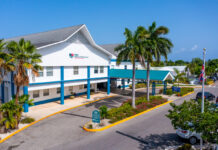
A comprehensive review of what the Cayman Islands spent to provide health care overseas for citizens and residents noted a lack of record-keeping within the Cayman Islands National Insurance Company.
Because of that, the auditor general’s office was unable to quantify how much may have been overpaid for certain health care services.
“Overseas medical expenses were not effectively managed,” Auditor General Alastair Swarbrick noted in its report.
The Cayman Islands National Insurance Company, or CINICO, saw its annual incurred claim losses for civil servants and pensioners rise by 35 per cent in the last five years, going from $11.5 million in 2006/07 to $15.5 million in 2010/11. Health care losses for indigents almost doubled during the same time period, according to figures contained in the audit.
More than $29 million was spent in the 2010/11 government budget year for overseas medical expenses.
Overseas medical expenses are paid to individuals who cannot receive health care services they require in the Cayman Islands. Referrals for overseas treatment are made by a patient’s doctor and are approved or denied by the Health Service Authority’s chief medical officer.
Typically, CINICO management hired a third-party contractor, known as a case management company, to handle negotiation and payment of overseas health care claims. The bidding process and management of those companies was a major problem area identified by auditors.
In its management response to the auditor’s report, CINICO said medical costs are increasing by an average of 10 per cent each year. Increases are due in part to more advanced and expensive medical care and patients’ poor lifestyle and health choices.
“A conclusion that the increases in claims costs year over year is only as a result of ineffective oversight by the overseas medical management programme, in an incorrect conclusion for the reader of this audit report to make,” the response stated.
Case managers
From 2005 to 2011, CINICO used the same case management company to handle overseas medical claims. There had been no formal review of the contract and attempts to re-tender the agreement during the last five years were not successful, according to auditors.
In January 2012, CINICO entered into a two-year contract with a case management company run by the United States-based Mayo Clinic Health Solutions.
However, despite the exclusivity clause in the case management contract, a second case management company was used to handle millions of dollars of claims. The CINICO board discovered the use of the second case manager in May 2010 and in October 2010 the board advised the Health Services Authority to only utilise the first case manager.
There was no evidence of any oversight within CINICO of the work performed by the second case management company.
“No documentation was made available to us to verify what was being done,” auditors noted. “We found no documentation relating to the terms and conditions under which the new case management company was to operate.”
The same situation existed for a certain number of overseas medical cases that were administered internally within CINICO. That shifted responsibility in those cases from the case manager to CINICO itself.
“We see this as an area of considerable risk,” auditors noted. “It was … a concern as to why CINICO would take on certain cases in the first instance.
“Since documentation could not be made available to us for the cases administered internally, there was no evidence to examine. This was a very significant shortcoming.”
Auditors also noted there was no general policy in place to determine why certain exceptional care cases were considered as such and others were not. It was also not clear why certain of those cases were taken away from the originally selected case management company.
No leadership
For a significant period of time, between late 2008 and 2010, CINICO was effectively leaderless – save for the appointment of an interim chief executive officer. For a total of 23 months, there was no chief executive at CINICO, auditors found.
“This led to a situation where the delivery of overseas health management services was not controlled and administered in a manner that would provide any meaningful information on how well the programme was being delivered.”
CINICO board members were also only being appointed to one-year terms, leading to a lack of historical knowledge and experience within the organisation, auditors said. The appointments for board members were also coming up all at the same time.
“Good practice requires that directors be appointed for a minimum three-year term,” the audit report stated.
Related Videos











With a program of this magnitude, the government owes the public proper oversight.
Without proper checks and balances in place, it makes it ripe for corruption.
This is 2012 for Pete’s sake not 1962.
It seems everywhere the AG looks he finds major fiscal irresponsibility issues.
I recommend hiring an off-island high-end pit bull like forensic accountant(s)to rip this one wide open to find the money trail.
The future annual savings will more than pay for this service and probably take some cronies out of play for good.