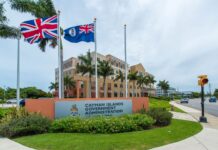
Joint message from Deputy Governor, Information Commissioner
We are pleased to jointly kick off the activities of Right to Know Week 2012 in Cayman. In doing so, the Cayman Islands is joining over 80 countries around the word in celebrating International Right to Know Day on Friday, 28th September.
While the importance of openness and transparency is increasingly recognised and translated into Freedom of Information legislation around the world, the Cayman Islands remains one of the trail blazers in the Caribbean in this regard. While there are at least 12 countries or territories in the Caribbean that have FOI Legislation at some stage of development and implementation – either as a draft, passed or dormant law – research shows that we in Cayman are amongst the most advanced in terms of the implementation and operation of our FOI Law. Recently our legislation has been copied by the Bahamas, and it has also serves as an example for Bermuda, but so far many FOI regimes in the region remain in their infancy.
However, in Cayman we have now seen almost four years of a vibrant and active Freedom of Information regime: A steady number of requests are being responded to by public authorities and the Information Commissioner’s Office is busily hearing appeals and monitoring compliance. Internal policies and procedures are in place within Government and the ICO to ensure that the objectives of the FOI Law are being upheld.
Law states objectives
These objectives are stated in the Law itself, and are worth repeating. The FOI Law aims to reinforce and give further effect to certain fundamental principles underlying the system of constitutional democracy, namely – government accountability, transparency and public participation in decision making. This is achieved by granting to the public a general right of access to records held by public authorities, but there are also exemptions to disclosure which balance this right against the need to keep some records confidential for various reasons.
Although, in practice finding the balance between the general right to access and legitimate exemptions under the Law can at times be complex, there can be no doubt that the FOI Law has positively changed, and continues to change, the way both the general public and public officers view official records and information.
Recently in the UK the Justice Select Committee of Parliament completed a “post-legislative scrutiny” of the FOI Act 2000. A close parallel can be drawn between its findings and our experiences in Cayman, and it is worth summarizing some of these findings.
The Select Committee’s report calls the FOI Act “a significant enhancement of our democracy”, and agrees with most of the witnesses that the Act is working well, calling FOI a “constitutional right, a fact that can get lost in complaints about the operation of the FOI regime”. On the question of cost, the Committee concluded that “the cost to public authorities must be weighed against the greater accountability the right to access information brings”, since “there is evidence of both direct cost savings, where [an FOI] request has revealed erroneous public spending, and an indirect impact whereby public authorities know that they will be exposed to scrutiny.. . and use resources accordingly.”
The report reaches these further conclusions:
proactive publication is important in achieving openness and transparency. It also reduces the number of applications made;
there should be no changes to the system of “requestor blindness”, since the focus of FOI is on whether disclosure is justified, not on the identity of the requestor. As well, it would be prohibitively expensive to police a system that requires each applicant to provide their real name;
public authorities should continue to use existing exemptions to protect the necessary “safe space” for high-level policy discussions. Research shows that the so-called “chilling effect” of FOI on such discussions is negligible;
when public functions are outsourced to the private sector, contractual terms should clearly safeguard the public’s access rights.
As the new Constitution is about to come fully into force, we should all strive to uphold and promote the tenets of good governance. Therefore, we are delighted to boast that in the area of Freedom of Information we have made great strides over the last four years.
Public sector encouraged
We encourage the Public Sector, at all levels, to embrace a culture of openness and transparency, to support the proactive disclosure of information, and to comply with the provisions of the Freedom of Information Law. We encourage members of the public to embrace your right to know, and use the Law responsibly to assist you in being better informed citizens.
We invite you to participate in the activities and events that are being held in celebration of Right to Know this week. In particular, you are invited to attend the ICO’s “meet and greet” events at the Hospital, the Government Administration Building and Market at the Grounds and Camana Bay. Also, be sure to inform yourself by checking out local media for interviews and articles, including the ICO’s daily page in the Caymanian Compass, the ICO’s own website and on Radio and TV throughout Right to Know Week.
Provides policy advice on areas of common concern for public authorities regarding Freedom of Information.
Provides general advice on interpretation of sections of the FOI Law and Regulations and procedural and administrative requirements.
Monitors and coordinates execution of the FOI Implementation Plan.
Makes presentations and arranges briefings for public authorities.
Conducts comprehensive training of Information Managers from each public authority at basic and advanced levels.
Prepares guidelines and outlines procedures for processing FOI requests, standard forms, and requirements for giving of reasons, etc.
Coordinates the creation of a Data Protection Policy for the Cayman Islands.
Develops guidelines for whistle-blower protection.
Acts as Secretariat for the Steering Committee.
Related Videos