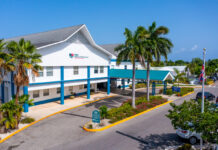
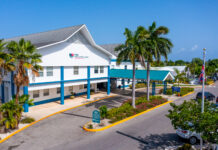
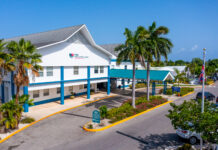
Patients at the Cayman Islands Hospital’s new dialysis unit are now able to take control of their own dialysis care through a home-based program.
Dr. Nelson Iheonunekwu, internist and nephrologist at the Health Services Authority, said, “The home-based dialysis program takes the form of continuous ambulatory peritoneal dialysis and automated peritoneal dialysis.”
Giving some background on the new service, Dr. Iheonunekwu said, “This program offers patients the opportunity to take control of their treatment, giving them far greater flexibility and independence.”
“When they participate in the home-based program, they do not need to then visit the Dialysis Unit at Cayman Islands Hospital three times a week for their treatment,” he added.
Dr. Iheonunekwu said that patients who are able to take control of their dialysis do well on the home-based program. “Patients are trained in how to administer their own dialysis treatments and many undertake their exchanges in the comfort of their own bedroom,” he said. “Additionally, the home-based unit is portable, making it convenient for the patient. Prior to doing their dialysis treatment, patients are instructed to follow the necessary hygiene procedures; the actual exchange takes about 20 minutes.”
Some patients, he said, have to undertake their dialysis every four hours, some every six. The flexibility with the home-based program means that patients are often able to go to work and live a more normal life.
Dr. Iheonunekwu said studies have shown that there is very little difference in life expectancy of patients who undertake the home-based peritoneal dialysis and those in a hospital-based program.
Lizzette Yearwood, CEO of the Cayman Islands Health Services Authority, explained the need for the expansion to the dialysis service offered at the Cayman Islands Hospital.
“Cayman is, unfortunately like the rest of the Western world, currently seeing an increase in the number of patients suffering from chronic kidney disease. Our chronic kidney disease and dialysis population has grown exponentially over the years; in 1998, there were 10 dialysis patients, compared to 52 patients requiring dialysis in 2012. This represents a 420 percent increase over a period of just 15 years,” she said.
Related Videos