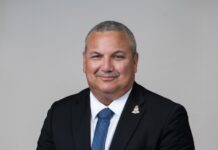
The ability of government ministers to look after their own expenses absent the watchful eye of civil service top managers has been questioned in the auditor general’s latest report.
Cayman Islands Public Management and Finance Law allows for what are known as executive expenses or executive transactions to be incurred by ministers outside the purview of chief officers, the auditor’s review of central government resources found.
“In practice, executive expenses may or may not be subject to the same controls or oversight provided for entity expenditures that flow through a ministry or portfolio,” Auditor General Alastair Swarbrick stated in a report released last week, adding that each executive expense is handled differently, depending on the minister involved.
The lack of clear guidance or rules for how those expenses would be handled were found troubling by Mr. Swarbrick.
“In the end, any government expenditure that does not have to follow appropriate controls … is at high risk of abuse and misuse,” he said. “We believe that the government should review whether there is a need for executive expenses at all.”
Executive transactions can include a number of areas in the government budget, such as transfer payments to organizations outside the public sector. Auditors have previously given the example of the government’s Nation Building Fund as one of the expenses that has not typically been included in the individual financial statements for ministries and government portfolios, and so were not audited by Mr. Swarbrick’s office.
The Nation Building Fund is undergoing a review by the auditor general. Some of the areas being reviewed in the audit have already become the subject of either criminal investigations by the police or political fodder in the Legislative Assembly.
Regarding the Nation Building Fund, there has been a police investigation into Sandra Catron’s alleged involvement in receiving payments from the fund. Ms Catron has repeatedly denied any wrongdoing in connection with the case.
In that case, police confirmed in September that officers were conducting a criminal investigation into more than $50,000 received by a Cayman Islands resident from the former UDP government’s Nation Building Fund.
Those payments, for an online paralegal instruction course, were made to a company named Micro Matrix, owned and operated by Ms Catron, according to police.
In an unrelated case, made public in the Legislative Assembly by Premier Alden McLaughlin, two students were given sports contracts of $28,000 a year to train for the 2016 Olympics, without any input from the Cayman Islands Olympic Committee or Ministry of Sports. The two “contracts,” which were not attached to any school or academic institution, are under review by the Sports Ministry, as well as by the auditor general.
Other instances involving Nation Building Fund disbursements are being looked at, but officials with the auditor general’s office and the Royal Cayman Islands Police Service have refused to discuss details.
In any case, Mr. Swarbrick advised, the system requires some reform.
“We have observed instances where ministers have established administrative responsibilities outside of their ministry, without the input and approval of the chief officer,” Mr. Swarbrick said. “Non-public servants have been given the authority over public funds, yet they are not subject to requirements [that civil servants must meet].
“The chief officer must, at a minimum, agree to the administrative mechanism [inputs] by which the ministry’s outputs, are to be achieved and his or her agreement in this regard must be informed, voluntary and affirmative.”
Related Videos