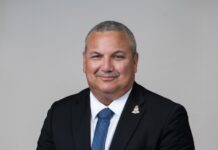
The Royal Cayman Islands Police Financial Crime Unit is reviewing government travel records in conjunction with government auditors to identify whether any potential offenses have taken place.
The information being reviewed deals only with records obtained in a recent travel and hospitality spending audit completed by the Cayman Islands Auditor General’s Office, according to a statement issued this week from Anti-Corruption Commission Chairman and police commissioner David Baines. More recent disclosures of travel-related costs and government officials’ credit card spending were not alluded to in the statement, which was issued via the commission’s secretariat.
“To date, no criminal allegation has been referred to the Anti-Corruption Commission or the Anti-Corruption Unit in relation to the credit card audit,” the statement read.
“The [commission] is aware that a review of the available information and identification of where gaps exist in the required information is taking place between the auditor general’s office and the RCIPS Financial Crime Unit.”
The May report detailed numerous areas of potential “gaps,” with nearly $500,000 in spending on unexplained travel and hospitality items occurring between 2009 and 2012. “It was unclear whether the expenditures had any business purpose,” Mr. Swarbrick said at the time.
The audit noted that some of the hospitality and travel expenses were paid for by government-issued credit cards given to elected ministers and senior government officials.
The five ministers who were elected at the time the audit was done received credit cards with spending limits from $15,000 to $25,000. The 47 senior officials noted in the report were given credit cards with limits between $5,000 and $50,000.
Of the $458,000 in unaccounted for travel and hospitality expenses, auditors noted that $71,000 of the expenses were incurred on the credit card of one former minister who “effectively self-approved” the payment of those transactions.
Mr. Swarbrick said the responsibility for placing proper controls on such transactions fell to the civil service chief financial officers in charge at the various ministries and portfolios. Government financial controllers, in a number of cases, approved the expenses for which no explanation had been provided.
“We found that the chief financial officers involved were negligent in these duties,” he said.
The commissioner’s statement this week indicated that police and audit officials still have a large paper trail to go through in relation to the travel spending review. “The scale of the information to hand means that it is impractical to comment further upon criminal actions or otherwise of any person at this time,” the statement read.
Section 20 of the Cayman Islands Anti-Corruption Law, 2008, states that any public officer or member of the Legislative Assembly to whom any loan, reward, advantage or other benefit is given in contravention of the law “shall report to the Anti-Corruption Commission or a [police constable] such loan, reward advantage or other benefit” together with the name of the person who offered the benefit or otherwise. “If not managed effectively, [travel and hospitality spending] could be seen as providing personal benefits to officials,” Mr. Swarbrick said.
Related Videos