

Thinking about pistols at dawn? Casting a spell under a full moon? Charging someone a fee to catch a duppy? Dumping a bucket of night soil on a local road? Think again. Under Cayman’s laws, all these are illegal and could land you with a fine or in prison.
These ‘offences’ are among some of the more archaic provisions in local laws, while the wording of others would be considered very politically incorrect these days, such as sections 132 and 145 of the Penal Code which deal with indecent assault and refer to a man or a woman who is “a defective”.
The Law Reform Commission is working to modernise Cayman’s Penal Code, under which duelling, obeah and witchcraft, and ghost catching are outlawed. The commission is concentrating initially on addressing any sections or wordings in the law that have human rights implications or may run contrary to the Bill of Rights.

Jose Griffith, the commission’s director, said it is putting together a ‘draft discussion paper’ on the various elements of the Penal Code that need to be addressed. This could involve changing the language involved, making minor adjustments, or repealing entire sections.
Once the draft paper is complete, it will be put out for public consultation, after which a final document will be drawn up based on the Law Reform Commission’s recommendations. This will be sent to the Attorney General’s Office, and from there, it will be forwarded to Cabinet who will determine if it needs to go before Parliament.
“It’s a big project,” Griffith said.
“When the commission was established in 2005, the objective was to modernise laws, from A-Z, to go through each one and look at the laws that need to be revised … whether that be a minor cosmetic change or something more substantial, or whether they need to be repealed entirely,” he said.
He said some of the matters the commission looks at come from its own proactive research or from referrals from others. The review of the Penal Code, for example, came about because of a referral from Attorney General Samuel Bulgin.
A recent change to the Penal Code was the decriminalisation of suicide, following a review of the law by the commission.
One part of the Penal Code that the commission is looking at is the offence of “insulting the modesty of a woman”, which carries a maximum penalty of three years in prison. Though this may sound like an outdated concept in these modern times, the charge pops up in court on a fairly regular basis, including as recently as this month. Lawyers representing defendants charged with this offence have argued that it is archaic, that there is no definition under the Penal Code of exactly what a woman’s modesty is, and that no corresponding offence exists for men.
Section 157 of the Penal Code, which refers to trading or distributing any object “tending to corrupt morals” has also come under fire. In 2017, it was used as the basis for customs officers seizing massagers, which they considered to be sex toys, from a local retailer. This broad statute does not actually mention sex toys, but refers to “obscene” items. In the 2017 case, the customs department eventually backed down and returned the massagers to the store.
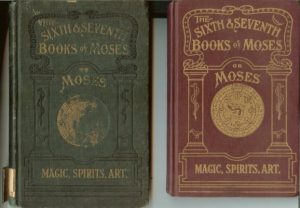
An accompaniment to the Penal Code is the Prohibited Publications Order, which was revised in 1998. This order lists scores of books, magazines, newspapers and other publications that are banned in the Cayman Islands. Among these are publications from Communist countries, like China, Russia and Cuba; books on magic and occultism; and erotica magazines, such as ‘Hustler’, ‘Eros’ and ‘Hooker’, as well as Madonna’s 1992 book ‘Sex’. Some of the banned publications were discontinued years ago – ‘Spicy Detective’ was last published in December 1942 and the Far Eastern Economic Review put out its last edition in December 2009.
The Penal Code, while first introduced in 1975, is based on British common law and statutes, many of which were already archaic by the time they were introduced in Cayman.
The law is essentially a consolidation of a number of pieces of legislation passed between the late 1800s and the mid 1990s, according to the Law Reform Commission’s 2020 annual report. Since the ‘70s, the Penal Code has undergone only minor changes, such as the adjustment of type and length of punishments with the introduction of some new offences, but has never undergone a comprehensive review.
According to its latest annual report, the Law Reform Commission’s review so far has identified provisions of the Penal Code that raise human rights issues, “including provisions relating to immature age (minimum age of criminal responsibility), compulsion by spouse, insulting the modesty of a woman, procuring abortion, unnatural offences, indecent assault, incest and obeah”.
The commission has also been comparing elements of Cayman’s Penal Code to relevant provisions of the penal laws of other jurisdictions, such as England and Wales, Jamaica, Canada, India, Bahamas and Australia.
Although the Penal Code is the focus of the Law Reform Commission at the moment, it’s not the only law that addresses outdated behaviours.
The Towns and Communities Law, for example, threatens a $12 fine for emptying ‘night soil’ onto a street between the hours of 4am and 10pm, and a $30 fine upon conviction for discharging a cannon in town.
Griffith said the commission welcomes feedback on what areas of Cayman’s laws may need updating or amending, and he invited members of the public to provide the commission “with specific submissions on any area(s) of the law which appear to be in need of reform or repeal”.
Related Videos













How about looking at the archaic law that prevents music on a Sunday? Every few years New Years Eve or new Years Day falls on a Sunday.
Thus either no music on New Years Eve until midnight or else no music after the stroke of midnight to welcome in the New Year.
No one is forcing anyone whose religious convictions demand that THEY should not listen to music on a Sunday. That’s their choice to make.
But at a time when we have become an international tourist destination such laws are quaint at best.