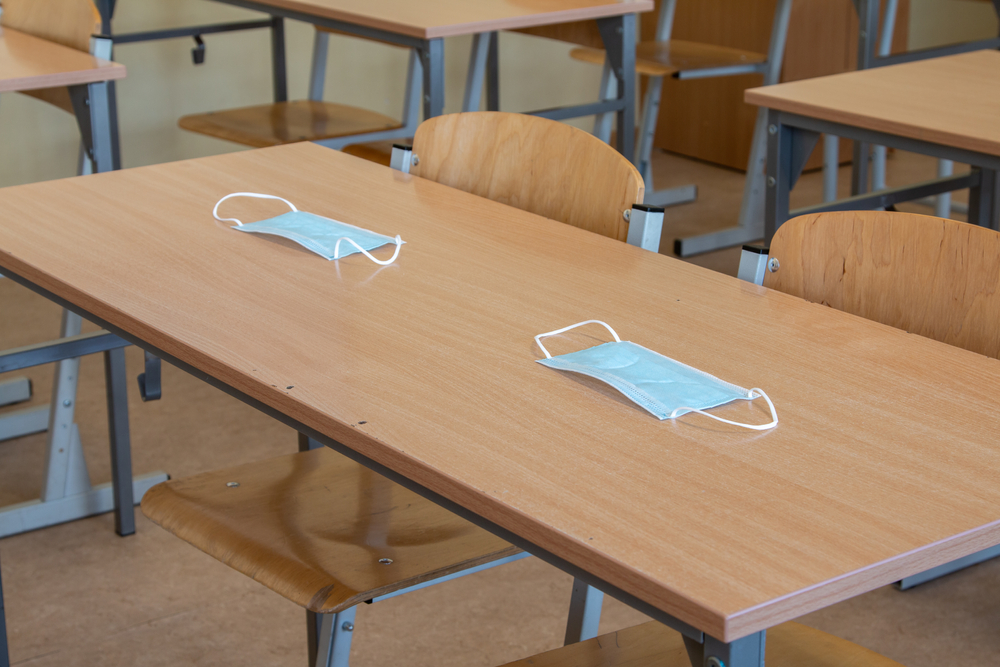
Despite resistance in some quarters, Director of the Department of Education Services Mark Ray is standing by the decision to mandate masks in schools for students age 5 and above.
He is also encouraging parents to have their children wear the masks in school.
“All of those protocols that we put in place are for their protection,” the DES boss said Wednesday (6 Oct.) night during an interview on the Cayman Compass weekly Facebook talkshow The Resh Hour.
Ray said parents can be assured that all sanitisation efforts are checked, as well as the wearing of masks in schools and on the buses.
He also encouraged parents to ensure their kids have masks when they are getting on the school bus.

“If they don’t have masks, normally we have some spares, [but] not a lot that we can provide them,” he said, adding that parents should encourage their children to wear a mask.
“Don’t ask them not to do it or… be rebellious about it because what happens is that then it has a knock-on impact for others who may very well be more vulnerable than the other students. So we want to make sure that we protect ourselves and we protect others,” he said.
Masks were mandated on 20 Sept. after 18 students had tested positive for COVID-19 from the George Town Primary School. The cases were scattered across nine of the 14 classes at the school and ranged from years 2 through 6.
Since then, several schools across Grand Cayman, including John Gray and Clifton Hunter High Schools, have recorded COVID-19 cases.
A petition, which objected to the mask mandate, has been circulating in the community and had attracted 699 signatures as of 7 Oct. The petition said there are no recommendations from the UK to wear masks in primary schools and, given Cayman’s vaccination numbers, there is no need for the mandate here.
However, Ray said the mask mandate was based on the advice of the Public Health Department which reviewed recommendations for masks.
He said the decision was based on a couple of factors, including the lack of space in some classrooms to safely maintain a distance between students.
“While some of the schools may have bigger classrooms, we have a lot of classroom libraries, we have a lot of different things that cut back on the actual square footage that’s available for students to sit, so we not able to provide that six-foot recommended distance,” he said.
Added to this, Ray said, looking at what constitutes close contact – fewer than six feet of distancing – the masks made sense.
“If we can’t avoid the closer-than six feet, [masks are] going to be really important for us,” he said.
The WHO and UNICEF advise that children aged 5 and under should not be required to wear masks.
The organisations say the decision to recommend masks for children aged 6-11 should be based on several factors, including whether there is widespread transmission in the area where the child resides, the ability of the child to safely and appropriately use a mask, access to masks, and adequate adult supervision and instructions to the child on how to put on, take off and safely wear masks.
“Children aged 12 and over should wear a mask under the same conditions as adults, in particular when they cannot guarantee at least a 1-metre distance from others and there is widespread transmission in the area,” the WHO guidance states.
Related Videos