

The last 19 months have been tough for Verona Dixon. She had been working as a room attendant at the Marriott Beach Resort for 10 years when the pandemic hit and the borders closed last March.
“When we closed, everybody thought it was going to be for maybe a month. Nobody thought it was going to go on this long,” she recalled.
“We were looking at it like a little holiday. Nobody was worried about job security at that time.”
But one month turned into two, two turned into six and now Dixon is well into her second year without regular work. The single mother is one of at least 3,000 displaced tourism employees who have been surviving off a monthly government stipend of $1,500, as the COVID crisis and border closure dragged on.
It’s a rough time that she is trying to turn into an opportunity.
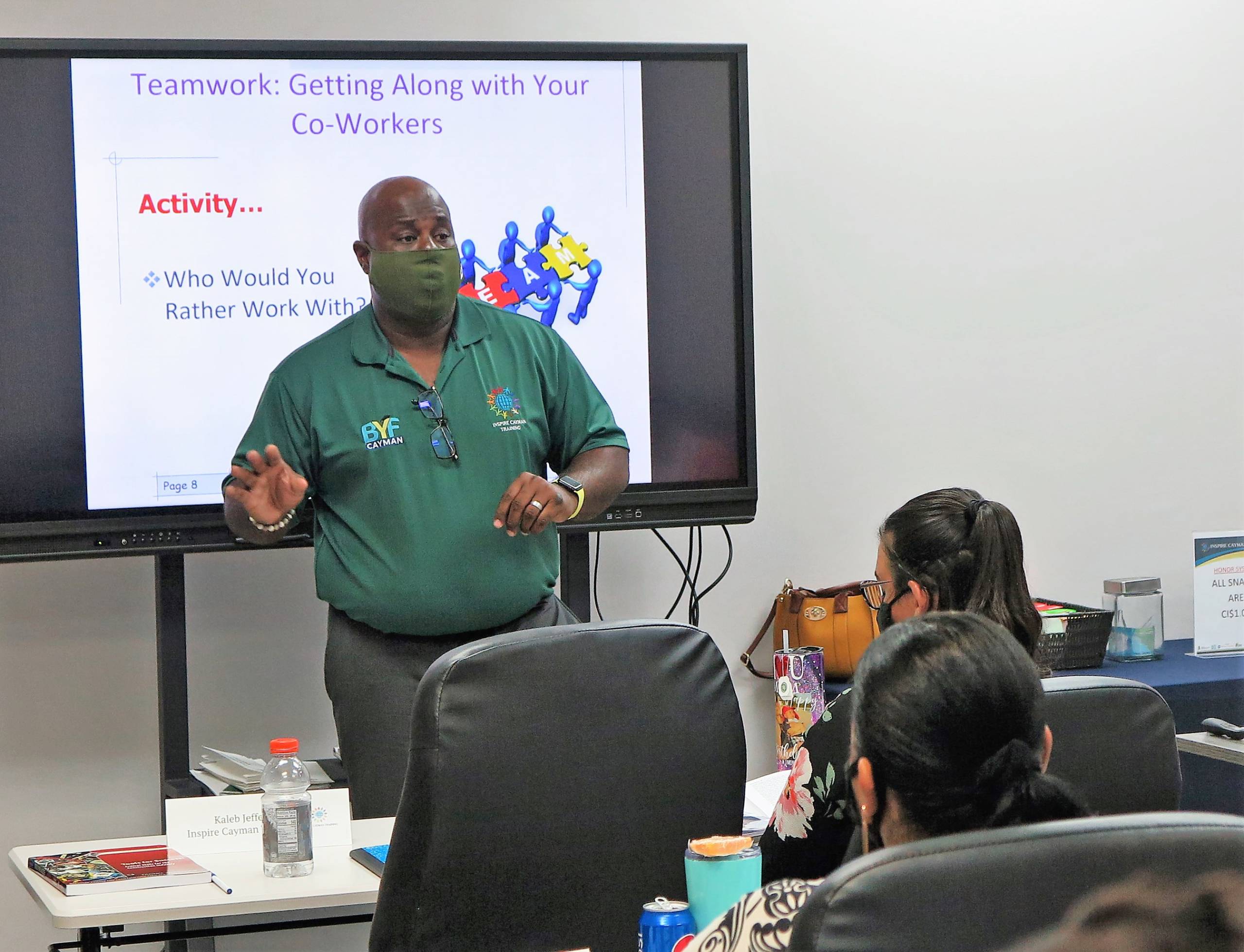
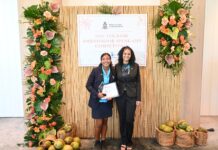
Dixon is among a new cohort of 18 students at Inspire Cayman trade school. She is midway through a series of career development and leadership courses that she hopes will stand her in good stead to take a more senior position at the resort when visitors do return.
“I was there for a while feeling sorry for myself but I said I have to use this opportunity to further my career. I really enjoy being in tourism but I never had time before to progress.”
Michael Myles, founder of Inspire Cayman, said places in the course, sponsored by the R3 Foundation, Scotiabank and the Lions Club of Grand Cayman, were giving some of the people most impacted by the pandemic hope for the first time in many months.
“Most of the people on this course have been unemployed since the start of the pandemic. Some of them don’t know where their next meal is coming from.
“If we don’t upskill these people they will end up as part of the system,” he added.
“These are people that desperately want to work. They don’t want hand-outs. Nobody forced them to be here.”
‘It’s been hell’
Diana McKenzie has gone from working 14-hour days in two jobs during the pre-COVID tourism boom to struggling to feed her family on the monthly stipend.
As a single mum with five children under the age of 11, her life was challenging before the virus struck. By working as a towel attendant and later at the Morritt’s Resort shop in East End, she was able to make enough money to pay the bills and hire a helper to assist her mother in looking after the children.
But she lost both her jobs last July and the struggles with managing childcare and trying to pay off bills and loans have begun to seem insurmountable.
“It’s been hell,” she said. “It was tough before, but since the pandemic, it has been much worse. It is hard not to be working because you don’t know where you will get the money to feed your children.”
The scholarship has enabled her to polish her CV, manage her financial situation and begin business-administration courses. In the longer term, she hopes to be able to get support to go to college and become a teacher.
Uncertain future
Myles said the course represents a broad cross-section of those impacted by the collapse of tourism. While some are keen to sharpen their skills and go back to serving visitors, others are looking for new careers.
Among them is Colin Solly.
He was working two jobs – at a jet-ski and hoverboard rental business and at a gas station – prior to the pandemic. He has trained as a boat captain with Inspire Cayman over the past few months – one of six students to get newly certified through the International Yacht Training organisation.
Though the qualification broadened his experience and options in the tourism trade, he is reluctant to get back into an industry that has an uncertain future.
“It (the experience) has put me off tourism a little bit,” he said.
Instead, Inspire Cayman has linked him with an apprenticeship opportunity with Mac Plumbing.
“I realised I needed something that would be as consistent as possible, that I would always be able to depend on,” he said. “People always need plumbers.”
For Tanya Truman, the tourism industry is still where she wants to be.
A long-time employee in The Ritz-Carlton’s retail outlets, Truman was initially put on reduced hours amid the impact of the pandemic and is now on sabbatical as the hotel goes through a renovation.
She is grateful for the support she has received, both from her employer and from the government. But the stipend can’t replace the salary or the pride she gets from going to work each day.
“People need to get back to work,” she said. “Being locked down and out of a job puts a lot of stress on you. I need to get back on with my life. I need to get my bills paid.”
Truman has completed several leadership and management courses and hopes that those certifications, aligned with her years of experience, will help advance her career when the industry is back in business.
Missed opportunities
Myles said Truman was a great example of someone who had tried to use the hiatus in tourism to move their career forward.
But he is concerned that the enforced break from employment has been a missed opportunity for many others to get the career training they need.
He said government had not provided scholarship funding for any of the school’s courses. The R3 Foundation and other private-sector organisations have enabled scores of students to retrain or get certifications that could diversify or build their career options.
“Unfortunately, we haven’t done it on a national level,” he said.
“When those borders reopen, there are people who are still not going to be skilled or qualified in any way. They have not gone through any training and they will go back to minimum-wage jobs.
“We have lost an opportunity to get them into higher roles and have just paid people money to stay home.”
For those that have been given a chance to retrain, the experience has provided a glimmer of hope at a dark time.
Dixon sums up the new perspective saying, “Now I can look up and dream.”
Related Videos










We are looking forward to coming down from Canada around Christmas and again in March and do our part to help rebuild your Tourism & Hospitality Industry.
We have missed you all so much!!….