When Phase 4 of government’s reopening plan comes into force on Saturday, 20 Nov., verified vaccinated travellers will no longer be required to quarantine.
Instead, they will be required to undergo a lateral flow test on days two, five and 10 of their stay.
On the Wednesday episode of the Compass weekly talk show ‘The Resh Hour’, Wesley Howell, the Ministry of Border Control and Labour chief officer answered some key questions about how the policy will work and who will pick up the tab.
A policy document setting out more details has also been posted on Cayman’s tourism website.
Do travellers self-administer the tests?
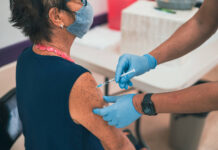
These tests will be “supervised”, Howell said, and performed by a medical professional; the results will be reported to government.
Can travellers use the results to return home?
The “supervised and certified” lateral flow tests can be used by US travellers returning home as proof of COVID status, and will be accepted by US immigration officials. However, Canadian visitors will have to get a PCR test to return home, Howell said.
The protocols released on visitcaymanislands.com remind “it should be noted that all tests for travel must meet the testing requirements for the intended travel destination, and it is the responsibility of the onward traveller to ensure that a lateral flow test will meet their requirements.”
Where can travellers get the lateral flow tests done?
There will be 30 locations, or “service providers”, where travellers can access the tests. Howell said this was “manageable” with the 700 passengers projected to arrive on Saturday.
How will officials monitor compliance with the testing?
According to the information on the tourism website, upon arrival, each incoming traveller will be issued with a ‘Rapid Antigen Testing Card’ by Customs and Border Control.
With each lateral flow test administered, the card is required to be certified.
The document suggests some hotels and other hospitality providers may “require guests, for example, to present this card demonstrating that they are in compliance with testing requirements before allowing entry to high traffic areas such as restaurants and pools”.
Failure to comply with testing requirements carries a maximum penalty of $10,000 or two years in prison, Tourism Minister Kenneth Bryan confirmed during Thursday’s press briefing.
Who will pay for the tests?
As for the issue of payment for the testing, Howell said the nuances were still being sorted. He said government would carry the cost for the first arriving visitors, but later “the providers would transition into collecting for that”, perhaps through a system where people would be required to pay upfront, prior to departing their home countries.
“That’s in the works, that will be coming in the days and weeks to come,” Howell said.
In the abovementioned policy document, it states “The costs of any COVID-19 testing undertaken to comply with Regulations regarding travel remains the responsibility of the traveller.”
The tests will cost $25 per person, it was announced, during Thursday’s press briefing.
What happens if a traveller has symptoms of COVID-19 or tests positive?
Per the information in the protocol document, a traveller who develops symptoms associated with COVID-19, in addition to any close contacts, should self-isolate at their hotel or private residence.
They should notify their hotel or accommodation provider, until they can make arrangements for a confirmatory test performed by a registered healthcare provider.
The Flu Hotline can be reached on 1-800-534-8600 or 925-6327 (Flow) or 947-3077 (Digicel), or email: [email protected].
If the traveller tests positive for COVID-19, the result must be reported to Public Health. The traveller is then required to self-isolate within their accommodation, and follow guidance issued by Public Health.
What do travellers who become primary contacts of a positive case do?
Travellers who are primary contacts of positive COVID-19 cases can avoid mandatory isolation, the protocols state, but they are required to:
• Test negative on a lateral flow test administered by a registered healthcare provider within 24 hours of close contact with a positive person.
• Commence a series of 10 daily lateral flow tests that are administered by a registered healthcare provider.
• Continue to test negative each day while participating in the daily testing programme.
Should the traveller become symptomatic, even if the LFT result is negative, they should immediately isolate and contact the Public Health Department and their tourism accommodation provider.
Related Videos