

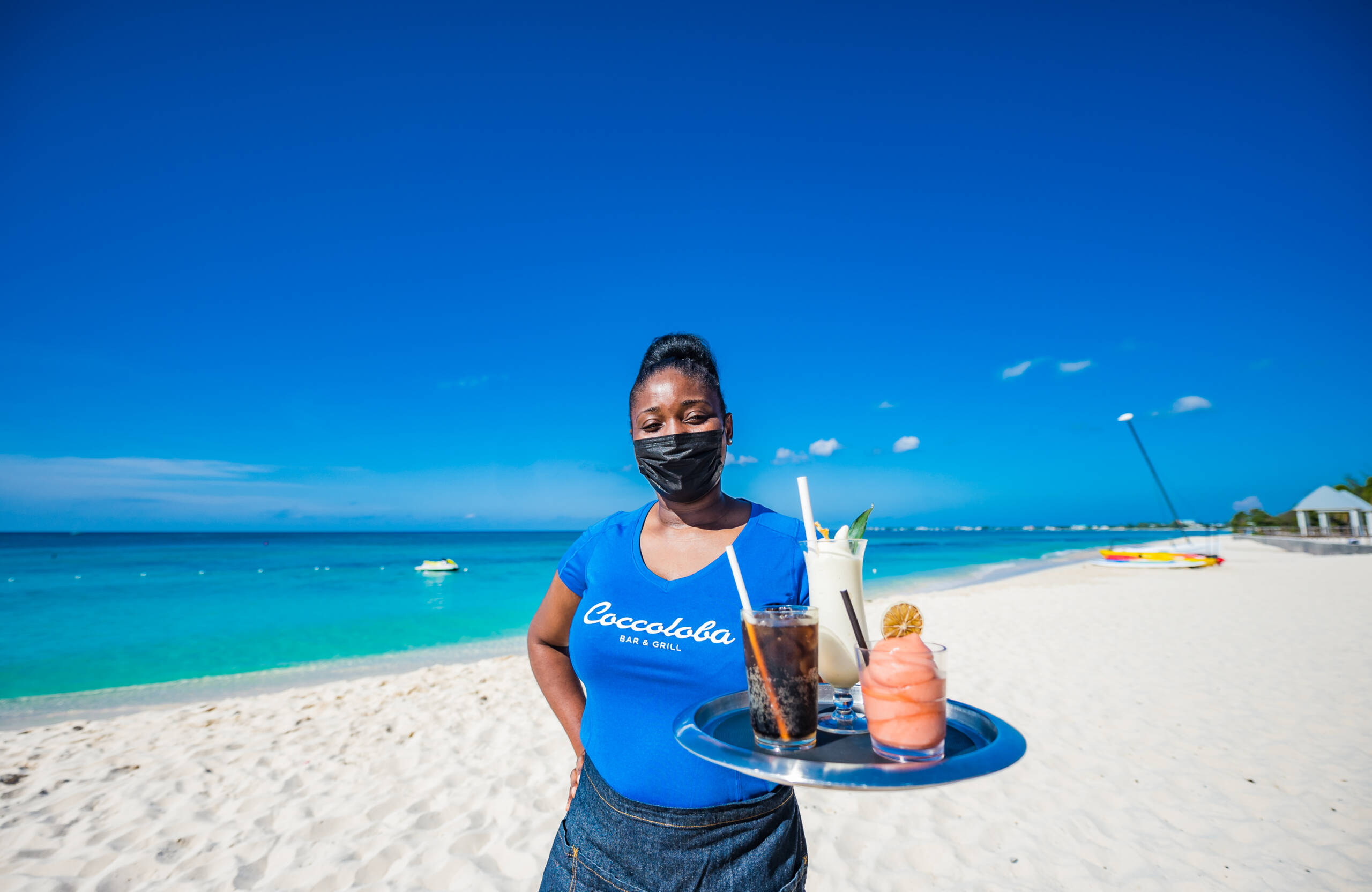
The hospitality industry is facing a possible recruitment crisis as it prepares for the return of more tourists in the new year.
Efforts to place Caymanians in jobs in the sector are intensifying. But major hotels say interest in some roles, in particular, is low and difficulty obtaining work permits is making staffing a key challenge for the reopening.
The pandemic has made many people wary of careers in tourism, officials from Workforce Opportunities and Residency Cayman acknowledge.
A recruitment drive – a partnership between WORC and the major hotels – is seeking to find local talent to fill empty slots in kitchens, behind front desks and in housekeeping departments across the industry.
“Our doors are wide open,” said Valerie Hoppe, director of people and culture at the Kimpton Seafire resort, one of the hotels currently liaising with WORC on a training programme for recipients of the government’s monthly tourism stipend.
The initial concept, said Hoppe, was that jobseekers would spend a week at each hotel learning different disciplines – front-desk training at the Marriott, housekeeping at the Westin, and food and beverage work at the Kimpton.
As it turned out, she said, many of the applicants did not want to do the full rotation and already knew which department they wanted to work in.
The Kimpton has hosted 18 people for training in food and beverage, but the drop-out rate has been high.
“It is not easy for us to recruit for these areas,” Hoppe said.
“The programme allows us to meet people in person and see their interest and for them to see what works for them. There is no guarantee of a job but it is a great way to get your foot in the door.
The participants that are showing up on time, that are enthusiastic, asking questions, are going to have a leg up,” she said.
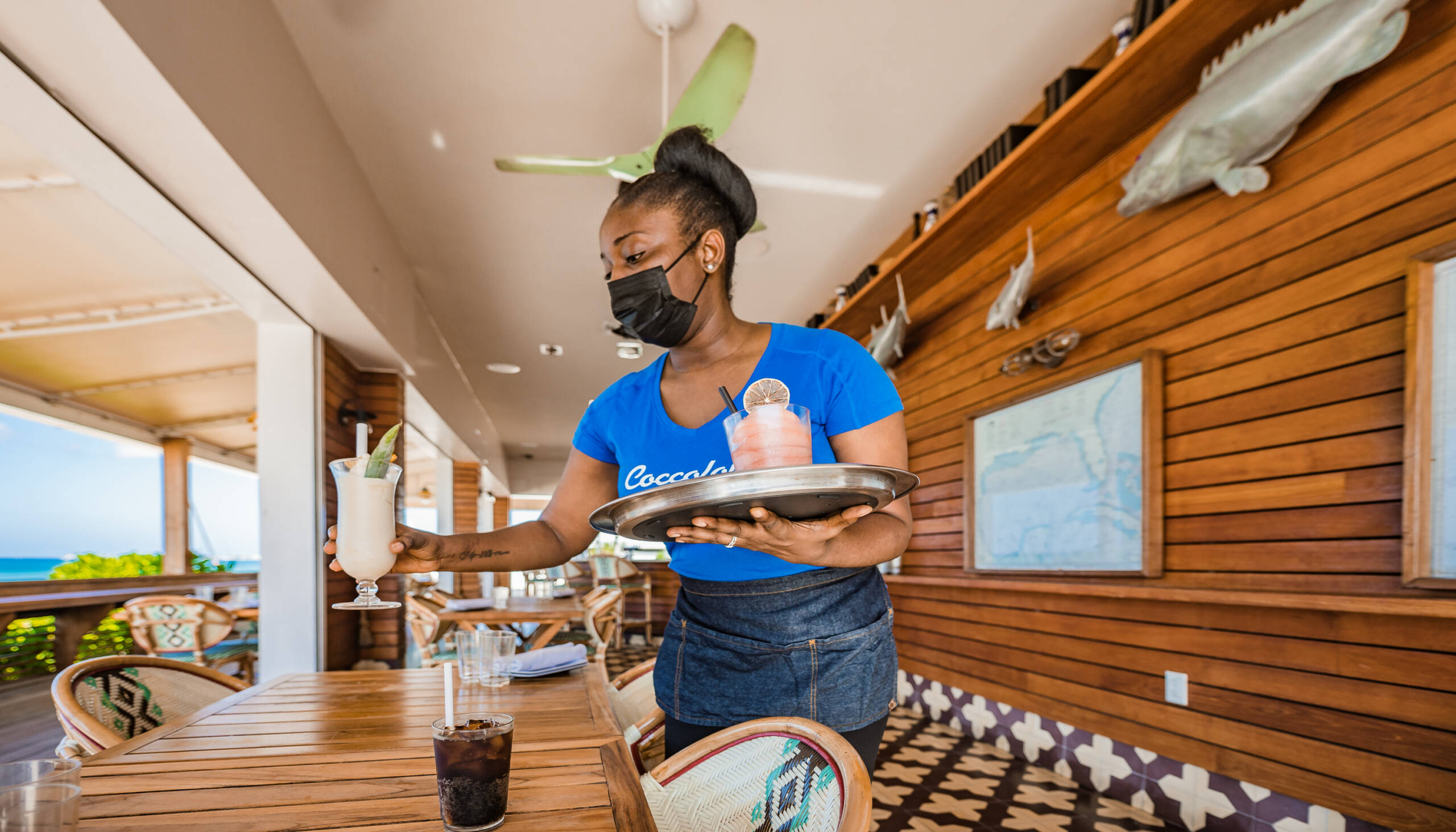
At the Marriott resort, the front-desk training has had more uptake.
Melissa Comparin, the hotel’s human resources director, believes there are some good candidates for jobs, not just at the Marriott itself, but at the other hotels across the island.
She said the week-long course was intended as an introductory ‘taster’ for many disciplines, but front desk had proved among the most popular.
“There are some areas that require a lot of training – front of house is mostly about the right attitude to service,” she said.
“There is a really big mix of people and it is nice to see.”
The applicants
At the resort last week, a group of seven people referred by WORC were coming to the end of their week’s training.
Roseanna Redden, 20, the youngest of the group, was studying hospitality at the University College of the Cayman Islands when the pandemic struck.
“It was a weird moment and it did make me rethink what I wanted to do,” she acknowledged.
Redden is looking for her first job in the industry, preferably in reception or housekeeping.
At the other end of the spectrum is 71-year-old Benjamin Augustine. He lost his job as a sales associate at a liquor store amid the impact of the coronavirus crisis.
He believes his sales experience will be useful in some positions, but he is keen to keep working and ready for any role.
“What I would love is that when any vacancies come up, they let me know and I will take any position at all,” he said.
Cleopatra Hamann, 43, has spent the best part of the past year preparing for the reopening of tourism. She was working in housekeeping when the pandemic put an end to her employment. And after a brief stint at a supermarket came to an end she has been busy signing up for every course the WORC department has recommended.
“I took classes in customer services, computers, I was at the Kimpton doing food and beverage last week, this week I am training on front desk. I would like to climb to another stage and move forward. I appreciate the hotels have opened their doors to us.”
For Gail White-Evans, a taxi driver and tour guide, who is studying hotel management, the course is a chance to preview some of the positions in the industry. The training is not as ‘hands-on’ as she had hoped but she is keen to get a preview of the different roles within a hotel as she prepares for a career in management.
Evans believes it will be some time before tourists are back in sufficient numbers for taxis and tour guides to be making money again. But she believes the skills she has picked up as an entrepreneur will help her pivot to hotel management.
“My taxi is my back-up plan,” she added.
Evans and her fellow students are not guaranteed a job for participating in the programme, but they will be among the first candidates considered, Comparin said.
The hope is that all the participants – a total of 39 candidates, according to WORC – will get full-time employment. But the programme also offers a preview for the applicants – and some have decided the industry is not for them.
“Realistically, there is always going to be a percentage that drop out or lose interest. They have been given a taste and they can decide,” she said.
Challenges
The fact that more than 3,000 people are receiving a tourism stipend to help get them through the lean times following the border closure has been cited as evidence of a cadre of unemployed people who could be called on to staff Cayman’s businesses as visitor comes back.
The reality is slightly more complex.
According to WORC, just over 1,300 stipend recipients have signed up as seeking jobs and completed the registration process to receive support from an employment officer.
Some of those that did not sign up indicated they had jobs to go back to once the borders opened.
Others were business owners, taxi drivers, nearing retirement or had medical reasons for not seeking to re-enter the workforce immediately, according to WORC officials.
Even among those actively seeking work, hospitality is not always considered an attractive industry.
“Some jobseekers are hesitant and have reservations about returning to the tourism industry because of the significant impact this pandemic has had on it, coupled with… it’s already mostly [a] seasonal industry,” said Laura Watler, acting director of WORC.
Others felt disenfranchised, she said, after being made redundant while some work-permit holders were kept on. Some were pessimistic about the challenges of breaking into the food and beverage industry and were inclined to seek a career change altogether.
Some of that apathy is being seen at the hotels.
“We don’t get too many applicants,” said Hoppe.

In the past, pay and working hours have been cited as key barriers to wider interest in the industry. Hoteliers acknowledge the sector is not for everyone but insist that while entry-level pay is low, tips are often very good and there is opportunity to advance and earn good salaries in tourism.
Work permits needed
Part of the challenge, said Marriott manager Hermes Cuello, is there simply aren’t enough qualified or interested Caymanian applicants to fill the roles the industry needed.
Even if every applicant is hired, he said, there would still be a need for work permits to provide the volume and the experience needed.
“The main challenge is food and beverage – cooks are very difficult positions to fill. There is not a culinary school, so there is not a place where you can find enough talent – there are some candidates but it is not enough; the four main hotels have 400-500 cooks.”
Cayman Islands Tourism Association president Marc Langevin said hospitality workforces need to be viewed as integrated teams.
It is hard, he said, to hire an entry-level employee without the experienced staff to show them the ropes.
It is equally difficult, he said, to bring 20 Caymanian housekeepers and front desk staff back to work, without being able to bring in kitchen staff from overseas.
“We can’t just put someone in a room and not give them breakfast,” he said.
“We can’t just check them in and not provide the amenities of a luxury hotel.”
Mindset shift
Langevin believes a change in mindset over recruitment is needed. Though many people believe the opposite, he insisted bringing in work-permit holders will help him hire Caymanians.
“We can’t bring back the room staff unless we bring back the kitchen staff,” he said.
It goes further than the hotel industry, Langevin insisted. Without the means to run Cayman’s hotels at close to full occupancy, he warned, there will be no recovery for the taxi, tour and water sports industries.
“If we can’t fill the hotels, people won’t go shopping, they won’t go out on boats, all the other sectors of tourism will be impacted.”
Right now, Langevin said, work permits simply aren’t being processed. Rather than helping Caymanians, he said, this is the biggest barrier to bringing staffing at hotels back up to a level that maximises Caymanian employment.
Former premier Alden McLaughlin made a similar claim in Parliament earlier this month.
“I know, I’m not guessing, that administrators are not considering permits,” he said.
“We are going to face a massive crisis over the next few months if the work-permit process is not sorted out.”
WORC officials didn’t answer specific questions about the speed at which permits were being dealt with, saying this would be addressed in Finance Committee.
Asked about the balance between hiring local and the desire of hoteliers to recruit from overseas, Watler said all data was being monitored through WORC’s jobs portal.
“When there are known Caymanians who are registered, willing, ready and available to fill the positions advertised via the system, [it] allows the transparency needed for the boards and administrators to see if they applied and what the outcome was when they are considering a work permit that has been submitted for the post,” she said.
Related Videos












So the government is paying millions of dollars for people not to work and there are hundreds or thousands of jobs not being filled. Something wrong with this picture
Please hire the locals if they are willing to work. Training may take extra time but it IS their Island after all. For that reason they should definitely be given first shot at job opportunities!!!
While the industry may want to take the easy way out and look overseas for talent, it’s in the best interest of the country and the economy to force their hand to hire local. So they may not get the best of the best every time they hire. That’s a situation employers face in any country. When employers are given the opportunity to recruit from the world then they will take the easy way out. It’s easy because they can recruit form areas where they are familiar with the culture, people like to recruit their own because communication can be seen as easier compared with a local culture. Having to recruit locally will force the government to step up the training facilities or create training programmes and internships in the industry. When overseas is made an easy option… what would you choose if you were a foreign investor? Even local employers choose overseas workers too easily over local workers because it is seen as less hassle. Not that this is the reality; it’s the perception. Help change the perception.