

Cayman is struggling to build enough public and social housing to meet the needs of all in the community, with more than 1,000 families on the waiting list for National Housing Development Trust homes.
A government report released earlier this year recommended the creation of a new housing authority with the budget and the remit to drastically ramp up production and to partner with banks and the private sector to provide innovative new models to get Caymanians into homes at affordable rates.
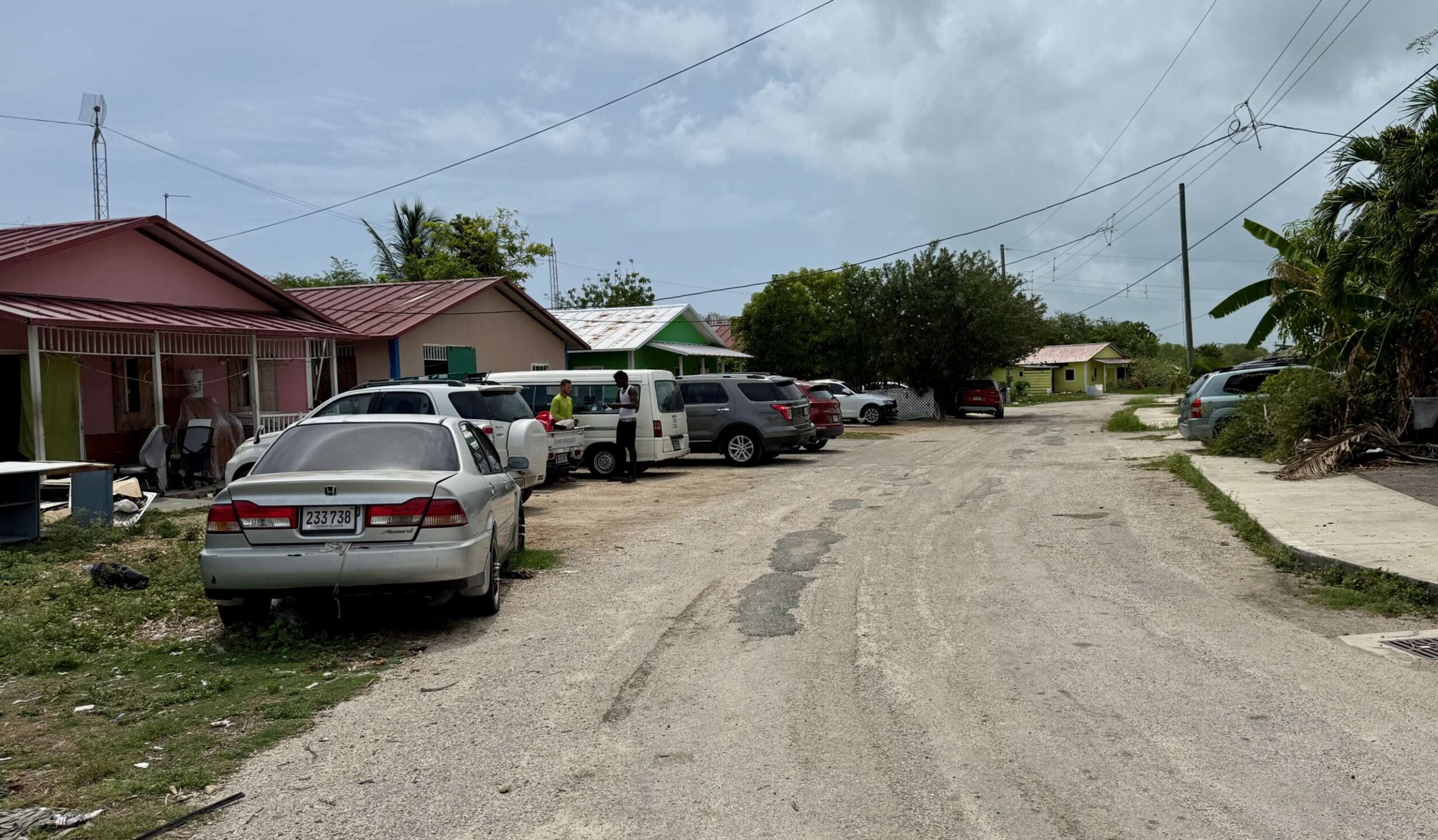
From a distance, Apple Blossom Gardens looks like an idyllic neighbourhood of single-family homes lining a broad quiet avenue.
Zoom in and the reality is quite different.
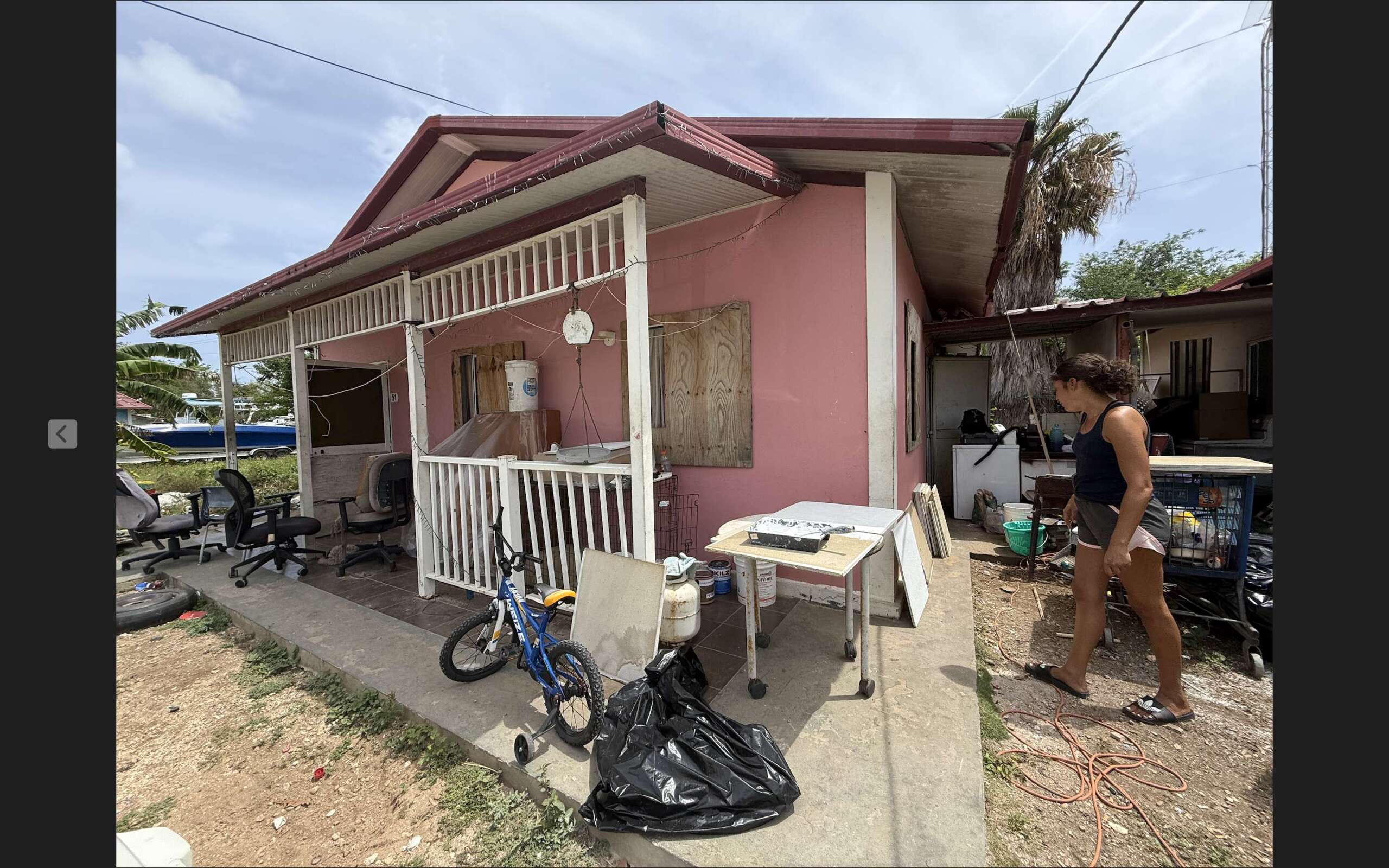
In front of a pre-fabricated building, rusting metal walls visible beneath peeling layers of paint, a child’s bicycle is propped against the splintered white timber of the porch.
Wiring hangs loose in front of the plywood boarded windows.
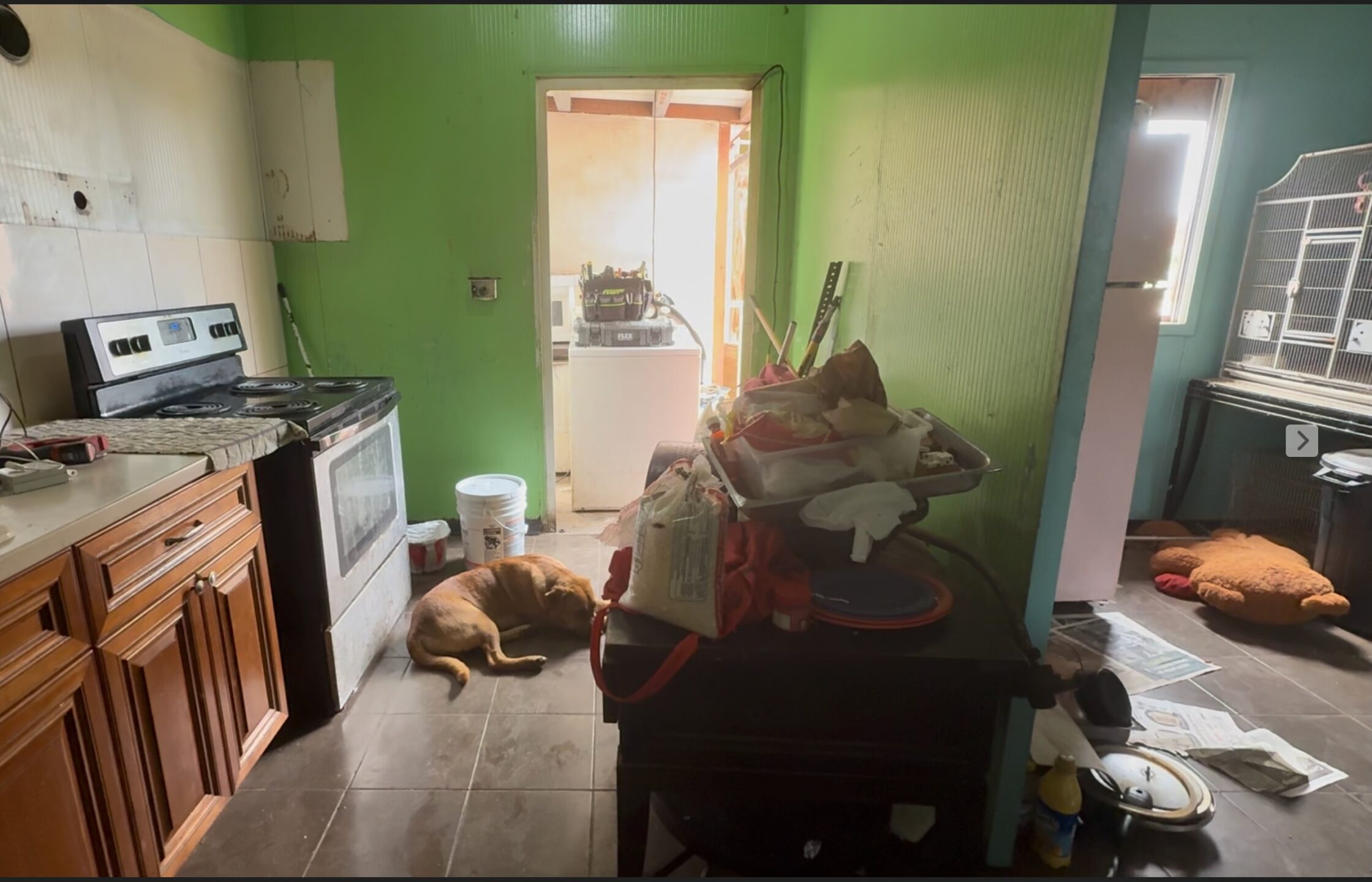
Inside, a dog lounges in the cluttered kitchen. Exposed ducting and electrical cables hang in the empty roof space.
Kimberly Facey has lived here for more than a decade, raising her five children in a home that was condemned by the National Housing Development Trust only a few years after it was built in 2004. She says she puts up with it because it is better than the alternative.
“To be honest with you, it is not so bad,” she told the Compass.
“When it rains, at least we have a roof over our head.”
The roof has taken them through several storms.
Facey and her family moved into the property under the Trust’s lease-to-own programme. They initially paid $750 per month as part of that arrangement before the Trust stopped charging once the properties were condemned.
One bathroom is inoperable because of sewage that back-flowed through the pipes when they showered. The family of seven shares a single bathroom that is itself in need of work.
Her partner has been able to do running repairs to keep the house operable. But the initial construction on the metal-framed building was done with custom-made components, so replacement parts are not available on island.
Still, she’s happy to have a place to live.
“Other than the sewage and the cabinets, we don’t really have problems.”
“My children are content and not hungry. They are happy for the most part. So that is okay.”
The status of the homes and the rights of the residents to continue living in them are ambiguous.
They were built in 2004 as part of a $14.5 million investment intended to build 200 homes in West Bay and George Town by a company called Vetromeccaniche Invest Ltd. Only 132 of the homes were completed before Hurricane Ivan hit in September 2004, destroying many of the homes before they were occupied and the materials to build the rest of them.
The remaining houses were recommended for demolition in 2011 after an engineering report concluded they were unsafe to occupy. Tenants in Windsor Park and Eastern Avenue were found new places to live and the homes were knocked down, But the relics of the Apple Blossom community continue to exist.
Previously, officials have told the Compass that the buildings were condemned and anyone living in them was essentially squatting, but the Trust has not sought to proactively evict people with nowhere else to go.
The total number of people currently living at Apple Blossom Gardens is not known, but as many as 12 of the houses appear occupied. Since the people living there are doing so without legal status, many aren’t forthcoming about their situation and questions to the Cayman Islands government about the numbers have gone unanswered.
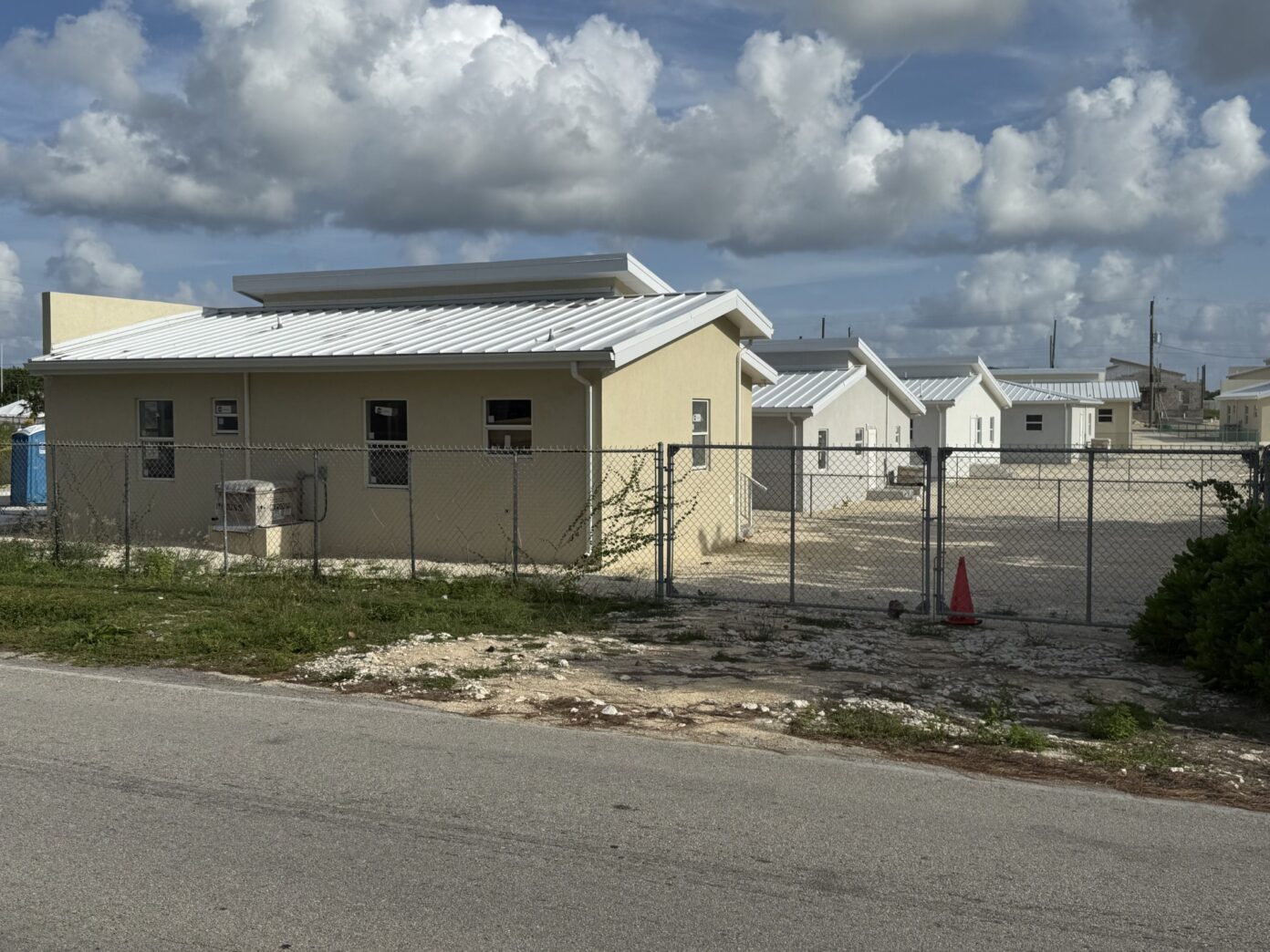
The long-term plan remains to demolish those homes and build 50 new properties on the same site. The first blocks for that new development – to be renamed Birch Tree Heights – were laid Wednesday, 1 July. Several government ministers visited the site and posted a video on social media celebrating the moment.
Premier André Ebanks said in the video that the redevelopment would see “the area known as Apple Blossom completely revitalised and priority given to those in existing homes with new homes coming behind it”.
The MPs suggested that work could start on the new project in December.
Speaking to the Compass last month, several current residents said they were assigned the homes, paid everything they were asked to, and are unwilling to move until a new unit is provided.
“They are not supposed to move us until they find us somewhere to go,” one elderly resident, who has lived in the community for over two decades, told us.
She points to the rust gathering on the floor that she sweeps away daily.
“Right now, it’s rotting down … it’s rusting from the foundation,” she said.
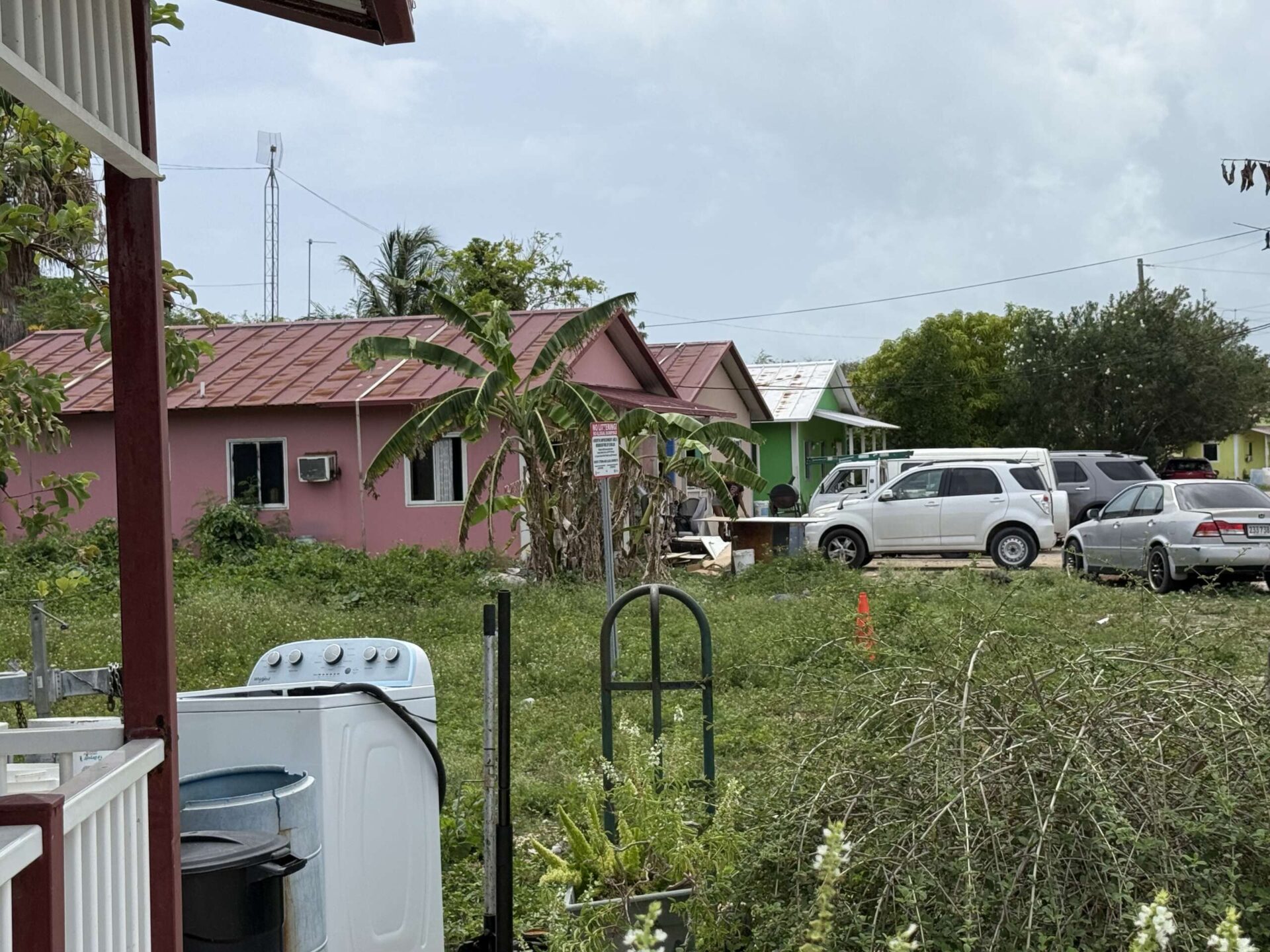
The same challenges impact houses all along Apple Blossom Gardens.
When the Compass visited Apple Blossom Gardens in 2021 as part of our ‘Living on the Margins’ documentary, families were already struggling in abandoned homes. Josepha Carter, who is in her 60s and has diabetes and a lung condition, told us at that time that she was struggling to get by in a home with no functioning bathroom.
In 2022, Housing Minister Jay Ebanks acknowledged the homes “should never have been built” and announced plans for a new 50-home development on the site.
‘Nowhere else to go’
For Facey, the alternative of trying to find somewhere for herself, her partner and five children on the open market is really not an option.
While the home may not be structurally sound, she says, it fulfils its core purpose of providing shelter, currently at no cost.
The non-profit organisation Acts of Random Kindness is helping fund a renovation to make the house more comfortable. One of Facey’s children is in ARK’s education programme and the charity tries to improve the home environment for the youngsters it helps educate.
The MER programme links corporate sponsors with children who need a kickstart in life, particularly in their education. In this case, the sponsor is supporting the renovations, as well as literacy coaching, and ARK has tapped its ‘Cayman CASA’ fund to help get the house in better shape.
ARK has helped numerous families in Apple Blossom over the years in an effort to ensure safe housing for the children that live in the community.
But the problems of the area are not unique.
ARK says its housing assessments routinely uncover families living with black mould, leaking roofs, termite infestations, rotten floors and homes without functioning kitchens, bathrooms or even running water. The charity works with corporate sponsors, contractors and volunteers to restore homes to a safe standard while longer-term housing solutions are pursued.
Despite the uncertain status of the homes and the promise that they will eventually be replaced and demolished, ARK has no qualms about spending donor funds on upgrades now.
Nielsen, who was recently awarded the MBE for her services to housing and community welfare in Cayman, said it was an easy decision.
“It’s a moral quandary, right? Do you just sit there and let them suffer for years and years because it’s going to be demolished and it’s condemned? Or do you make sure they have clean, safe housing?”
The challenge for ARK and for the people living in condemned homes is that the alternatives are in many ways worse.
“They’re there because there’s nowhere else,” Nielsen said. “They can’t really kick them out because then they’ll just have another problem on their hands – they’ll be homeless.”
Government has apparently come to a similar conclusion. While, in the past, officials have indicated that anyone living in the condemned housing should leave, they have not forced the issue. Residents have been informed that the Trust would like them to leave, but the Compass understands formal eviction notices have not been served.
Challenges across Cayman
The situation at Apple Blossom reflects a broader lack of social and public housing that is highlighted in the Public and Affordable Housing Policy and 10-Year Strategic Plan released by government in April.
The document indicates more than 800 families are on the waiting list for National Housing Development Trust homes, based on 2023 data. Subsequent Compass reporting indicates that number has risen to 1,152 families representing 2,200 individuals.
But, over the 18 years up to 2023, the data which informs the report, the Trust has only built 116 houses – a rate of six or seven each year.
Government has injected fresh capital into the organisation in recent years. A total of $15 million was allocated for 2026 and 2027, with government indicating plans to build new homes in North Side, East End and for the redevelopment of Apple Blossom in West Bay.
The report concludes that Cayman needs a broader rethink of how it approaches the issue.
It recommends the creation of a new government-owned Housing Authority, established through legislation and given clear statutory powers, an independent budget and long-term responsibility for affordable and social housing.
The new body would develop and manage housing directly, guarantee mortgages, run rental subsidy and homeownership programmes, enforce habitability standards for rental properties, and collect the baseline housing data that government currently lacks.
The report also proposes moving away from the single-family home model, which it highlights as the most expensive way to provide housing.
Future developments are recommended to include mixed-income communities, affordable rental housing, townhouses and apartments aimed not only at the poorest Caymanians, but also working families increasingly priced out of the private market.
Government plans new housing authority
Government did not answer queries from the Compass or requests for an interview on its affordable housing plans for this article.
Responding to questions from the opposition in Parliament, Housing Minister Ebanks confirmed government intends to follow the recommendation to establish a new Housing Authority with expanded powers.
He said the Trust is currently operating with limited resources and a restricted mandate.
“We continue to face challenges due to the increased demand driven by various factors contributing to the housing crisis,” he said.
The Trust has an expanded pipeline of projects in motion, including the plans to redevelop Apple Blossom Gardens. But Ebanks suggested a larger organisation with an expanded remit was needed to meet the challenges Cayman now faces.
Cabinet has approved drafting instructions for what he described as Cayman’s “first ever Housing Act”.
Ebanks said there is currently no specific legislation to “address emerging housing and basic shelter needs” or to “provide legal authority for government intervention and establish an accountability mechanism for housing delivery”.
He added that the act would “enable us to enact the policy recommendations and to create a new public housing authority to expand the government’s efforts to provide affordable and social housing across all three islands”.
During this term, he said, the ministry would also seek Cabinet approval for a modernised mortgage guarantee programme to help first-home buyers with deposits and closing costs.
Non-profits fill the gap
Many of the functions the report says a future Housing Authority should perform are already being carried out on a much smaller scale by charities like ARK, largely through donations and volunteer labour.
ARK has built a handful of small homes, repaired and renovated dozens of homes, and funded rental accommodation for families in need.
Even as a small non-profit, dependent entirely on community donations, it has been able to build small homes for needy families at an upfront cost of around $125,000.

And the donation of a 1.1-acre plot off Shamrock Road will enable the charity to move ahead with a new project for 16 townhouses that can be rented at affordable rates to social assistance clients.
Nielsen said, “There are thousands of people who will never buy a house, but they should be able to have somewhere they can rent that’s affordable and clean and nice and safe.”
Nielsen said the need is vast and the non-profit focuses particularly on families with children in the home. There are hundreds more applicants than it can realistically assist in any given year.
But she believes the work of ARK, its projects and its methodology of bringing community leaders and donors together with the neediest applicants provides a blueprint that government could copy at scale.
In Apple Blossom Gardens, residents are hanging on to the promise that new homes will be coming soon.
For now, they live rent-free in crumbling properties, a scenario that is better than alternatives.
More than a decade after moving into the street, Facey is still waiting for the replacement home she says her family was promised. Her eldest daughter is now an adult. All five of her children have grown up in a house that was condemned for demolition before she moved in.
But she is grateful to have somewhere to live and that change may be coming soon.
“My children are content and not hungry,” she said.
“But I’m just tired of seeing a place like that.”
Related Videos








Bermuda is one of the strictest countries/territories in the world that gives preference to its local population and actively restricts foreign residents from buying most properties. The Bermudian government actively controls market access to preserve housing availability for locals.*
Other countries that restrict foreign homeownership to protect their local housing markets include New Zealand, Australia, Switzerland (via the Lex Koller), and Canada.**
*https://www.properstar.com/real-estate-guides-and-advice/bermuda
** https://realting.com/news/countries-where-foreigners-face-property-buying-restrictions
Also, European Commission President Ursula von der Leyen confirmed today, July 3, 2026, that Europe is facing a severe housing crisis. Speaking alongside Irish Prime Minister Micheál Martin in Cork, Ireland, von der Leyen described it as a “crisis of affordability, access and quality” that has become one of the most pressing social issues across the bloc.
A large number of former expats have acquired real estate in the Cayman Islands as rental investments. Furthermore, expats who have been granted residency status often own multiple properties. Considering the severe shortage of affordable housing that leaves many Caymanians living in substandard conditions—such as shacks and converted shipping containers—unrestricted foreign property ownership should have been regulated or prohibited.
Should the proposed 157-apartment Legoland project be approved, a significant percentage of its units must be allocated to Caymanians through government-assisted programs. Implementing this as a standard policy would help restrict unchecked foreign ownership and alleviate the ongoing housing crisis for Caymanians.