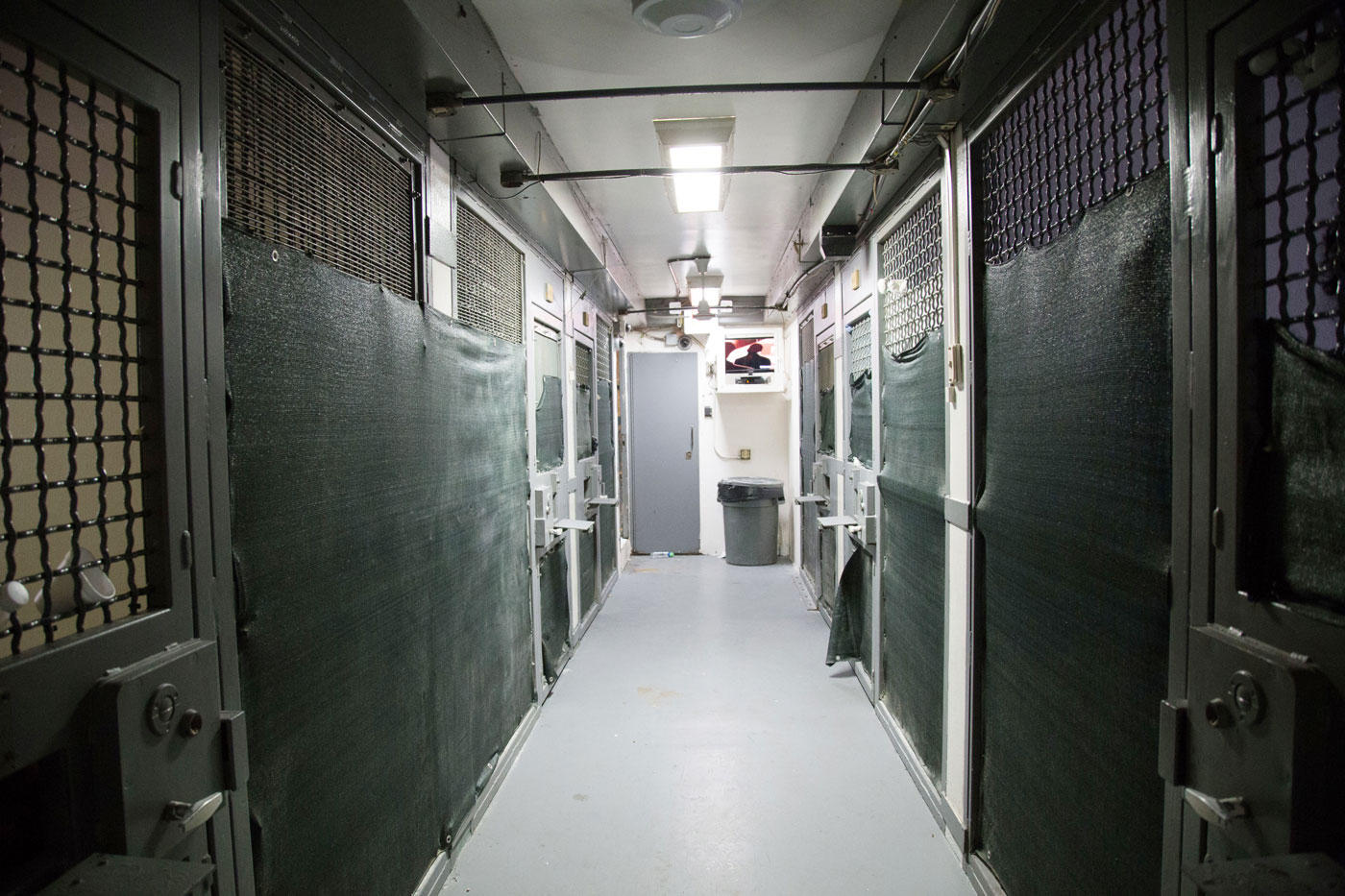
Attorneys for the Governor’s Office have called on the Court of Appeal to uphold a UK prison transfer order that saw two murderers shipped out of Cayman, before they could enact a plan to break out of Northward Prison.
Addressing the appeal judges on Wednesday, 26 Jan., Paul Bowen, QC, said the decision to transfer brothers Osbourne Douglas and Justin Ramoon involved the UK Chancellor, Secretary of State, the governor of the Cayman Islands, and local police, as well as UK and Cayman prison officials.
In 2016, Douglas and Ramoon were imprisoned for 30 and 33 years, respectively, for the 2015 execution-style murder of Jason Powery. The brothers were later transferred to Belmarsh Prison, a maximum security facility in London.
“The concerns that the decision-makers were faced with were so grave, they could not even release the organisations from which the information was emanating,” said Bowen. “It is for this reason why the [personal identification information] was so heavily redacted, which, of course, is now being used as a means to justify the quashing of the transfer order.”

Douglas and Ramoon originally contested the transfer decision in a judicial review in April 2021, in which they argued that the transfer to a UK prison far from their home was an infringement of their right to a family life, as set out by the Constitution.
Justice Michael Wood, who presided over the judicial review, ruled against Douglas and Ramoon. However, the reasons for his decision have not been released to the public.
Prior to the judicial review, a Grand Court hearing was held to decide what information was to be kept from the brothers and the wider public, as a matter of national security.
That hearing, which was presided over by Justice Marlene Carter, resulted in the details of who supplied the information and how the information came to prison officials, being kept from the two convicted men and the public.
Information provided was purposefully limited
Responding to the brothers’ attorney Hugh Southey’s arguments for their return to Cayman, Bowen said the information which was deemed to have been suitable to be released does not provide a clear picture of what the decision-makers were presented with when considering whether to transfer the brothers.
“Mr. Southey would have my Lords quash the transfer order, because on the surface of the admissible evidence, there is no way to attest the validity of the information, and subsequently challenge said information that led to the order,” said Bowen.

Bowen presented the court with a signed affidavit from Deputy Governor Franz Manderson, who signed off on the transfers while acting in the place of then Governor Helen Kilpatrick.
The court was also presented with signed affidavits from the UK Foreign and Commonwealth Office, the UK Minister and Secretary of State and the UK Chancellor, which attested to the orders and directives given to Manderson, advising him of the national security risk Douglas and Ramoon posed.
“In addition to those affidavits, my Lords, there are also four signed affidavits from Governor Martyn Roper, Cayman’s police (commissioner) and prison director and the UK prison director,” said Bowen.
Bowen said some of the affidavits had sensitive information redacted, while others had been completely deleted.
“From my perspective, it is easy to understand why sensitive information would have been redacted,” said Justice Richard Field, one of three judges presiding over the hearing.
“If that information was to be released, then one could easily envisage the drying up of information from police informants who would fear having their details released, especially on an island with such a small population,” he said.
Proper consideration given
Bowen refuted Southey’s claims that at the time of the decision, the acting governor and the associated parties failed to properly consider the effect the transfer would have on the defendants and their families.
“It is clear from the evidence that multiple parties were involved with the decision-making process and at each stage there was proper consideration given,” said Bowen.
Bowen told the court, “Upon their transfer, the brothers’ sentences were reduced by two years to reflect the fact that they were serving their sentences so far from their home.”
He added, “Since 2019, the Cayman Islands government has set $25,000 for the family members of both men to travel to the UK on an all-expenses-paid trip to visit them. The brothers have also been given additional phone calls and Zoom meetings to be able to communicate with their family.”
Transfer was legal
Bowen told the court that under the 1884 Colonial Prisoners Removal Act, the governor had the legal authority to make the transfer order.
“What’s more, the order sets out that the governor is obliged to follow the directive of the minister, who in this case is the Secretary of State,” said Bowen.

In closing, Bowen reminded the judges of the three options put to them by Southey, which are rule in favour of the defendants and quash the transfer order; rule against the defendants and uphold the transfer order; or set aside the transfer until legislation can be brought in to facilitate a Closed Material Procedure hearing.
“What we think is perhaps the best option is the third,” he said, “but instead of returning the brothers, my Lords could hold a CMP hearing, which is provided through implied legislation.”
The final arguments are expected to be presented tomorrow.
Related Videos