


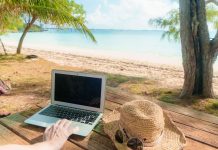
The marketing images of digital nomads have been all about executives on ocean-side patios, sand in their toes, sun on their faces and iPads on their laps.
But the reality of the remote work phenomenon which has taken off in the aftermath of the pandemic is that it cuts both ways.
In the flexible post-COVID work world, employees could just as easily be earning Cayman salaries and spending them elsewhere.
Cayman, Bermuda and Barbados have all bolstered their virus-stricken economies by issuing special permits for people to live in paradise locations while clocking in to offices in colder climes.
But there’s a potential downside for small islands with the ‘work from anywhere’ trend, says Grand Cayman-based recruitment specialist Steve McIntosh.
He says an increasing number of jobs, previously located in Cayman have gone elsewhere, a trend he expects to continue as more workers detach from traditional offices and 9-5 environments.
Outsourcing administrative, IT and back-office support jobs, primarily to Asia, has been a cost-cutting strategy for businesses on the island for some time, says Nick Joseph, a partner specialising in immigration law with HSM.

But he believes the pandemic has led to a mindset shift about remote work that is also leading to frontline roles moving overseas.
Many employers learned by necessity during the pandemic that it was possible to run a business with the majority of staff working from home.
It’s not a huge leap, says McIntosh, to decide that home doesn’t need to be in Cayman.
When a trusted long-time employee chooses, or is required for immigration reasons, to leave Cayman, the option for them to continue in their job from overseas has become a much more realistic option.
“There’s no question in my mind that it will become increasingly common for Cayman companies to have employees based overseas,” says McIntosh.
“This is a good thing for employers who will benefit from a much larger talent pool and reduced costs of employment, but it’s very clearly a bad thing for local workers who will increasingly have to compete on a global playing field.”
Brain drain
One of the perceived perks of Cayman’s large financial industry is that it creates high-paying jobs for Caymanians and brings in well-remunerated professionals from overseas to spend money on rent for local landlords, groceries from local supermarkets, and services from local businesses.
In theory, those businesses and employees also help create new jobs and training opportunities for Caymanians on island.
But if more businesses choose a remote work model in the aftermath of COVID, that will lessen the necessity to have bodies in the office, or even to have an office at all.
The flip side of digital nomadism is overseas-based workers earning salaries as ‘contractors’ from Cayman firms and spending their salaries elsewhere.

The employee wins because they can reduce their cost of living by paying for rent and groceries outside of Cayman.
The business wins because they no longer have to pay pension, health insurance or work-permit fees.
But Cayman loses direct revenue for government, discretionary spending for businesses, and support jobs for the economy.
“We are entering a new phase of ‘globalisation’ and it is not only the supporting roles that are being outsourced,” says Joseph.
“There have been striking instances where Cayman-based executives have been stuck in third countries due to border closures.
They have maintained their roles effectively, often from a laptop computer. Their work permits have been due for renewal. The call has come in: ‘Do I need to pay CI$30,000 to renew my work permit or can I instead continue to work for a Cayman company whilst remaining outside of Cayman, for free?’”
In an age where laptops and WiFi keep us constantly connected, he says, there are relatively few jobs that need to be carried out exclusively in a specific location.
“The world is flat and you can do almost anything from anywhere,” Joseph says. “Tourism, construction and healthcare are about the only sectors that need employees on the ground in Cayman. Everything else can be exported.”
Red tape
This dynamic is exacerbated, says Joseph, when authorities or circumstances make it difficult or time consuming to get work permits. If the hassle and the cost of bringing in a skilled worker to Cayman becomes too much, he says, the easier route will be to go remote.
“Increasingly, professional roles that traditionally would be filled in Cayman are regrettably being filled overseas,” he says.
“These include positions where attempts were made to secure work permits in Cayman which were refused, or for which processing was delayed, beyond the patience of the business or individual concerned.”
McIntosh says it is now common for work permits to take three months or longer to process. This is not an approach that he believes helps Caymanians in the job market.

The same person is just as likely to get the position – they will just do it from overseas.
He says it was difficult for government to prevent or even to track this drip-feed of jobs out of the Cayman economy.
“The government can frustrate employers’ attempts to hire foreigners here in Cayman, but there’s really nothing the government can do to prevent employers hiring foreigners who remain on their own soil,” he said.
The best approach is to reduce or eliminate any unnecessary red tape required when bringing staff to Cayman, Joseph argues, especially where the staff are not competing with Caymanians for opportunity.
“We must remember that technology and globalisation are increasingly facilitating the relatively free movement of people and business.
Every barrier we place, every fee we impose, every call we fail to return, and every need we fail to fill, increases the prospect of the people and business that we, the Caymanian people, would choose to have here, don’t come or, worse, don’t remain here.”
Global trends
The digital nomad trend is a global phenomenon that shows few signs of slowing down.
Almost half of all workers in the US worked remotely during the pandemic and more than 10 million now identify as ‘digital nomads’, who travel with their laptops and are officially untethered from any central office.
Analysis from consulting firm MBO Partners indicates a higher degree of job satisfaction among digital nomads, and predicts the trend will continue.
“The pandemic-induced shift to remote work has taught businesses of all sizes that remote work works. This has led to broad support from executives, managers, and workers to continue allowing both flexible work schedules and remote working arrangements after the pandemic ends,” the report notes.
Cayman is still well placed to benefit from this, says Joseph. He believes the island’s year-round sun, low crime and modern infrastructure make it a great choice as a place to live.
“Overall, the benefits of globalisation to Cayman ought to outweigh the negatives, but we will need to recognise them and respond effectively to maintain the balance in Cayman’s favour.”
Related Videos










Do you think that perhaps another factor in this “brain drain” could be the onerous Covid testing and quarantine/isolation that has persisted despite other nations realizing that there is no useful purpose in it?
In this day and age the 7 or 9 year roll over is out dated. Why would you make someone leave who has worked on the island for all those years. It makes no sense
I’ve been saying for years that if Cayman wants to grow its economy and ensure prosperity for all Caymanians, they need to make it easier – not harder for employers to obtain work permits. If there were no permitting system or permits were streamlined so anyone could come to work here, the economy would quickly grow as more people sought to base businesses here.. in the end there would be far greater opportunities and prosperity for Caymanians. Making permitting difficult shrinks the pie for everyone because it forces employers to go elsewhere. Making permitting difficult is politically comforting and seems like the knee-jerk answer but it has been proven to hurt everyone in our Country because employers will just hire elsewhere when they can’t do it here