

Premier Wayne Panton confirmed on Friday morning that cruise passengers will not be required to do lateral flow testing before disembarking in Cayman, when the first cruise ship returns to the jurisdiction on Monday, 21 March.
Other protocols mooted prior to the phased return of cruise tourism, such as the Islands being the first port of call for ships, are not among the requirements outlined by the premier in a pre-recorded press briefing held on Friday, in spite of government having pressed the cruise lines on the issue.
When questioned about the disparity between travellers arriving by air – who are required under the current regulations to test the day before they arrive in the jurisdiction – Panton stated that cruise travellers will be tested prior to boarding the ship. However, he said that the cruise lines had outlined “in considerable detail” the logistical complications involved in conducting testing for passengers who wished to come ashore in Grand Cayman.

“We accepted that it would be difficult for that to happen,” Panton acknowledged, stating, “The counterbalance to that, of course, is that unlike the stayover tourists, who are usually here for an average of 5.5 days, the cruise visitors are probably here, on average, on a daily basis between five to six hours. So it represents a much smaller window of opportunity or a much smaller window of risk.”
He added that cruise tourists would be operating in “little bubbles” with less intense interaction with Cayman’s population than stayover tourists.
At one stage, the Cayman Islands being the first port of call for ships had also been touted as desirable for cruise travel to resume. Panton agreed that the lowest level of risk is posed to the Island and its inhabitants from “those vessels that are making Cayman their first stop”.
However, he acknowledged only a small number of cruise lines, “perhaps 20%, maybe as much as 30%” were in that position.
“We are a very significant stop, very important to the cruise market. But we’re certainly not, ordinarily, the first stop, and that makes it difficult for us to maintain that we insist on being the first stop,” he explained.
What are the rules for arriving cruise tourists?
Instead, only fully vaccinated passengers over 12 will be allowed to disembark. Children 12 and under will be given the same vaccination status as the adults in their group.
This means passengers will be required to have received their final dose of a Cayman Islands-approved vaccine at least 14 days prior to the beginning of the cruise.
The premier clarified this constitutes the second dose for vaccines with double-dose requirements and one dose for vaccines that require a single jab.
All crew must be vaccinated and no COVID-positive passenger or crew will be allowed to disembark, regardless of whether they have symptoms or not.
The amended regulations come into effect on Monday, 21 March. Within the first four weeks of cruise lines returning to the Cayman Islands, 21 ships carrying up to 74,208 passengers are scheduled to arrive.
The Disney Magic, with a maximum capacity of 2,700 passengers, will be the first ship to arrive, beginning the phased resumption of cruise tourism in Cayman, thereby “helping us to define a new normal for our cruise tourism industry, our tourism industry as a whole. And this will help us move more effectively towards full economic recovery,” said the premier.
Where will the tourists go?
With the closure of local spots favoured by cruise tourists, such as Royal Palms and Calico Jack’s, Panton acknowledged “we’re not going to have 100% of the businesses operational at the right time.”
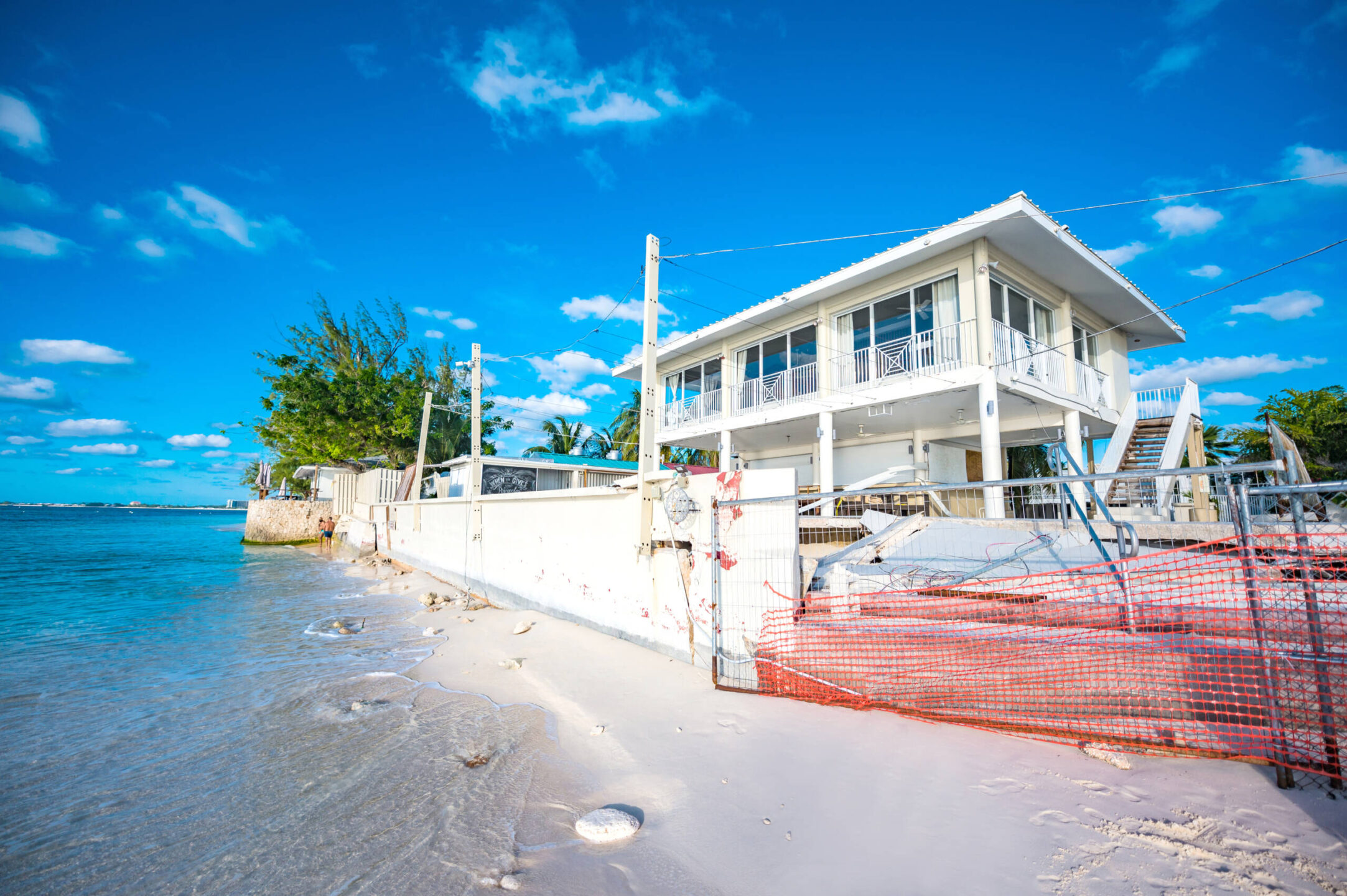
“We still have businesses that provide attractions all over the islands. I think there will be enough operational to be able to provide a significant level of the wonderful tourism products that we offer in Cayman,” he said.
Visit caymancompass.com on Monday and our social media channels, for live coverage as the first cruise ship arrives.
Compass journalist Seaford Russell, Jr. contributed to this report.
Related Videos



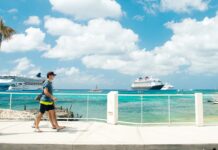







“…unlike the stayover tourists, who are usually here for an average of 5.5 days, the cruise visitors are probably here, on average, on a daily basis between five to six hours. So it represents a much smaller window of opportunity or a much smaller window of risk.”
Someone tell me what science the premier’s information is based upon. And someone please tell me why stayover visitors, those spending much more money during their stay than cruise visitors will continue to be subject to much stricter entry rules than cruise passengers.
The requirements for arrival should be the same for ALL regardless of if they arrive on a plane or a cruise.
Beth, There is no science; neither medical for statistical. Those of us who have ventured here and supported the economy for all these months are still being penalized. Your government is simply bending to the will of the cruise industry. If w are not the the first port of call how do we know whether someone has been exposed;, showing moderate or no symptoms and for the “5 or 6 hours” are coming in contact with Caymanians, stayover travelers, etc,. There is no logic this. I’ve spoken with friends (citizen/residents) and they are excited about the return of this aspect of the tourist industry- but are extremely nervous about the implementation.
Will the tender workers and Stingray City tour operators be wearing HAZMAT suits?
Perhaps we “Stay over” visitors who come via an airline can get the same treatment.
Or perhaps we and the Caymananians can stay in our homes for the 6 hours Cruisers are on island?
I think at this point making the air passengers jump through the testing and portal hoops means that the portal is a jobs program because it makes absolutely no sense otherwise.
This is quite a turnaround from the demands that Premier Panton in Tourism Minister Bryan were making several weeks ago: Grand Cayman must be the first stop for all arriving cruise ships and all disembarking passengers must be tested.
It seems that they should have had these conversations with the cruise ship industry weeks ago and seeing what protocols other cruise ship destination islands had in place before making such declarations. Hopefully they are learning that Grand Cayman is not “the tail wagging the dog” if they want to make a serious effort to reviving the tourism industry.
If cruise ship passengers are not being required to test, then this should definitely apply to returning residents and possibly visitors coming by air as well. At some point we will have to rely on people acting responsibly – wearing masks and staying in if they are unwell or test negative at home. The argument is made that cruise visitors stay only a few hours. However there are many more of them than visitors by air with therefore a greater risk of spreading the Virus. Also cruise visitors will have been to other countries with high rates of infection such as Jamaica, Mexico and the Bahamas just a day or two before coming here. So even if they test negative upon boarding their ship they could easily have contracted the Virus at these ports.
I agree with the approach taken here. We now have to live with COVID and return to normality. All remaining restrictions or requirements for vaccinated travellers (and their children) should be scrapped. NOW.
Are we forgetting that the very first person to have brought COVID to Cayman was a cruise ship passenger? Way fewer people were exposed to him (only those who took him to Health City and the staff who cared for him there), and yet just that one man made COVID spread like wildfire through the community. And now we’re allowing tens of thousands of untested people to step ashore after having been in countries with far more cases of COVID in their communities? We sacrificed so much freedom to keep everyone safe…and now this!
Just Shocking. There is no rational and the government are now discriminating between air and sea arriving guests. Wrong on so many fronts
When will those that are not vaccinated have had COVID in 2019 and now again in January 2022 be allowed to visit our time share? I refuse to get a so called vaccine that still allows you to get a virus. That is not the definition of a vaccine but a therapeutic.