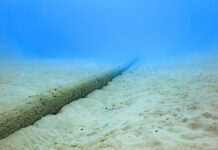
Telecommunications provider C3 Pure Fibre announced that it has established access to both landing stations of subsea communication cables in Grand Cayman – the Maya-1 in High Rock and Cayman-Jamaica Fiber System in George Town.
Having access to both landing stations, after five years of negotiation, is another step towards total market liberalisation in the telecommunications industry in the Cayman Islands, the company said in a press release.
C3 said as a result it has full sight of its circuit end-to-end, from Grand Cayman to the cable landing station in Florida, with protection of the circuit from the landing stations to the Network Access Point of the Americas in Miami and a colocation data centre in Jacksonville.
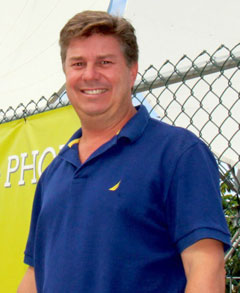
“This access is the final piece allowing C3 to monitor our circuits at a much higher level and it means we are not dependent on our local competitor in the event there is an issue,” said C3 managing director Randy Merren in the release. “We can immediately determine where the problem is and start to trouble shoot the issue, so it is resolved as quickly as possible.”
Two years ago, Parliament’s Public Accounts Committee heard from telecommunications providers about the roadblocks to liberalising the industry. At the time, C3 noted it had been in numerous disputes with other providers about gaining access to infrastructure under sharing arrangements. This included access to the Cable & Wireless-operated Maya-1 landing station in High Rock.
Cable & Wireless is the owner of the Cayman Jamaica Fiber System and the local member of the consortium that owns and operates the Maya-1 subsea cable, which connects Cayman to Miami.
C3 is the second licensee to get access to landing stations in Grand Cayman, Merren said, adding this would improve customer connectivity and increase access for new and existing customers.
“Small victories like this can only benefit the consumer, as the other providers now have an alternative to backhaul their circuit from the landing station and negotiate directly with other consortium members for capacity to the Cayman Islands, meaning consumers will pay less for internet,” Merren said.
Government is currently researching whether a third subsea communications cable could add diversity, redundancy and competition in the industry. Earlier this year, the Ministry of Planning, Agriculture, Housing and Infrastructure issued a request for proposal for a feasibility study that would inform future updates of Cayman telecommunications infrastructure with a new submarine cable.
The current two-year government budget has allocated $15 million for a submarine cable in 2022 and another $15 million in 2023.
C3 said in the press release that it is working to provide a reliable internet service at much lower rates than the island has seen.
“If Cayman truly wants to remain in the forefront of the financial industry and attract a global citizen, they will require access to the internet superhighway that is on par with other first world countries,” Merren said.
In 2020, the previous Progressives-led government kickstarted discussion on whether a third cable is needed in connection with a wider debate about the costs, speed and accessibility of the internet in Cayman.
Related Videos