

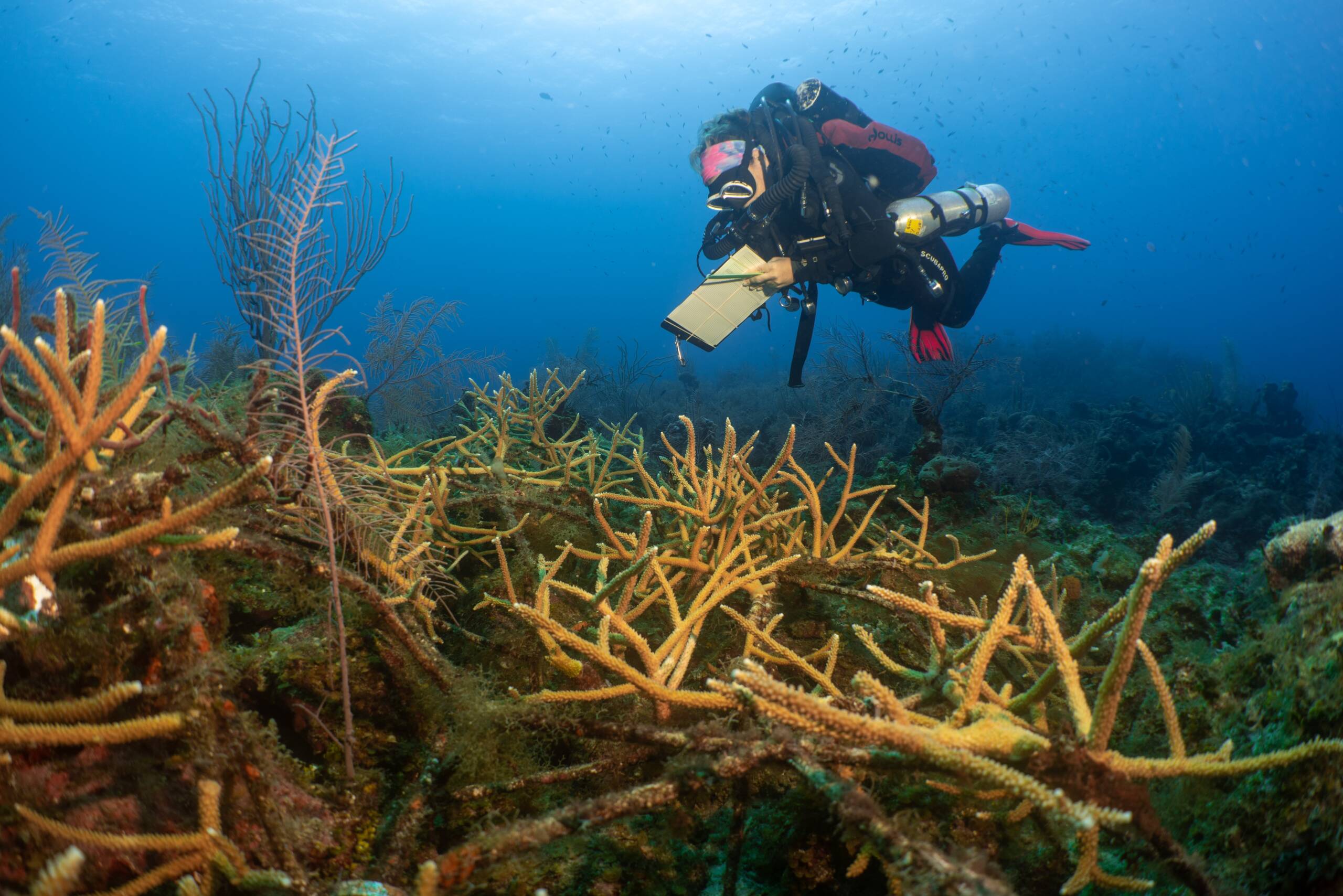
With diseases attacking local corals and rising ocean temperatures leading to bleaching events and algae overgrowths, coral reefs are facing threats from all sides.
Now, with the help of a CI$228,220 grant from the European Union, the Central Caribbean Marine Institute is carrying out research at its Little Cayman field station into the resiliency of corals to diseases and rising temperatures.
The EU has also awarded CCMI another grant, of $180,000, to adapt its Little Cayman facility and programmes to the impacts of COVID-19.
The grants were awarded by the Resilience, Sustainable Energy and Marine Biodiversity Programme, known as RESEMBID, which is funded by the EU.
Reef resiliency project
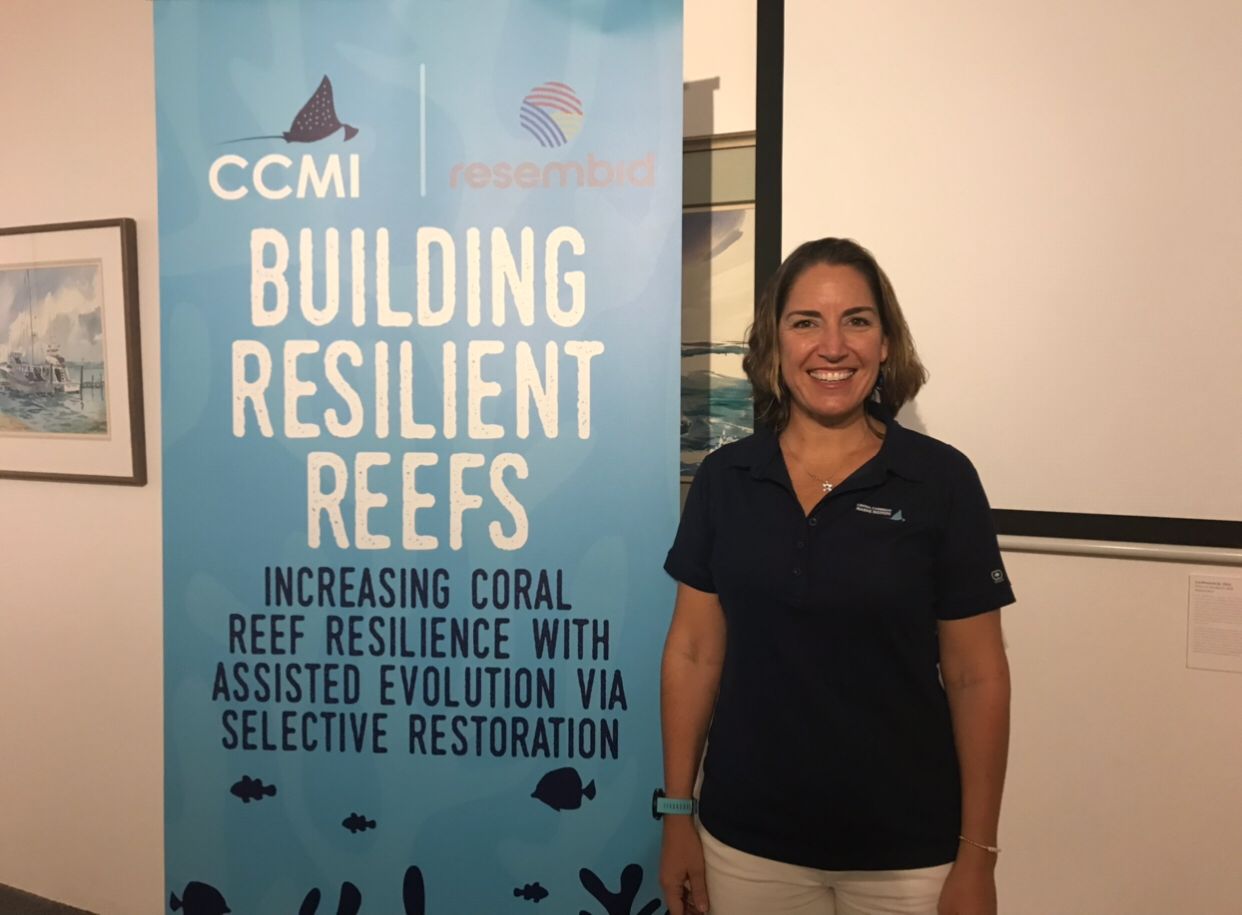
Work on the 18-month reef resiliency project has already begun, CCMI’s director of research and education Gretchen Goodbody-Gringley said at a media briefing on Thursday evening.
“The goals of this project are primarily to build resilient reefs,” she said. “We’re going about this through a process called selective restoration, where we are identifying corals that have differential responses to stress, such as disease and temperature, and we’re using those to create a reef that has a higher resilience to ongoing threats.”
The project aims to build up the biodiversity and resiliency of reefs, not just on Little Cayman, but throughout the region, she said, and to increase the awareness of the public to the threats facing the reefs and what can be done to help protect them.
CCMI set up a coral nursery in Little Cayman in 2012, and since then has been determining the best practices for outplanting of coral for restoration purposes.
“Over 10 years of studies, we’ve identified two main threats that continue to impact the success of our restoration, and these are disease and ocean warming,” she said.
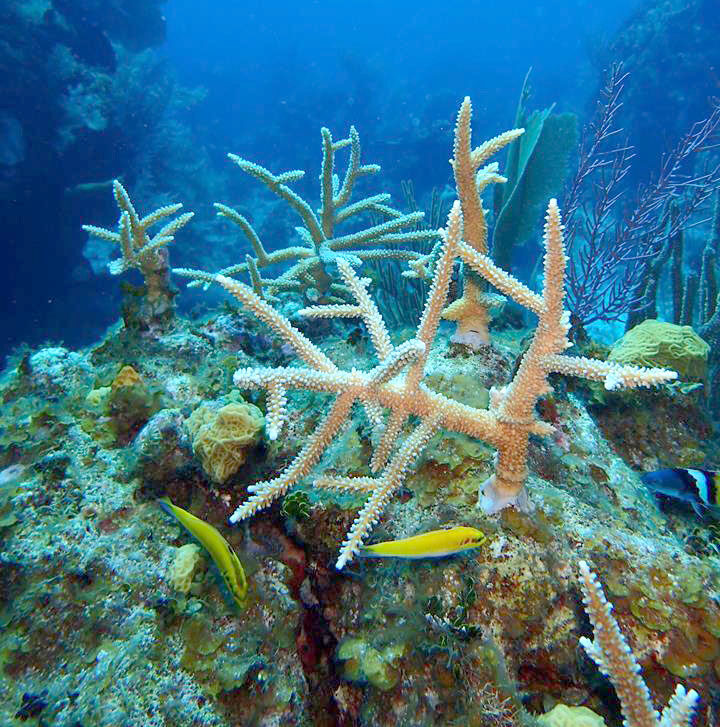
She said white band disease, for example, which was first identified in the 1980s, continues to attack staghorn coral, and “we do see occasional outbreaks in our nursery and our outplanted corals”.
She added, “We also are constantly dealing with the impacts of global climate change and ocean warming, because this causes coral bleaching, in a process in which the corals will expel their symbiotic algae due to an increase in temperature, and this can lead to coral deaths.
“Both of these things are the main impacts that are causing death or decline of our restored populations, and so the project… aims to mitigate these risks, in order to increase the success over time.”
Through CCMI’s existing nursery-monitoring programme, during an outbreak of white band disease in 2019, its researchers were able to identify which corals were susceptible to the disease, which ones were not impacted by it, and which were able to recover and survive.
“This is generally linked to genetic identity,” Goodbody-Gringley said, “so certain genotypes are more or less resilient to getting white band disease. And knowing this we’ll incorporate genetic diversity into our restoration efforts with this grant.”
In the research project, CCMI’s scientists will also be assessing heat tolerance of various corals.
To do this, starting in February, the researchers took fragments of different coral from the nursery, placed them in small chambers in the laboratory and exposed them to temperatures ranging from 28 degrees Celsius to 37 degrees Celsius to assess their metabolic response, including their oxygen consumption and production.
“We actually just finished this experiment two days ago,” Goodbody-Gringley said, adding that the results are still being analysed.
By combining the results of those observations with the history of white band disease in its outplanted and nursery corals, she said, “we can test how these corals will respond in a restored community using a common garden approach” – which involves testing the effect of an environment by moving distinct species from their native environments into a common environment.
“We will take individuals that are disease resistant, disease resilient, heat tolerant and heat intolerant, and we will outplant them onto the reef and monitor them for over a year to determine if what we have assessed in the previous history of the corals and in our laboratory experiments actually results into something tangible. Can we identify that what we saw in the lab actually translates into greater survival on the reef?” she explained.
After the corals have been outplanted on the reef, the researchers will check a variety of metrics, including growth, survival, leaching response and photosynthetic response, in six months, and again a year later.
Once the results are known, CCMI plans to hold several public lectures, seminars and webinars, and create a handbook for people, organisations and governments involved with reef management and monitoring.
Making CCMI COVID-safe

The second grant will be used to improve health and safety features at the Little Cayman Research Centre.
While COVID-19 meant that visitors to Cayman were prevented from coming for almost two years, since the borders reopened, the path has been cleared for overseas students, researchers, citizen scientists and others to spend time at the Little Cayman facility.
Goodbody-Gringley said the facility can accommodate up to 25 students at a time in its dorms, and other individuals in its private rooms.
“This grant is going to enable CCMI to modify some of our infrastructure and adjust and operate safely in the context of the ongoing pandemic,” she said.
“This will ultimately benefit CCMI by enabling us to continue our work on improving and protecting the reef biodiversity,” Goodbody-Gringley said.
“By doing this, we are seeking to stabilise operations in response to virus transmission, lockdown, isolation, interruptions in international travel and, of course, cancellations, which we have already had to deal with several times.”
The grant will be used in part, over the next year, to renovate the facility’s kitchen, dorms, showers and work spaces to make them more sanitary areas; to purchase a new vehicle that will enable social distancing while travelling to field excursions; and to set up a new IT system that will cut back on the use of printed material.
Related Videos








Great news for a fantastic organisation!