

A single blue whale generates the equivalent of US $3 million in the ‘services’ it provides to the earth over the course of its lifetime.
One elephant deserves a ‘salary’ of $80,000-a-year for the role it play in capturing carbon from the atmosphere. The world’s seagrass is worth up to $2 trillion for providing the same services.
Those figures are not speculative, according to Ralph Chami, assistant director of the International Monetary Fund, who spoke with Cayman Islands government leaders last week.
They are the product of a methodical economic analysis of the services different wildlife and habitats provide and their tangible value in existing markets.
Nature markets – a fast accelerating trading niche that places monetary values on ecosystem services – are beginning to integrate conservation and climate change goals into the financial system.
Perhaps the most established current market is the European Emissions Trading System – where businesses can trade carbon emissions permits, which are capped by the European Union.
The price of a benchmark carbon emissions permit hit a record high of almost 100 Euros earlier this year.
Chami, who was behind a groundbreaking paper applying economic theory to whales, believes nature markets will evolve to become broader and more sophisticated. If regulated properly, he believes they could become a catalyst for dealing with humanity’s two greatest threats – climate change and biodiversity loss.
‘Everybody wins’
Chami, speaking at a lunch event at the Marriott, attended by Premier Wayne Panton, several Cabinet members, chief officers and government department heads, said the evolution of ‘nature markets’ would be a win-win-win for governments, businesses and the planet.

He said developing such markets would enable businesses to offset their negative impacts on the environment.
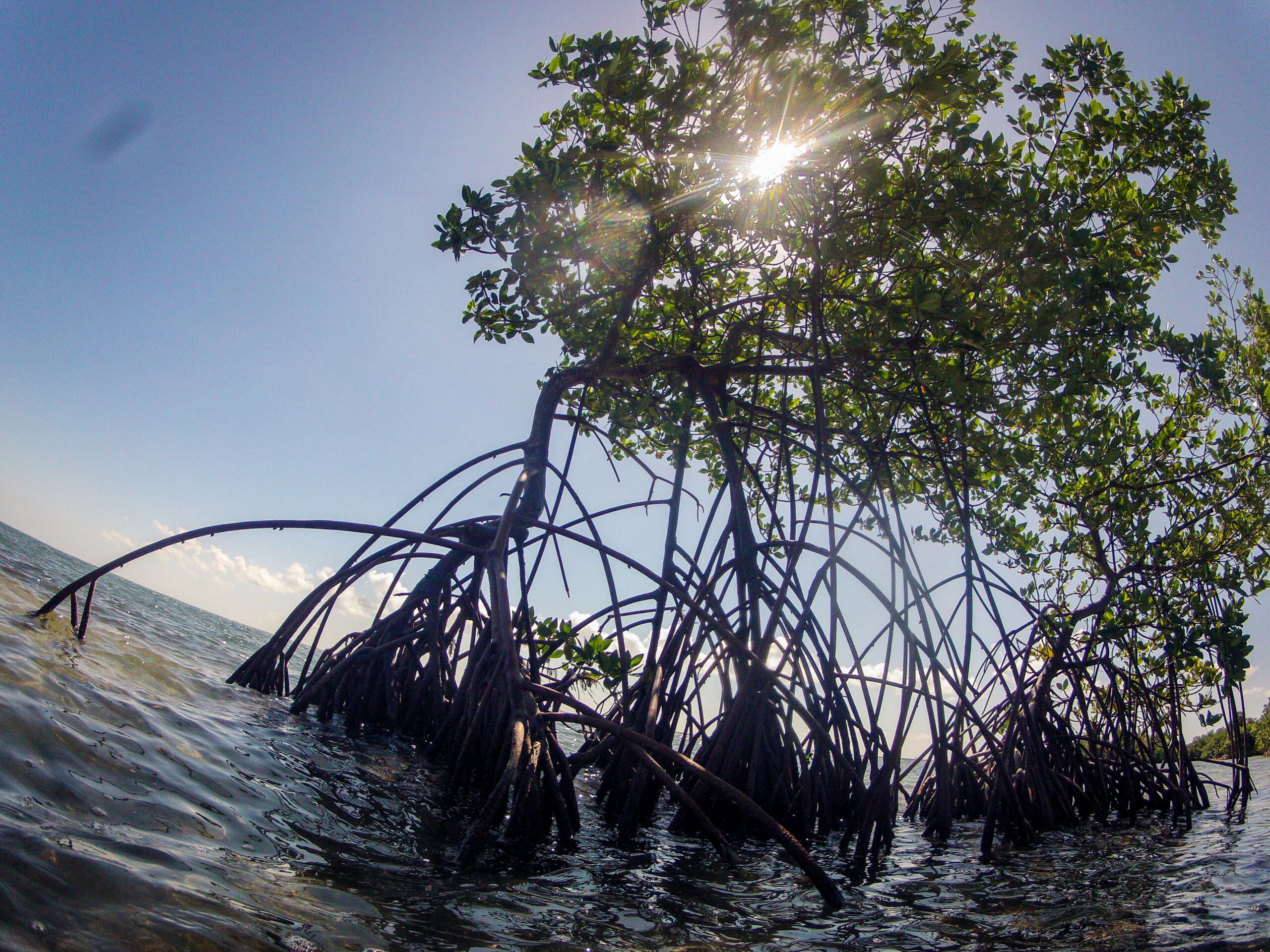
A company that contributes to climate change through carbon emissions, for example, could seek to offset that impact by funding mangrove or seagrass conservation. The aim is to incentivise corporations to create a net-positive impact for the planet, even when their business model relies on a certain amount of pollution.
The concept is not based on goodwill. It is the kind of trading that allows companies to show to customers and regulators that they are meeting environmental and sustainability goals.
“You’re not selling carbon here. You are selling a new narrative,” said Chami.
“You’re involving the private sector in the new narrative which says, ‘I want to be part of this new world where nature is not an afterthought, nature is part of the calculation’.”
One of the key challenges is how to measure the effect of a business’ investment in conservation or carbon sequestration to be sure it genuinely offsets their negative impacts and does not become a ‘greenwashing’ marketing exercise for polluters. Chami believes nature markets will enable that, by providing benchmarks which show up on a balance sheet.
“This is not about stopping development. This is about development that is nature positive,” he said.
“Conservation changes from a cost proposition to becoming a source of capital for sustainable and shared prosperity. It is literally a new paradigm.”
Chami believes nature markets are a product of the financial world’s belated realisation that all economies exist within – and are dependent on – the natural world.
The goal is not to put a price on nature; it is to assess and evaluate some of the services it provides, so that they become a much bigger part of the decision making process.
Cayman moving in same direction
Jennifer Ahearn, chief officer in the Ministry of Sustainability and Climate Resiliency, said Cayman was already beginning to factor the value of nature into its decision-making processes, highlighting a natural capital accounting project which took place over the past year.
“Our first set of ecosystem accounts confirms economic prosperity and wellbeing of the people the Cayman Islands are fundamentally linked to the effective management of the natural environment.
“With a partial value of more than $3 billion, our natural assets provide tourism and amenity value and essential ecosystem services such as carbon sequestration and coastal protection.
“While there’s no way to put a precise value on the intrinsic, cultural and spiritual value of our local ecosystems, these accounts will act as an evidence base to support environmentally and economically sustainable decision making.”
Related Videos






