


North Side’s Beacon Farms may be best known for its tobacco crops, but now it’s introducing a new ingredient for the chefs of Grand Cayman – the mangelwurzel beet.
The farm has harvested its first crop of mangelwurzels, also known as mangel – a large root vegetable from the same family as red and sugar beets and Swiss chard.
Although this beet is commonly used as cattle fodder, both leaves and roots of the mangel beet are edible by humans, and local chef Jack Barwick has already been experimenting with it to create tasty dishes.
More typically grown in colder climes than Cayman’s, the team at Beacon Farms trialled a winter crop in their research and development garden this year and now have plans to plant more extensively in their commercial fields next year, according to a press release from the farm.
Beacon Farms chief operating officer Sandy Urquhart said in the release, “Mangels are a robust and versatile crop that grow well in Cayman’s soil and climate. If we can farm on a larger scale, mangels could help improve food security in our islands by providing a local food source for livestock and a nutritious vegetable for human consumption.”
Beacon Farms is a non-profit organisation providing jobs and training to Caymanians in recovery. As part of their mission to increase agricultural literacy in the Cayman Islands, the 34-acre farm has introduced new technology and farming techniques to expand the volume and diversity of crops that can be grown in the Cayman Islands.
In addition to local staples such as tomatoes, avocados and callaloo, Beacon Farms has had success growing radishes, tobacco and corn this year. “Radishes and mangelwurzels are the first of the new crops to make it to market, where they have been snapped up by local retailers and restauranteurs,” the release said.
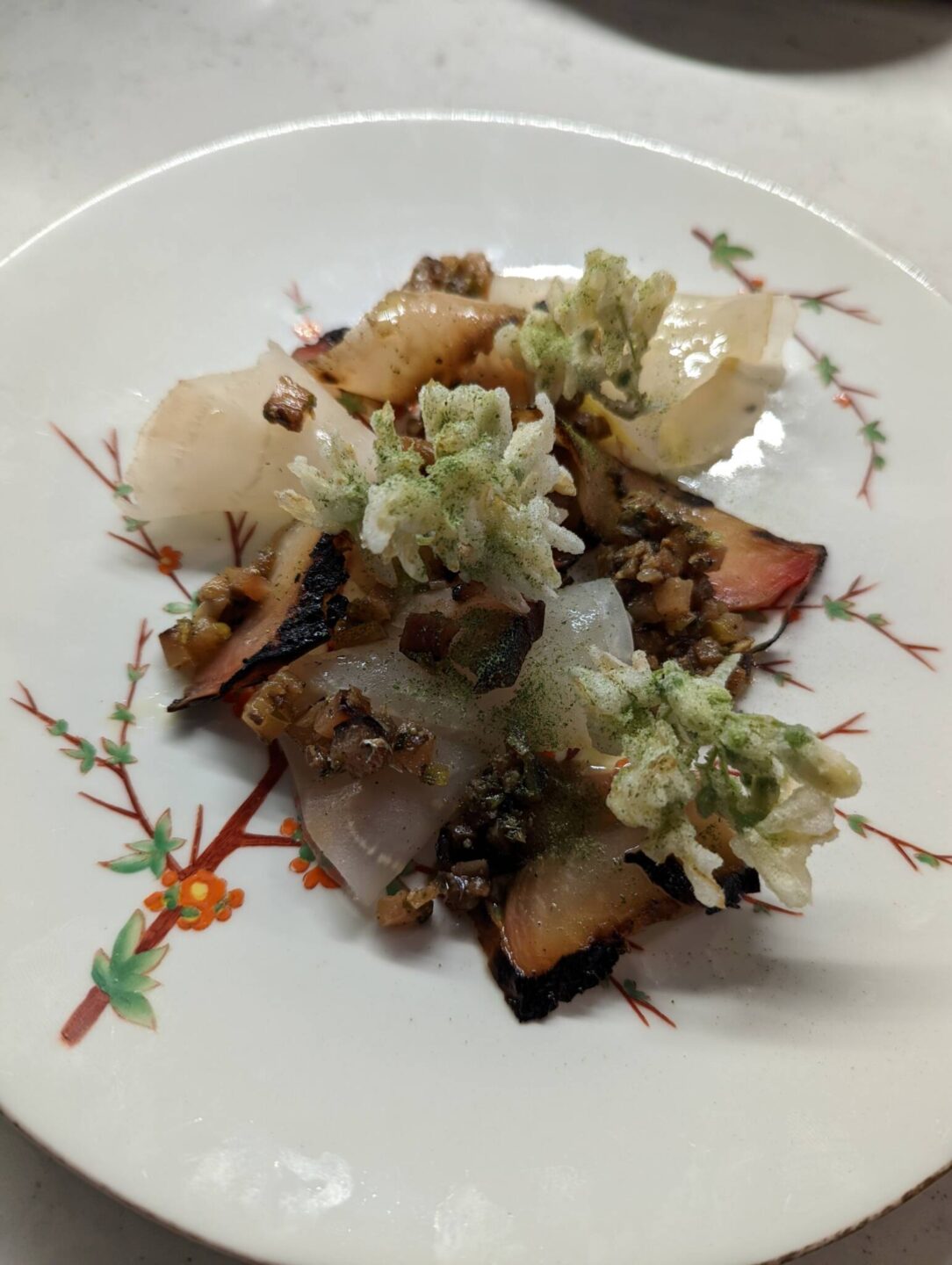
Barwick, whose private dining company Chellamella focusses on using locally-sourced ingredients, has been experimenting with different ways to cook the mangel, transforming the ungainly, bulbous vegetable into a work of art on the plate.
“We expected such a large root vegetable usually used for cattle to be more fibrous and flavourless but in fact it was quite the opposite,” said Barwick. “The mangel went bright white after salt baking and the barbecued version created a bright orange/purple crust as if it was a sliced piece of smoked brisket. We were surprised to find that even though mangels are in the beet family, they look and taste very meat-like.”
The release noted that mangels are also in demand from cattle and goat farmers in Cayman. Local historian and author Roy Bodden, who raises cattle on his land, said he has used Beacon Farms’ mangels as animal fodder.
“My farm manager, Garry, my son James and I all agree that mangelwurzels are a great food source for cattle,” Bodden said in the press release. “It complements the grass which is the staple cattle food and we eagerly anticipate Beacon Farms production of this new crop which we highly recommend.”
Mangelwurzel is a high-sugar, high-energy food that is rich in calcium and magnesium and suitable for most animals including cattle, pigs and goats. Also known as mangolds, these beets can grow up to 20 pounds in size and store well.
“Developing our capacity to produce a locally-grown, nutritious animal fodder will reduce our dependence on importing from overseas,” said Urquhart. “Recent disruptions to the global supply chains have highlighted the importance of increasing our food security. As we scale up our agricultural endeavour, this is one area we can have a positive impact quickly.”
Related Videos











Mangelwurzels! Love it!