A blurred horizon with hazy and cloudy overhead conditions are unmistakable signs that the Cayman Islands have once again been engulfed by a passing Sahara dust cloud.
“The latest models show that the conditions are expected to intensify in the coming days,” said Cayman Islands National Weather Service forecaster Avalon Porter, who noted the passing dust cloud should be out of Cayman’s area by Friday, 27 May.
Porter said, each year the dust clouds start off as micro-particles of dust and sand, mainly from the Sahara Desert in northern Africa, from which it gets its name. Those tiny particles are then blown away with the passing breeze, and eventually picked up by strong prevailing winds and eventually become suspended in large plumes which can reach the upper atmosphere.
“From there, the dust cloud makes its way across the Atlantic Ocean thanks to the assistance of the northeasterly trade winds, where it impacts southern states in North America, Central and South America and the Caribbean,” he said.
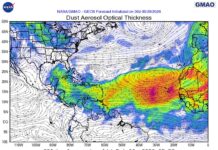
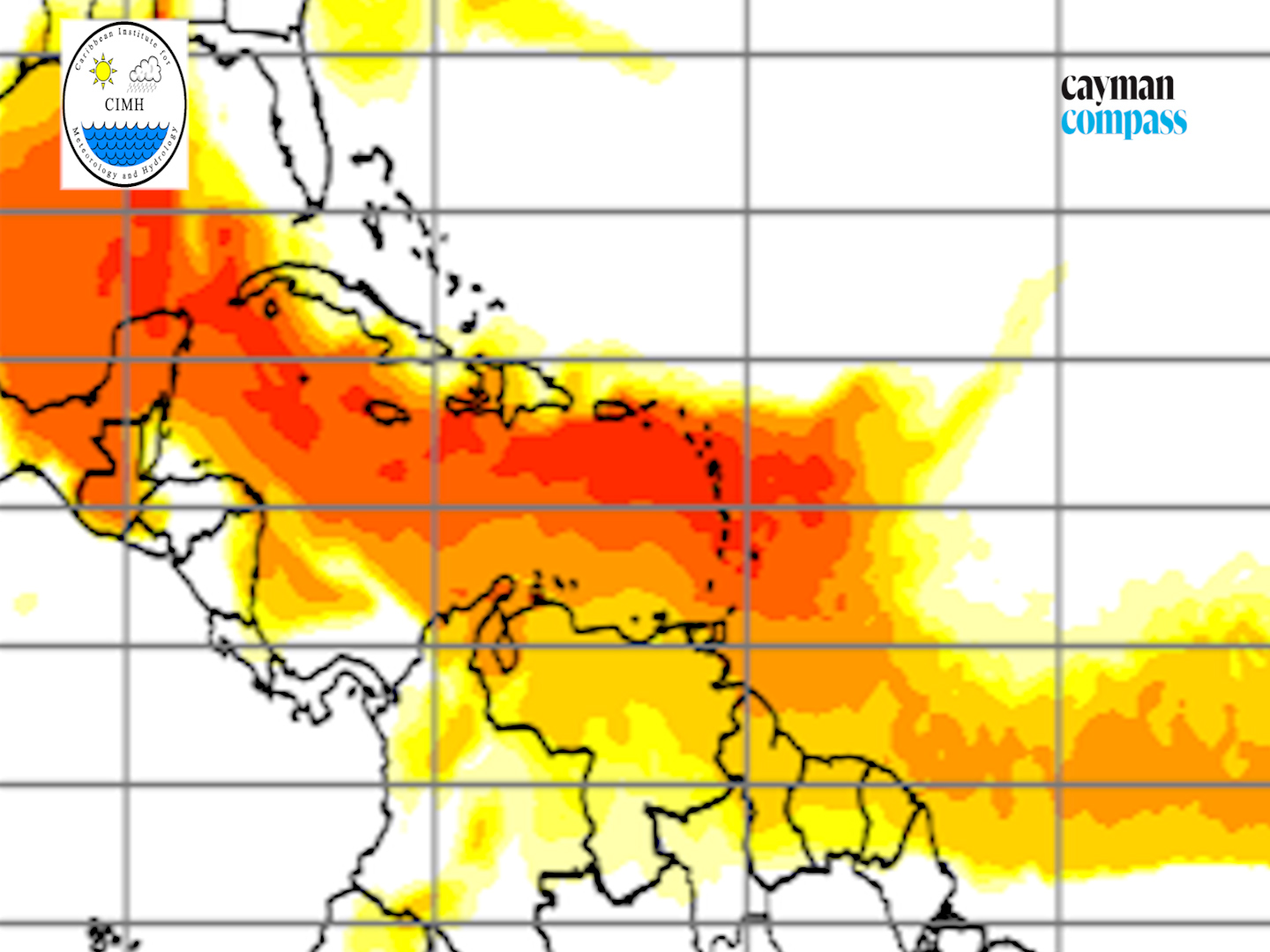
The Caribbean Institute of Meteorology and Hydrology is the main body that monitors the sand and dust storms as they enter the Caribbean. In its latest 7-day forecast, the institute provided images which show a significant increase in the coming days.
Potential storm suppressor
Along with the hazy and cloudy weather, the Sahara dust storms are often accompanied by dry and arid upper atmospheric conditions.
“Those conditions have the ability to weaken major storms, and in some instances prevent rainfall,” said Porter. “For some, this might be viewed as good news, considering that we are now about to enter the hurricane season.”
Initial forecasts are calling for an above-average hurricane season, which begins on 1 June.
The National Weather Service told the Cayman Compass the Sahara dust cloud is a yearly phenomenon, which has intensified over the course of the past decade. In 2021, the Cayman Islands and the wider Caribbean experienced one of the thickest cloud covers in recent years.
In April 2021, the passing dust clouds left a thin layer of sediment atop parked cars, buildings, trees and almost every other stationary outside item. This year, the clouds have returned, but so far, not as intensely.
Potential health hazard
Although Cayman’s location helps to reduce the brunt of the dust storm, the micro-particulates that enter the area can cause potential health hazards.
In the past, Public Health has warned people with respiratory-related illnesses against going outside unnecessarily when a dust cloud is overhead. They advise that, in cases where a person must leave their home during a dust storm, they should wear a mask to protect the nose and mouth.
Related Videos