

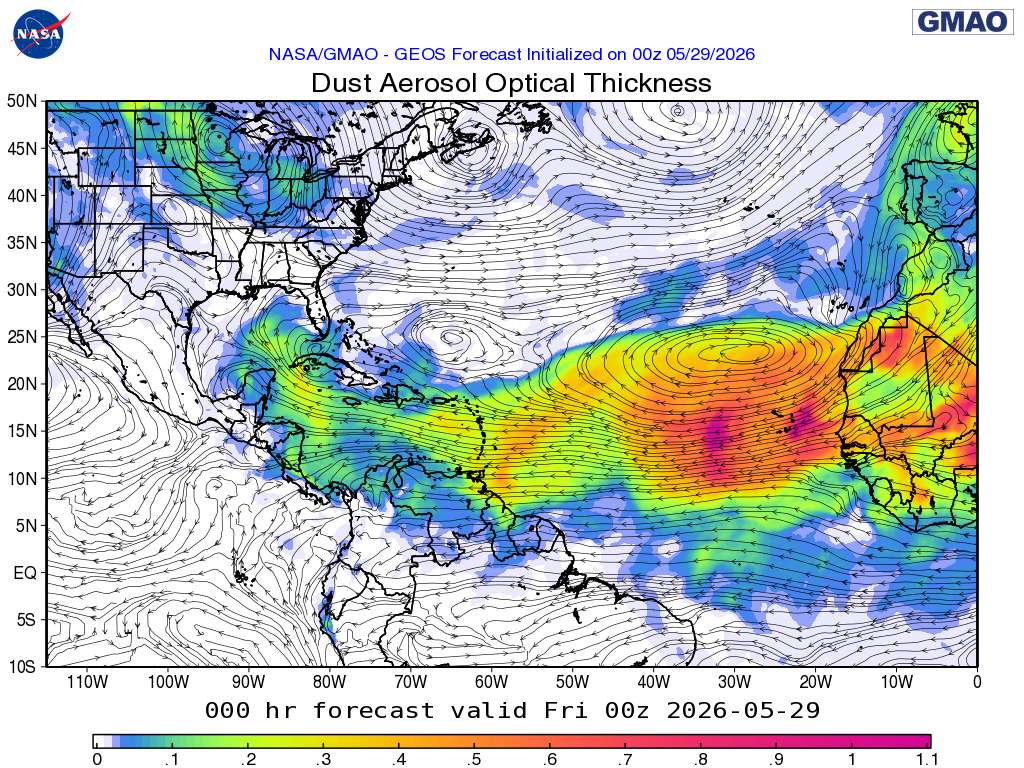
A large plume of Saharan dust moving across the Atlantic has reached the Caribbean and is beginning to affect air quality in the Cayman Islands, with forecasters warning that dust concentrations are expected to remain through the weekend and into early next week.
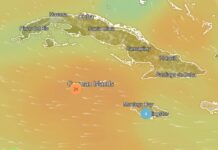
Air quality data from the United Nations Environment Programme’s IQAir platform showed levels of PM2.5 – tiny airborne particles commonly found in dust, smoke and pollution – rising on-island from 19 micrograms per cubic metre at 11am on 29 May to 25 micrograms per cubic metre by 1pm, five times higher than the World Health Organization’s guideline value.
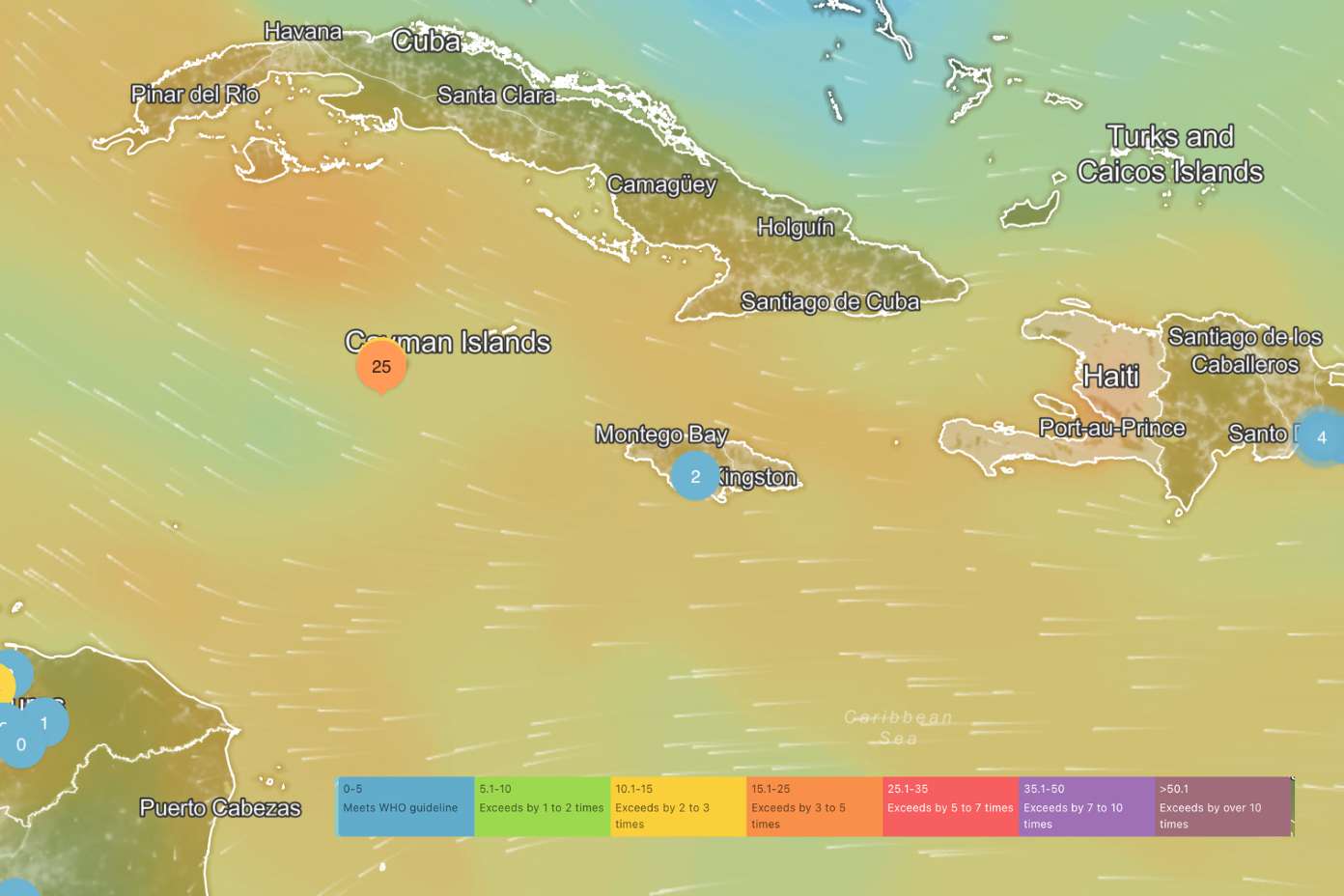
Because these microscopic particles are small enough to penetrate deep into the lungs and enter the bloodstream, they can pose health risks, particularly for people with asthma and other respiratory conditions.
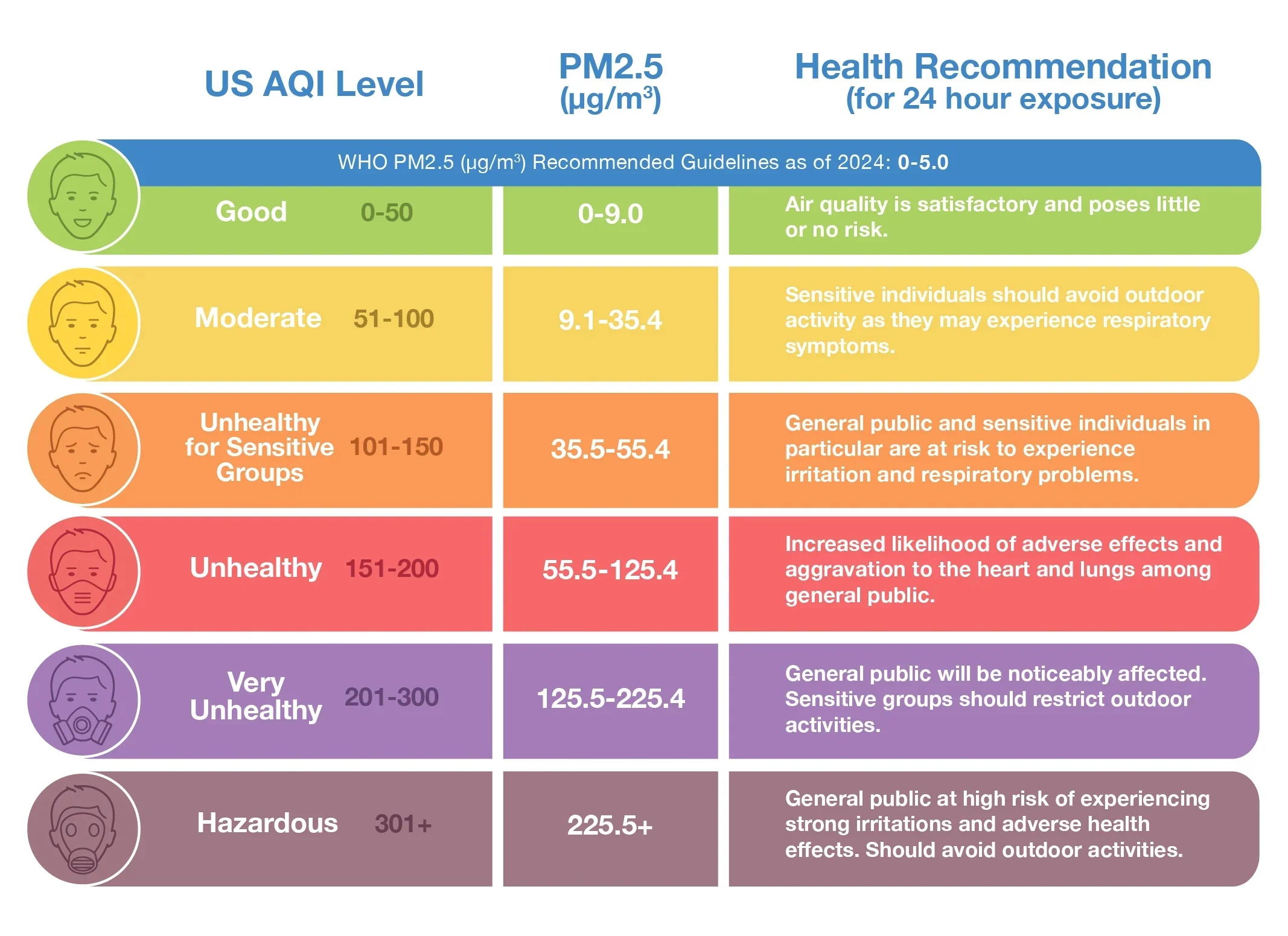
According to Cayman Islands National Weather Service Chief Meteorologist Kerry Powery, the Saharan dust currently affecting Cayman is of slight to moderate intensity, while air quality data from IQAir recorded a US Air Quality Index or AQI reading of 81, placing conditions at in the moderate category.
Although the WHO says no level of air pollution is completely safe, its PM2.5 guidelines are widely regarded as the global benchmark for reducing long-term health risks.
Based on current conditions, sensitive groups are advised to reduce strenuous outdoor activity, keep windows closed, wear a mask outdoors and, where possible, use an air purifier indoors.
Meteorologists monitoring the event
Powery said the dust currently affecting Cayman is likely the result of a combination of Saharan dust and stronger winds across parts of the southern Caribbean.
While conditions may improve somewhat over the coming days, Powery cautioned against describing the dust as disappearing entirely.
“I wouldn’t want to say dissipate, because that might imply it will completely disappear,” he said, noting that a reduction in concentrations is more likely than a complete clearing.
However, forecasters are already tracking a second dust plume that is expected to reach Cayman around Tuesday evening. Based on current projections, Powery said the incoming plume could be slightly thicker than the current event and may reach moderate levels.
Powery said the National Weather Service will continue monitoring the situation and provide updates through its forecast discussions and daily weather forecasts as the next plume approaches.
The local forecast aligns with regional and international monitoring efforts.
Noah Bergren, senior meteorologist with FOX 35 Orlando, said a “big plume of dust” is expected to spread as far west as the Bahamas and Jamaica this weekend, creating hazy skies and potentially producing vivid sunrises and sunsets.
Weather Trader, which is managed by former NOAA Chief Scientist Ryan Maue, reported that multiple Saharan dust plumes are emerging from Africa and are expected to move across the Caribbean at intervals of roughly five to seven days into early June.
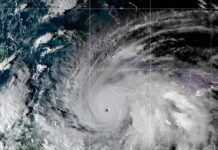
Satellite imagery released by the National Oceanic and Atmospheric Administration on 29 May showed a massive dust plume stretching from western Africa across the Atlantic to the Caribbean with forecasters from the National Hurricane Center in Miami indicating that dust concentrations are expected to increase later this weekend and into early next week.
What are Saharan dust plumes?
The phenomenon, known as the Saharan Air Layer, consists of hot, dry air laden with dust particles that periodically travel thousands of miles from North Africa across the Atlantic Ocean.
According to NOAA, these dust outbreaks occur regularly between May and October and can transport more than 100 million tonnes of dust annually across the Atlantic and into the Americas.
While the dust can degrade air quality and aggravate respiratory conditions such as asthma, allergies and eye irritation, it also plays an important environmental role. The mineral-rich particles help fertilise ecosystems across the Atlantic, including the Amazon rainforest, marine environments and agricultural areas in the Americas.
The Saharan Air Layer also has implications for hurricane activity. Because the air mass is significantly drier than typical tropical air, it suppresses cloud formation and thunderstorm development, often reducing the likelihood of tropical cyclone formation in areas affected by the dust.
Forecasters at Colorado State University include Saharan dust levels among the factors used in their Atlantic hurricane season outlooks.
Residents across Cayman may notice hazier skies than usual in the coming days, along with vivid sunsets. However, health officials generally advise people with respiratory illnesses, allergies or other sensitivities to limit prolonged outdoor exposure during periods of heavy dust concentration and seek medical advice if symptoms worsen.
Related Videos







” More than 100 million tonnes of dust annually”, how long will the Sahara Desert last?.