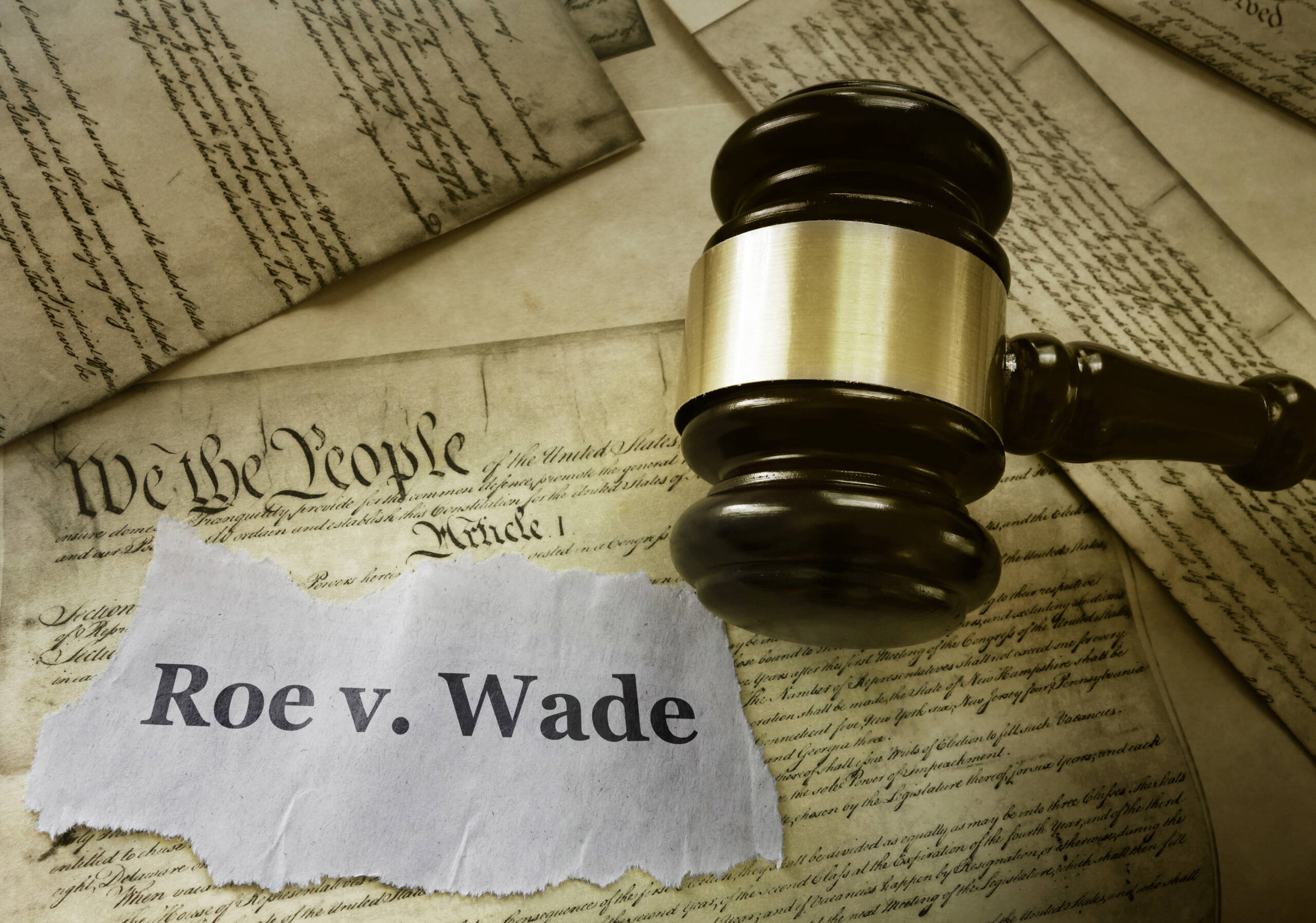
The United States Supreme Court on Friday morning overturned Roe v. Wade, declaring that having an abortion is no longer a constitutional federal right.
The Supreme Court judges’ 5-4 majority decision means that abortion rights will now be decided by individual states, rather than by the federal government.
According to US media report, more than 20 US states already have legislation in place to ban abortions, which can now be enacted following the court’s ruling.
Since abortion is illegal in the Cayman Islands, unless the life of the mother is at risk, many women with unwanted pregnancies travel from here to the US, usually to Florida, to get an abortion.
Advocates for women’s rights and healthcare in Cayman had warned that if Roe v. Wade were overturned, and if Florida subsequently bans or restricts abortions, this could lead to pregnant women in Cayman undergoing unsafe methods to terminate unwanted pregnancies.
Decision to overturn had been expected
The decision by the Supreme Court to overturn the 50-year-old law had been expected, as a draft ruling of the judges’ opinions had been leaked in May.
Justice Samuel Alito, in his majority opinion issued on Friday morning, wrote, “Roe was egregiously wrong from the start. Its reasoning was exceptionally weak, and the decision has had damaging consequences. And far from bringing about a national settlement of the abortion issue, Roe and Casey have enflamed debate and deepened division.”
He added, “It is time to heed the Constitution and return the issue of abortion to the people’s elected representatives.”
Three judges issued a joint dissenting opinion, stated, “With sorrow – for this Court, but more, for the many millions of American women who have today lost a fundamental constitutional protection – we dissent.”
A fourth judge, Chief Justice John Roberts, did not join the majority, but issued a separate opinion.
The original Roe v. Wade decision was determined by the Supreme Court in 1973 which issued a majority opinion in favour of ‘Jane Roe’ that women in the US had a fundamental right to abortion, and struck down an abortion ban in Texas as unconstitutional.
Abortion law in Cayman
In Cayman, the Law Reform Commission addressed the issue of legalising abortion here, as part of its review of the Penal Code, to bring it into line with the Bill of Rights.
In a discussion paper, which sought public input, the commission said, “International human rights legal instruments and authoritative interpretations of those instruments support the claim that the right to access safe abortion services is a human right and compel the conclusion that women have a right to decide independently in all matters related to reproduction, including the issue of abortion.”
It added, “Where abortion is illegal and unsafe, women are forced to carry unwanted pregnancies to term or suffer serious health consequences and even death.”
Under the Penal Code, anyone who “attempts to procure an abortion, or supply drugs or an instrument to assist with the procurement of an abortion commits a criminal offence”.
According to the Law Reform Commission’s discussion paper, there have been no reported abortion-related prosecutions in Cayman.
But the commission noted, “However, this does not mean that abortion is not being procured,” and it cited a 2013 Ministry of Health Report on the Adolescent Health and Sexuality Survey, which stated that, out of 202 female participants in the survey, 9.1% of 15-16 year olds and 8.5% of 17-19 year olds admitted to having an abortion.
Read the Supreme Court decision here.
Related Videos