


Banned pills are being sold for $500-a-dose to help women terminate unwanted pregnancies in the Cayman Islands, a Compass investigation has revealed.
Scores of women on the islands have acknowledged swallowing pills to illegally induce a miscarriage.
Compass reporters were able to obtain the prescription drug misoprostol – available for $8 in areas where abortion is legal – at a considerable mark-up on the black market.
The revelations come as part of a special report on the challenges faced by women in Cayman amid a near total ban on abortion in the territory.
While the Supreme Court’s repeal of the landmark Roe v. Wade case has put global scrutiny on the issue in the US, Cayman’s own anti-abortion laws – which are among the strictest in the world – have garnered relatively little attention. However, women who have been impacted by the ban and advocates for reform are hoping to change that, and the Law Reform Commission is currently reviewing the existing legislation.
No legal avenues available
For pregnant women and girls in Cayman who do not want to carry a baby to term, there are no legal avenues available to them to terminate that pregnancy as it is unlawful to procure an abortion by any means, unless the life of the mother is at risk.
The choices that are available are limited to buying pills locally, and illegally, for an inflated price of hundreds of dollars to deliberately induce a miscarriage, or illegally importing them, or travelling off island to get an abortion, often to a clinic in the US. However, the recent decision by the Supreme Court to reverse Roe v. Wade, giving individual US states the autonomy to draft their own abortion laws and regulations, has made that a more difficult option.
During the pandemic, while Cayman’s borders remained closed, travelling off island for an abortion effectively became impossible for several months, so buying pills locally were the only option.
In a survey carried out by a University College of the Cayman Islands student recently as part of her studies, a fifth of the women who said they’d had an abortion said they had ingested pills to end their pregnancies.
In a bid to get an idea of how difficult or easy it is to obtain abortion pills on island, the Compass sought to buy some of the pills that are available on the black market here.
As it turns out, it’s not hard to find them. One phone call to a person who knew a person who could supply the pills was all it took.
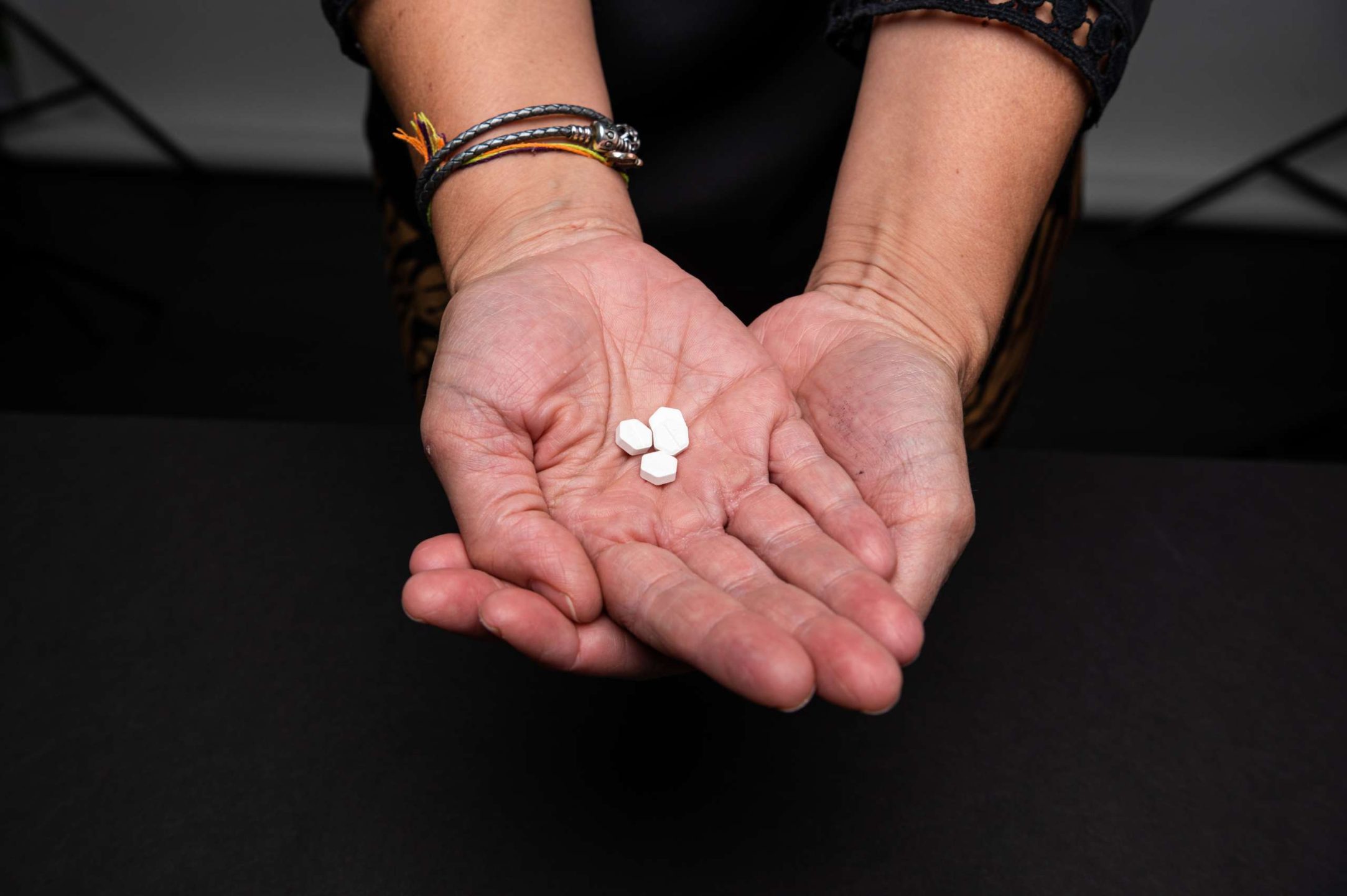
Four misoprostol pills, under the Pfizer brand name Cytotec, were handed over, still in foil but with each one cut out separately from the blister pack. The cost? $500, or $125 per pill.
A pharmacist familiar with the pills examined them and confirmed they were the genuine article, although, as the seller had cut the individual pills out of the blister pack, it was impossible to tell what the expiry date of the drug was.
The pharmacist pointed out that the pills that sell for $125 on the street cost $8 for five pills at their pharmacy. However, the pharmacist noted that those drugs can only be prescribed by a doctor and only in cases to induce miscarriage where there is no foetal heartbeat, or for ulcer treatment, which was the original purpose of misoprotol.
Often, in US states where abortion pills are legal, they can cost anywhere from $200 to $500, depending on insurance and the type of medical facility the pregnant woman attends, but this cost includes a visit to a medical professional before and after the pills are prescribed and taken.
Where abortion pills are legally available, the process usually involves two drugs – mifepristone which ends a pregnancy, and the second, misoprostol, which empties the uterus. The latter is sold under a number of different brand names, such as Cytotec, Misoclear and Isovent.
In Cayman, it’s usually only the second pill, misoprostol, that is sold on the black market. It is only recommended to be taken during the first 10 weeks of pregnancy.
According to the people selling the pills, and some who have bought them, the pills most commonly available come from Honduras.
Advocates: Criminalisation leads to unsafe abortions
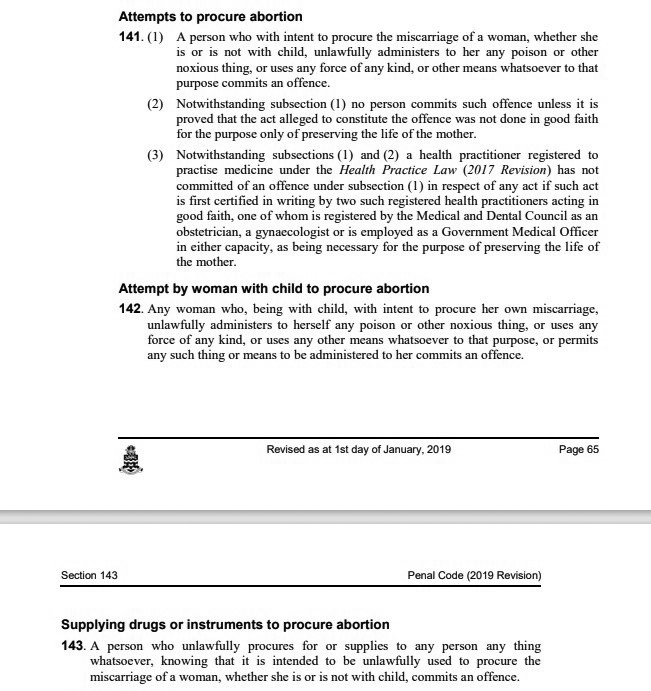
Under the Penal Code, abortion is illegal in Cayman in all instances other than to save the life of the pregnant woman. It does not apply to girls or women who become pregnant as a result of rape or incest, or in cases where the foetus won’t survive to full term.
Advocates for legal terminations say outlawing abortions does not stop women getting abortions; it simply stops them getting safe abortions.
Carolina Ferreira, who heads the Red Cross’s child protection and sexuality education programmes, has, over the past two decades, seen her fair share of girls and young women in Cayman who have ended their pregnancies – or attempted to – in a variety of ways, including some that put their lives at risk.
While some have travelled off island to get a medical abortion at a clinic in the US or elsewhere, and others have gone down the route of buying abortion pills illegally and taking them, some have gone so far as to insert bleach-soaked tampons, drink noxious teas and concoctions, or throw themselves downstairs in a bid to abort.
“That’s a lot of harm [they] do to themselves when they’re trying to resolve a situation that can’t be resolved legally, by appropriate medical means,” she said.
Ferreira says there is a notion “that we’ve become far too comfortable with” that pregnancy is a punishment for having unprotected pre-marital or extramarital sex. She’s also concerned that there is not enough of a conversation about combatting the sexual abuse of young girls who end up becoming pregnant through that abuse, adding that the blame is often placed on the victim, who may then have to try to secure an abortion or carry her abuser’s child to term.
Estefanie Barnett, who recently published her findings on surveys on the subject in Cayman as part of her social work studies at the University College of the Cayman Islands, noted, “The rate of abortion does not equate to the criminalisation of abortion. Criminalising abortion only pushes women to engage in unsafe behaviours in order to procure an abortion, sometimes with fatal consequences.”
She added, “Restrictive abortion laws and regulations do not prevent abortion. It only pushes women to engage in self-induced, unsafe and clandestine abortions.”
She says she believes her study shows that there is support in Cayman for the legalisation of abortion. She received responses from more than 250 women when she posted her survey questions on the Women in Cayman Facebook group earlier this year, and 90% of those respondents indicated they would support making abortion legal in the Cayman Islands.
A snapshot of the data
There is little data available in Cayman about the rate of abortions through medication on island, or on the number of women who fly overseas to end their pregnancies. Barnett’s research, though limited to just 252 women (and another separate survey she did involving included 15 men and 55 women) appears to be the most extensive carried out since a 2013 government survey in schools that looked at the health and sexuality of adolescents.
Of the 214 respondents who answered Barnett’s question, regarding whether they’d ever had an abortion, 70 of them, or 31%, said they had. Of those, 46 said they had had an abortion because of an ‘unwanted pregnancy’, five said it was because of ‘financial reasons’, another four cited ‘medical reasons’, four said it was because of ‘academic/career reasons’ and 11 had other reasons.
Fourteen of the women, a fifth of those who said they’d had an abortion, said they had done so here in Cayman by ingesting pills. More than half, 39 women, had travelled overseas to do have a medical abortion.
“Everyone has their own story,” Barnett told the Compass.
She said she chose the subject of abortion for her studies, even though she knew it would be controversial, because she felt it was important that Cayman begins to have a conversation about it. “You have to start somewhere,” she said. “Nothing is going to happen unless people start talking about this.”
In her report, she said that the raw, unpublished data collected in both of her surveys indicated that the restrictive abortion laws in Cayman may not reflect the population’s opinion. “They express a high level of acceptance towards change and disagreement with the current abortion provisions. Participants expressed a high level of support for cases of fetus abnormality, personal choice, and in the case of low-income families.”
She added, “Contrary to the belief that religion predominates most of the islands’ population, the data showed that most of the participants were not religious, and 80% had not attended a religious event in the past year. 99.2% of participants agreed that a more in-depth curriculum regarding sexual and reproductive life and health should be available in high schools across the islands. It is important to note that objective, high-quality, and representative data on the matter can be a powerful advocacy tool to push for abortion rights in the Cayman Islands.”
Law reform
Barnett plans to forward her findings to the Law Reform Commission, which is currently reviewing Cayman’s outdated Penal Code, including the section of it that deals with abortion.
Jose Griffith, director of the Law Reform Commission, said the commissioners are looking at the submissions that were received during the public consultation period following the publication of the commission’s discussion paper on the issue in December last year. The commission is ascertaining if the Penal Code is consistent with the Bill of Rights.
Griffith described the responses to the discussion paper, from members of the public and stakeholders, as “quite robust”, including those for and against amending the law.
While the Penal Code does not set out a specific penalty for abortion-related offences, it does state that, in instances where no punishment is specially provided for an offence, it is punishable with imprisonment for four years and with a fine.
In its research, the Law Reform Commission could find no cases where a person had been prosecuted for an abortion-related offence in Cayman.
According to the commission’s discussion paper, Cayman is one of 39 countries in the world where abortion can only be legally carried out to save the life of the pregnant woman. In another 24 countries, abortions are completely banned, in any circumstance.
The commission acknowledged the subject of abortion is “highly emotive, sensitive, complex and controversial”.
It noted in its discussion paper, “Where abortion is safe and legal, no one is forced to have one. Where abortion is illegal and unsafe, women are forced to carry unwanted pregnancies to term or suffer serious health consequences and even death. Approximately 13% of maternal deaths worldwide are attributable to unsafe abortions – between 68,000 and 78,000 deaths annually.”
Of 202 female teenagers who answered the question on whether they had had an abortion in the 2013 survey carried out by the Ministry of Health, 9.1% of 15-16 year olds and 8.5% among 17-19 year olds admitted to having an abortion.
The commission stated that a general comment under the UN International Covenant on Civil and Political Rights notes that there are “critical global human rights standards to prevent maternal mortality and to ensure that access to abortion is protected under international human rights law. It also reaffirms the fundamental principle that human rights apply only after birth.”
It also clarifies that the criminalisation of abortion of women or girls undergoing abortion, or of medical service providers assisting them in doing so, could be considered a violation of the right to life of women or girls, as it compels them to resort to unsafe abortions.
While such ‘general comments’ are not legally binding, they help interpret human rights treaty provisions.
No timeline has yet been set for when the Law Reform Commission will release its recommendations following its review of the Penal Code.
Related Videos













Cayman’s archaic laws on abortion need to be changed now. If a woman doesn’t want to have a baby she’s going to swallow some pills, not knowing exactly what they are, or use a coat hanger. These laws are so outdated and so unfair. We’re not a 3rd world country — or are we?