As the World Cup gets under way in Qatar, the world’s media is once again turning its scrutiny on the quagmire of corruption that led to the biggest sporting event on the planet being hosted in the middle of November in a barren desert outpost with no footballing history or pedigree. While Cayman will have no involvement in the tournament, its administrators were heavily implicated in a kickback scandal dubbed the ‘World Cup of fraud’, the repercussions of which rumble on to this day.
The Cayman Compass has been covering the unfolding scandal since 2015, when the islands’ top football official, Jeffrey Webb, was arrested by the FBI at a Swiss hotel. While Webb’s close associate Canover Watson was found guilty last month of a separate, but linked, soccer scam, Webb remains on bail in Georgia awaiting sentencing. In a special report today, Cayman Compass business editor Michael Klein, who covered Watson’s 14-week trial, delves into the long-running saga.
Whatever happened to Jeffrey Webb?
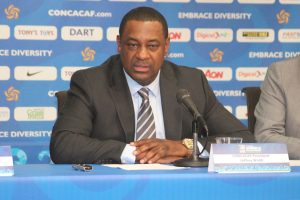
When Jeffrey Webb, the former FIFA vice president and head of regional football body CONCACAF, was arrested in Switzerland in 2015 and pleaded guilty to charges of corruption and racketeering six months later, many expected him to spend a long time in prison.
“I can remember very clearly on the 27th of May 2015, I was watching CNN, and I saw on the news that Webb was arrested in a matter relating to some issue with FIFA and the FBI,” said Canover Watson, Webb’s close associate, at Watson’s own football-related fraud trial in the Cayman Islands in September this year. It was a very difficult, unsettling and uncertain time for him personally to see his friend and business partner arrested on television, because no one really knew what it was actually about, Watson claimed.
“Everyone that ever met Jeffrey was now assessing: Well, what did I say to Jeff or what have I done with Jeff? Banks that did deals with Jeffrey Webb or transactions with Jeffrey Webb were all now re-examining everything. Is there anything that, potentially, I could be a part of that somehow implicates me in this, even if you did nothing wrong,” Watson said. “It was just that type of scene. I mean, it was a very scary time for a lot of people in Cayman.”
Watson had reason to be scared. He had leveraged his friendship with Webb to make his own fortune, skimming cash intended for soccer balls, kits and equipment for young players around the Caribbean. But while Watson has been investigated, charged and convicted for his crimes, the man at the centre of the scandal has yet to be fully brought to justice.
Rise and fall of a Cayman anti-hero
Webb’s rise to the top of the world of football governance was as meteoric as his fall from grace was steep. He became president of the Cayman Islands Football Association in 1991. In 1995, he joined the first of many committees at world football body FIFA. Webb became the chairman of FIFA’s Internal Audit Committee in 2011, after having served as the deputy chairman since 2002.
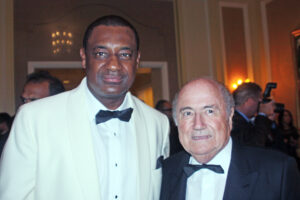
One year later, at the FIFA Congress in Budapest, Hungary, he was elected president of CONCACAF and joined the executive committee of FIFA. Tipped as a successor to FIFA president Sepp Blatter, by Blatter himself at CONCACAF’s congress in the Cayman Islands in 2013, it appeared to be only a matter of years for Webb to assume the highest executive function in world football.
“I found Jeffrey to be a large personality, very outspoken. You know, when Jeffrey walks into a room, everyone knows it. He is one of those personalities, very outgoing, outspoken, very charismatic, very likeable,” Watson told the Cayman Islands Grand Court.
“I always thought that Jeff was well suited for politics. I am not sure that is a compliment, but that’s his personality. He lived and breathed football. That was his entire life. Football was his job, Fidelity [the bank where Webb had a full-time position] was his side gig.”
The wait for sentencing
Seven years later, the disgraced football executive has still not been sentenced. On 28 Oct. this year, his lawyer requested sentencing, set for mid November, to be delayed again – for the 14th time.
US attorneys, as usual, consented to the request and it was, again, accepted by judge Pamela Chen. Sentencing is now set for 8 Aug. 2023.
Webb was initially released in July 2015 after arranging a US$10 million bond, secured by 10 properties owned by himself, his wife and relatives, as well as three cars, 10 luxury watches and jewellery.
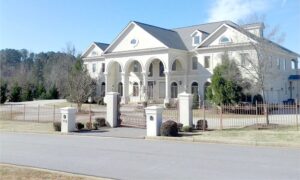
While at first he was confined to house arrest at his home in Loganville, Georgia, Webb was later allowed to travel within a radius of 50 miles to run errands and take care of his young son. Since June 2017, when the court last modified Webb’s release conditions, he was allowed to travel anywhere in the state of Georgia but remained subject to a home curfew between the hours of 10pm and 7am.
These conditions were lifted in June 2022, and Webb is now free to travel in his home state without curfew limitations or location monitoring. For travel within the United States outside of Georgia, he still requires the pre-approval of Pretrial Services and the FBI.
Bribes, wire fraud and money laundering
Webb is accused of taking millions of dollars in bribes in exchange for awarding commercial rights for various football tournaments in the region. He has pleaded guilty to seven counts of racketeering, wire fraud conspiracy and money laundering conspiracy.
He agreed to forfeit US$6.8 million and is facing a fine of US$500,000, or an amount equal to half of the proceeds he received from the criminal enterprise. At his plea hearing in 2015, Webb admitted that he abused his position as CIFA and CONCACAF president to personally enrich himself.
“Upon attaining these leadership positions, I began to exercise significant influence over the awarding of commercial rights associated with football tournaments, organised by CONCACAF or CFU [Caribbean Football Union],” he told the court. “In this capacity, I abused my position of trust to obtain bribes and kickbacks for my personal benefit.”
Webb said he committed at least two counts of racketeering, when together with other co-conspirators he accepted bribes from sports marketing companies that would offer side payments in exchange for awarding them commercial rights to World Cup qualifying matches of CFU nations.
“At the time, I understood this to be a bribe offer, and I believed that such offers were common in this business,” he said.
Webb said he accepted further bribes in connection with the sale of commercial rights for the 2018 and 2022 World Cup qualifying matches from the CFU member associations.
In 2012, and 2013, he said he agreed with co-conspirators to accept bribes in connection with the sale of commercial rights to the Gold Cup and the Champions League CONCACAF club tournament.
Then, in 2013 and 2014, he agreed with others that they would accept bribes in connection with the sale of commercial rights to the Copa America Centenario tournament – a major international event featuring Brazil, Argentina, USA and Mexico, among others.
In addition to generating bribes from the income streams of the football organisations he represented, Webb admitted that he pilfered funds meant for football development, and that he took bribes from service providers and vendors.
“I… abused my position of trust… by embezzling funds intended for the benefit of football organisations that I represented and by soliciting and accepting bribes and kickbacks related to other agreements between, for example, CONCACAF and third-party vendors, for services and equipment,” Webb said. “I deeply regret my participation in this illegal conduct.”
Webb also admitted that he helped launder the funds together with co-conspirators by transferring them from the US to bank accounts owned by front companies in Panama, the Cayman Islands and elsewhere.
It is likely that Webb will receive a reduced sentence, perhaps even just time served under bail restrictions, in exchange for his cooperation with US federal prosecutors in the FIFA investigation.
But his plea agreement and a preliminary forfeiture order from November 2015 are under seal, hidden from public view, at least for now. Webb’s life of quasi-freedom in his Loganville mansion for the past seven years stands in stark contrast to other defendants in the case.
The middle man
Webb’s former right-hand man Costas Takkas, a UK citizen who lived in the Cayman Islands for 20 years, received a 15-month prison sentence in October 2017, after he pleaded guilty to one count of money laundering in connection with a bribe payment to Webb that he facilitated.
Takkas was accused of being a middleman for Webb, negotiating bribes on his behalf and using his bank accounts in the Cayman Islands to funnel illegal payments to his boss. All charges, other than money laundering, were dropped as part of the guilty plea. Takkas was credited with 10 months already served in Switzerland, while he was fighting extradition to the US. He was deported to the UK in 2018.
Undercover mole helped uncover $10m bribe scheme
This year, Webb’s business partner and friend Canover Watson was found guilty by a jury in the Cayman Islands in connection with a scheme that saw him send three fake invoices to CONCACAF for $1.54 million worth of sports equipment that was never delivered. His sentencing is set for January 2023.
The invoices were signed off by Enrique Sanz, who was installed by Webb as CONCACAF’s secretary general. Before joining the football confederation, Sanz was vice president of Traffic Sports USA, the US subsidiary of the Brazilian sports marketing company that is one of the firms at the heart of the football bribery scandal.
Jose Hawilla, the founder and head of Traffic Sports, was arrested in 2013 and admitted to paying football officials tens of millions of dollars in bribes over two decades to retain the media and marketing rights for football events like the Copa America or the Gold Cup. Upon his arrest, the former sports journalist agreed to cooperate with the FBI by wearing a wire.
Taped conversations, recorded by Hawilla, helped bring charges against many others, including colleagues like Aaron Davidson, the head of Traffic Sports’ North American subsidiary, Traffic Sports USA.
In one conversation between Davidson and Hawilla in March 2014, the men discussed a bribe payment to someone they only referred to as Jeff, who, according to Davidson, was angry because he wanted more “after he found out that [South American football confederation] CONMEBOL was going to get more”.
As a witness at a US trial in 2017, Hawilla described how Traffic Sports joined forces with two other firms to pay a US$10 million bribe to Webb to receive the rights for the Copa America in 2016.
Hawilla pleaded guilty in December 2014 to corruption charges, including racketeering, wire fraud and money laundering, and agreed to forfeit $151 million. He died in 2018. In October 2016, Davidson admitted paying more than $14 million in bribes to football officials and pleaded guilty to racketeering conspiracy and wire fraud conspiracy. He has not been sentenced.
Sanz, Davidson’s right-hand man and alleged fixer for bribe payments at Traffic Sports USA, also cooperated with the FBI. The indictment against Webb claims that in addition to paying bribes to Webb and others when he was at Traffic, Sanz negotiated bribes by Traffic on Webb’s behalf while working for CONCACAF. As a cooperating witness, Sanz was never charged.
He was, however, found guilty of negotiating bribes by FIFA and banned from any football-related activity for life.
Soccer Uniform Company A
According to the US indictment of Webb, he directed Sanz to seek a bribe payment from Traffic in connection with the 2012 Gold Cup and CONCACAF Champions League marketing rights. Sanz allegedly negotiated a $1.1 million bribe payment with Davidson. Both Webb and Sanz, who is only identified as co-conspirator #4 in the indictment, are said to have discussed how best to pay the bribe.
“Ultimately, Webb decided to use an overseas company that manufactured soccer uniforms and soccer balls (Soccer Uniform Company A), the identity of which is known to the Grand Jury. Co-conspirator #23, like the defendant Costas Takkas a close associate of Webb, had a connection to Soccer Uniform Company A. Webb eventually instructed [Sanz] to submit a false invoice to Traffic USA for $1.1 million to be paid to Soccer Uniform Company A, which [Sanz] did,” the indictment said. “On or about December 4, 2013, the $1.1 million bribe payment for the defendant Jeffrey Webb was made by wire transfer from Traffic International’s account at Delta National Bank & Trust in Miami, to a Wells Fargo correspondent account in New York, New York, for credit to an account in the name of Soccer Uniform Company A at Capital Bank in Panama City, Panama.”
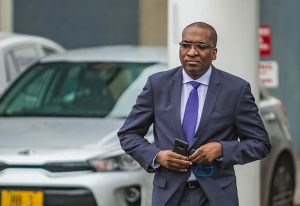
Evidence at the Cayman trial revealed Canover Watson was the sole owner of Forward Sports International Management Inc., a Panama company that ostensibly acted as the sales arm of football and soccer uniform maker Forward Sports PVT in Pakistan. Email correspondence between Watson and Capital Bank in Panama, seen by the jury, showed that he alerted the bank to incoming payments from Traffic Sports and CONCACAF.
A ledger titled ‘Forward Activity’, found on Watson’s personal computer, also presented in the Cayman trial, shows an incoming payment from Traffic Sports on 5 Dec. 2013 in the amount of $1,099,948, which would correspond to a $1.1 million payment less a transfer fee – the bribe paid to Webb.
Watson’s own scam
However, Watson was not charged in relation to the payment from Traffic Sports. Instead, the charges related to more than $1.5 million in orders, sanctioned by Webb and Sanz and paid by CONCACAF, for sports equipment that was never delivered.
On 28 Oct., Watson was convicted of all counts, including receiving secret commissions, money laundering and false accounting. The latter charge was in relation to two fake loan agreements used to explain to auditors two US$600,000 payments to the Cayman Islands Football Association that paid down a CIFA loan from Fidelity Bank which Webb and Watson had personally guaranteed.
Bruce Blake, another CIFA and CONCACAF official, was convicted of false accounting in relation to loan agreements but cleared of money laundering.
Cleaning up
When starting as CONCACAF president in 2012, Webb had vowed to clean up the regional football confederation with a culture of transparency and accountability. In hindsight, these statements turned out to be part of a dishonest ploy.
After awarding commercial partnership rights to Traffic Sports in 2012, CONCACAF issued a press release proclaiming that the multiyear agreement was reached after due process from the CONCACAF Evaluation Committee assigned to this bid. The committee included, next to three other football executives, “Canover Watson, Treasurer of the Cayman Islands Football Association, who evaluated all bids submitted”, the press release stated.
Watson’s Panama companies ultimately had connections to at least three CONCACAF partners that had received million-dollar contracts from Webb: Traffic Sports, Watson’s own Forward Sports, and travel and event organiser Cartan Global.
Cartan had obtained a lucrative contract from CONCACAF to arrange all of organisation’s travel and event logistics. According to documents shown at Watson’s Cayman trial, Cartan shared a net profit of $792,000 generated in 2013 with Watson through a Panama joint venture. Cartan also transferred $600,000 in sponsorship to the Cayman Islands Football Association at Watson’s request.
CONCACAF sued Cartan in 2016 alleging that this payment was graft in return for the CONCACAF deal. Both parties settled out of court. When contacted by CIFA auditors about the $600,000 payment, Cartan, in an email, denied that it had a Panama subsidiary.
On paper, Watson’s joint venture with Cartan in Panama was intended to pursue event management and travel and ticketing services for football associations, like CONCACAF, the Caribbean Football Union, UNCAF and even FIFA.
Webb’s link to hospital scam
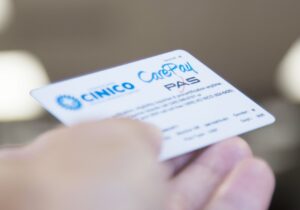
Webb still stands to face charges in the Cayman Islands for his alleged involvement in a scheme that skimmed hundreds of thousands of dollars from the public hospital system’s CarePay patient swipe-card contract.
His business partner and friend Watson, a former chairman of the Health Services Authority Board, was convicted in the case in 2016. He was found guilty of conspiring with Webb to steal money from the government, the Health Services Authority and the government insurer CINICO.
Watson was sentenced to seven years in prison but released after 28 months. Any move to have Webb face these charges in his home country requires him to be sentenced in the US first.
The ‘World Cup of Fraud’
The dramatic dawn arrest of Webb and a number of other football officials at a Swiss hotel in 2015 was the first public move by US law enforcement in a battle against what investigators described as the “World Cup of Fraud”.
By the end of that year, prosecutors had indicted more than 40 individuals and entities, and in the years since, have added new charges in the case.
More than dozen individuals have pleaded guilty, and two people have been convicted at trial, as a result of the FIFA investigation. Of the indicted, eight have died, 16 have been convicted, and a third have not been extradited and are unlikely to ever face charges in court. Against others, the football corruption investigations and indictments are ongoing.
The one that got away?
One of the people still fighting extradition is Jack Warner, a former FIFA vice president and Webb’s predecessor at CONCACAF and the CFU. The UK Privy Council ruled on Thursday, 17 Nov., that Warner can be extradited from his homeland of Trinidad to the US to face corruption charges.
The football boss played a controversial role as CONCACAF president for 21 years. He was forced to resign in 2011 after a leaked FIFA ethics report suggested he was involved in facilitating bribe payments from Mohammed bin Hammam to CFU members in return for their votes to nominate the Qatari head of the Asian Football Confederation as president of the football world’s governing body.
A video published by the Daily Telegraph showed Warner telling the Caribbean football executives in 2011: “I know there are some people here who believe they are more pious than thou. If you are pious, go to a church, friends, but the fact is that our business is our business. If there is anybody here who has a conscience and wishes to send back the money, I am willing to take the money and give it back to him at any moment.”
Bin Hamman was suspended for life but the investigation against Warner was dropped after his resignation. The Daily Telegraph later alleged it had obtained evidence that Warner and his family were paid almost US$2 million in 2011 from a company controlled by bin Hammam.
According to documents cited by the newspaper, a note from one of Warner’s companies, Jamad, to bin Hammam’s firm, Kemco, requested $1.2 million for work carried out between 2005 and 2010. The note was dated 15 Dec. 2010, two weeks after Qatar was awarded the World Cup.
A system inherited
When Webb took over from Warner, he inherited an established system to turn TV and marketing rights into personal profit. Warner set up a company, J&D International, in the Cayman Islands in 1995, which sold the 2002 World Cup TV rights for the Caribbean region for $4.25 million to the Caribbean Football Union, an organisation that he himself controlled.
The company was struck off the register in 1997 but restored in 2005 after Webb submitted an affidavit as J&D International’s director. The company also sold the regional TV rights for the 2010 and 2014 World Cup under a sublicence from the CFU.
In 2011, following Warner’s resignation, FIFA stripped the 2014 World Cup TV rights from J&D International and voided a deal with the original media rights licensee CFU, stating it had not agreed to the Caribbean Football Union sub-licensing the rights to the company.
The Full Play trial
Three media executives and a sports marketing company are still to stand trial in the case next year. It is possible that Webb’s evidence will take centre stage.
One defendant, Gerard Romy, former co-CEO of Spanish media company Imagina Media Audiovisual SL, also known as MediaPro, is charged in the case with wire fraud, money laundering and racketeering conspiracy. Romy allegedly participated in schemes to pay millions of dollars to high-ranking officials of the Caribbean Football Union and federations within the Central American Football Union to secure the media and marketing rights to FIFA World Cup qualifier matches.
In connection with the CFU scheme, Romy and his co-conspirators allegedly agreed to pay Webb, who in addition to being CONCACAF president was also a senior CFU official at the time, a $3 million bribe in exchange for a share of a contract awarding the media and marketing rights to CFU members’ home World Cup qualifier matches for the 2018 and 2022 qualification cycles. Romy remains out of reach of the US justice system, but MediaPro’s Florida subsidiary US Imagina has pleaded guilty to fraud charges and committed to pay fines and restitution of more than $24 million.
In addition to Romy, prosecutors have brought wire fraud, money-laundering and other charges against two former Fox Sports executives, Hernan Lopez and Carlos Martinez, as well as sports marketing company Full Play Group SA. All defendants have pleaded not guilty.
Hugo and Mariano Jinkis, a father and son who ran the Argentina-based firm Full Play, were also taped by Hawilla when they discussed bribing various presidents of national football associations.
According to transcripts of the conversation, Mariano Jinkis said, “I want to co-exist with and make all the presidents rich.” When Hawilla said he wanted to clean up his business to sell it, Jinkis said he did not want to partner with anyone who did not appreciate that payoffs are part of the business. “There will always be payoffs,” he said. “There will be payoffs forever.”
Jinkis senior and junior have not been extradited.
Related Videos