The Central Caribbean Marine Institute has announced it will be carrying out an extensive study of the marine ecosystems at popular deep-sea fishing sites 12-Mile Bank and Pickle Bank.
Pickle Bank is located about 80 miles northwest of Grand Cayman, while 12-Mile Bank is about nine miles west of North West Point in West Bay.
The exploration project, which will use cutting-edge technology, is being funded by a £490,000 (CI$489,086) grant from the UK’s Darwin Plus Initiative, which has been matched by a private donor, meaning almost $1 million will be available to CCMI and its collaborators.
“Offshore seamounts like these banks are closely related to islands and often provide important mid-way locations for species to connect populations in more distant areas,” CCMI said in a press release.
It stated, “At present, 12-Mile Bank and Pickle Bank are relied upon for commercial and recreational fishing and tourism. Yet there is a lack of baseline knowledge about species that are present at these sea mounts and in what numbers, as well as how the populations there relate to populations on Grand Cayman, the Sister Islands, and other locations in the Caribbean.”
CCMI is collaborating with the Department of Environment, the Guy Harvey Ocean Foundation and the Smithsonian Tropical Research Institute, each of which will lend resources and expertise to the project.
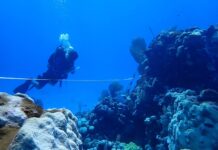
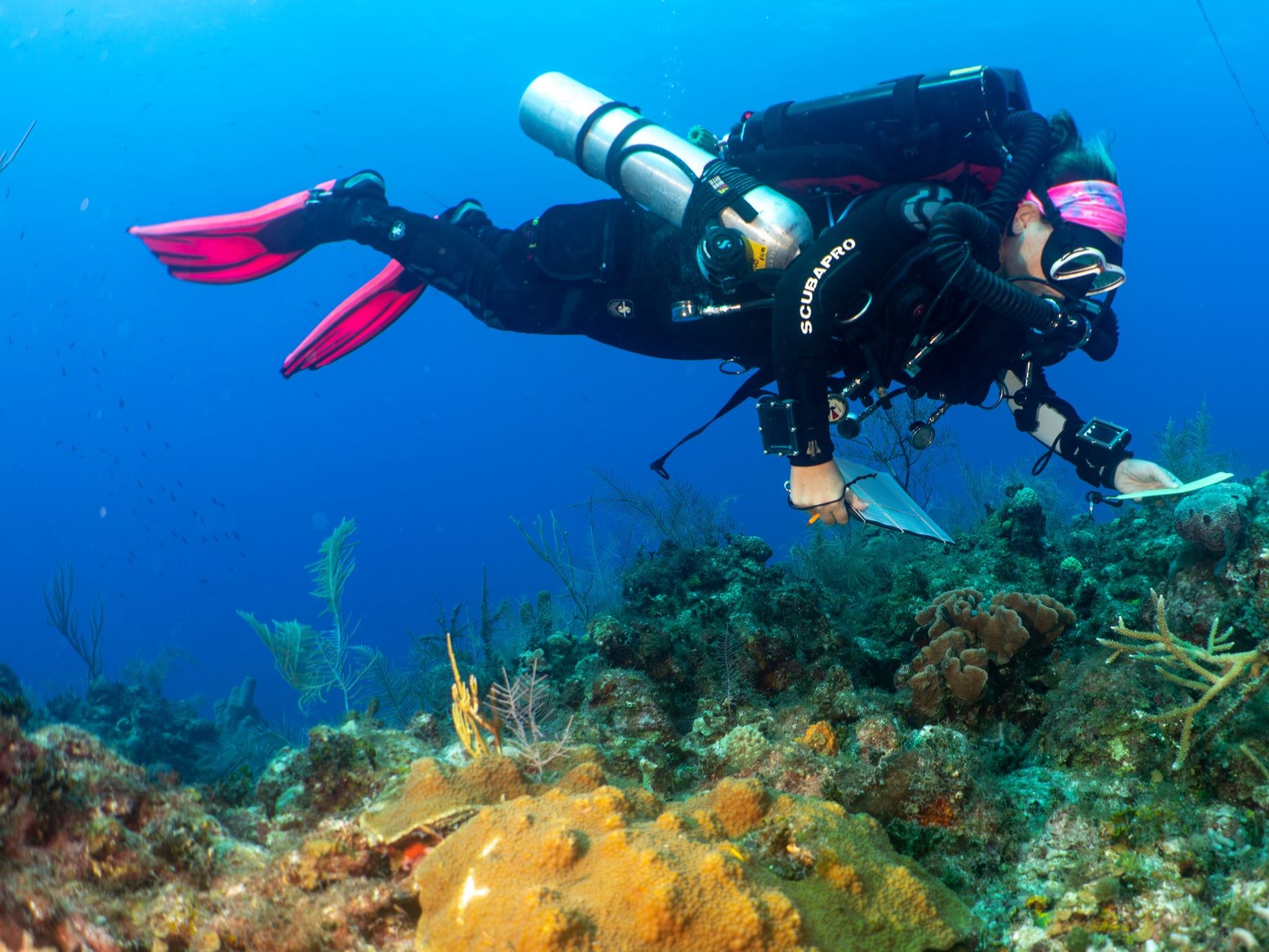
The teams plan to carry out deep technical dives on closed-circuit rebreather diving equipment “to conduct surveys, create detailed photomosaics and bathymetric maps, and collect samples for eDNA [environmental DNA] analysis”.
Small water and sand samples will be taken to conduct analysis to look at DNA shed from skin, scales, faeces and mucus in miniscule amounts. “These small samples can be used, in conjunction with more traditional methods like surveys and video analysis, to gain insight into species that are present in an environment but may be more elusive,” CCMI said.
The institute said the results from this study will “help guide future management of offshore seamounts and assist with marine spatial planning for offshore zones and the Blue Belt”.
Related Videos