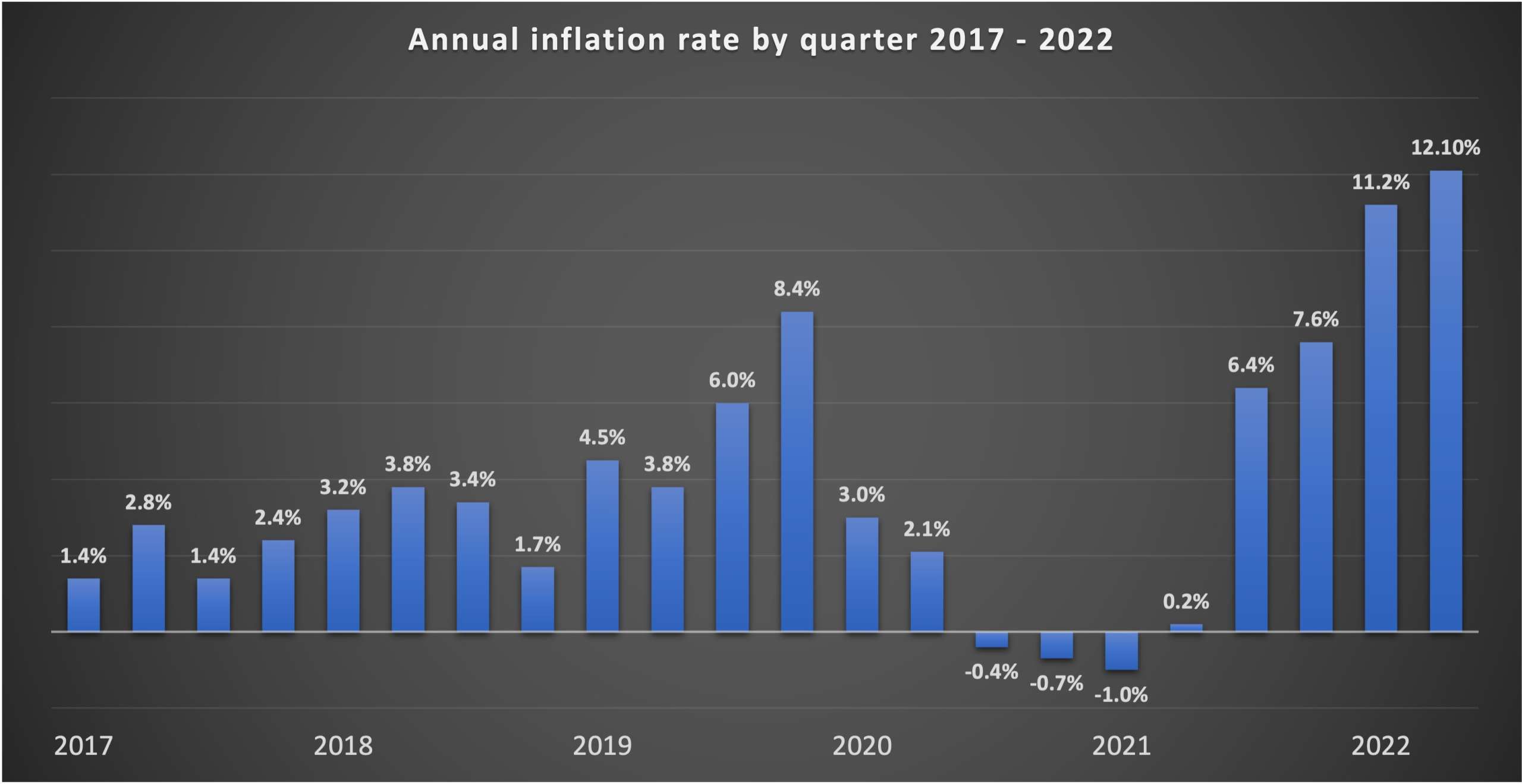
 The cost-of-living crisis continues unabated as consumer prices increased on average by 12.1% between April and June compared to the same period last year.
Following 11.2% annualised inflation in the first quarter, prices continue to rise further – this time to record levels, exceeding even the price hikes of 11.4% in the aftermath of Hurricane Ivan.
Compared to the first quarter, prices were on average 2.2% higher.
Eleven out of 12 divisions of Cayman’s consumer price index (CPI) showed higher prices in the second quarter, led by the rising cost of housing and utilities (19.2%) and transport (17%), the Economics and Statistics Office reported.
Fuel prices, which jumped by 37.3% during the quarter year-on-year, pushed up the cost of water supply (37.7%) and electricity (20.2%), as well as air travel (11.3%).
The costs for homeowners increased by 22.4% and rental prices went up by 10.8%.
In addition, footwear is 17.2% more expensive than last year and clothing prices are 13.3% higher.
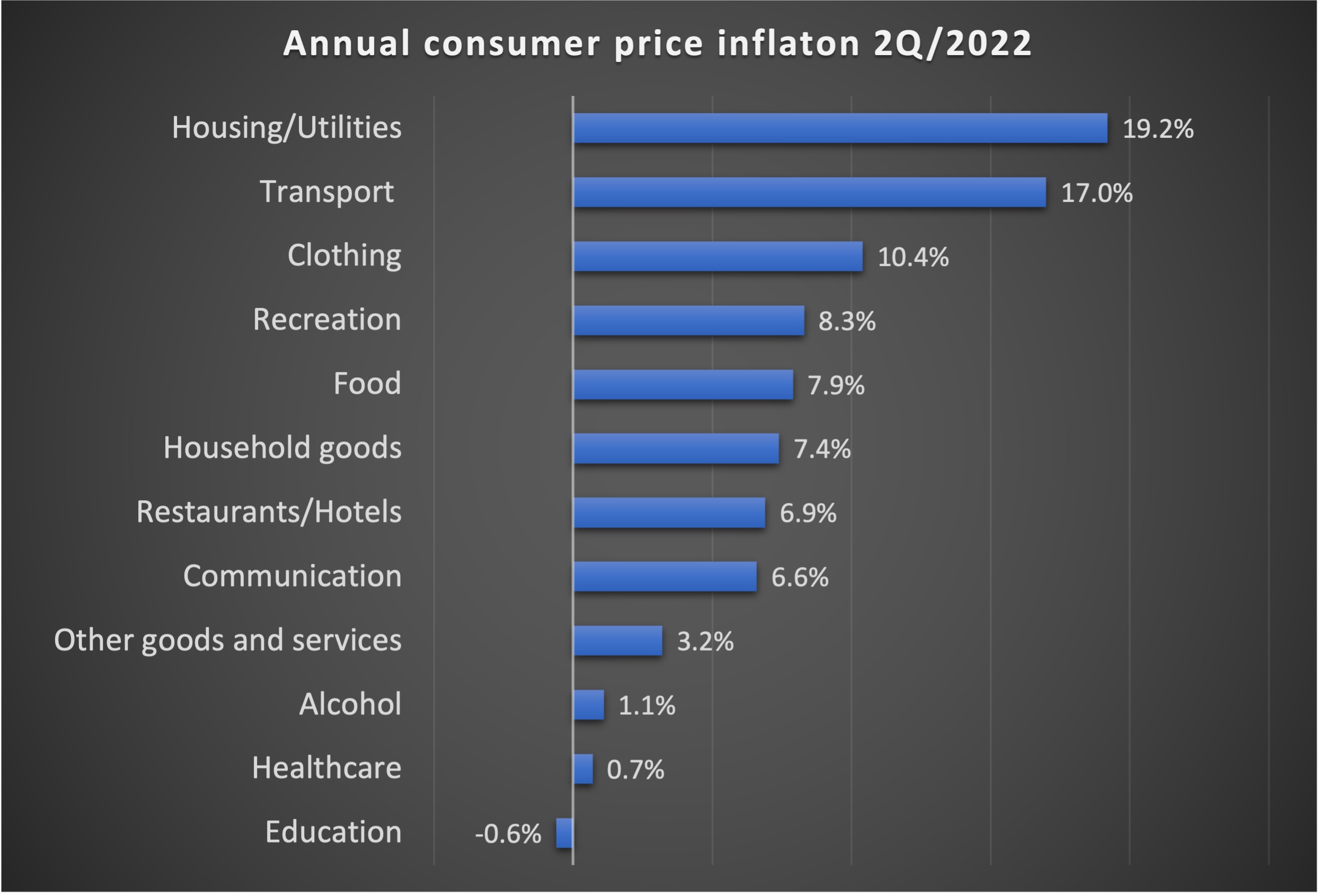 Among the food items, which are up 7.9% on average, meat has seen the highest prices rises of 18.9%, while fish and seafood (14.3%) and vegetables (13.4%) also saw double-digit percentage hikes.
Prices in Cayman follow a global trend of rising inflation.
In the US, an important source market for Cayman, consumer prices went up 9.1% in June, the highest inflation rate in four decades.
Among the 38 OECD countries, inflation rose by 10.3% in June, the sharpest increase since 1988, as food price across the OECD spiked 13.3% and energy inflation reached 40.7% year-on-year.
Excluding food and energy, core inflation continued to climb to 6.7% from 6.4% in May.
Economists have been divided as to how quickly inflation will come down, in the wake of interest rate increases in the US and Europe.
In the US, inflation was higher than forecasted for three consecutive months.
In the UK, the Bank of England said in May that inflation would rise slightly above 10% this year, and then drop quickly as higher interest rates depress consumer demand.
But the National Institute of Economic and Social Research expects an inflation rate of 11% before the end of the year, with the retail prices index set to climb to 17.7%. The think tank also believes that interest rates will have to go much higher for longer to bring inflation in the UK down to 3% by the end of 2023.
Related Videos